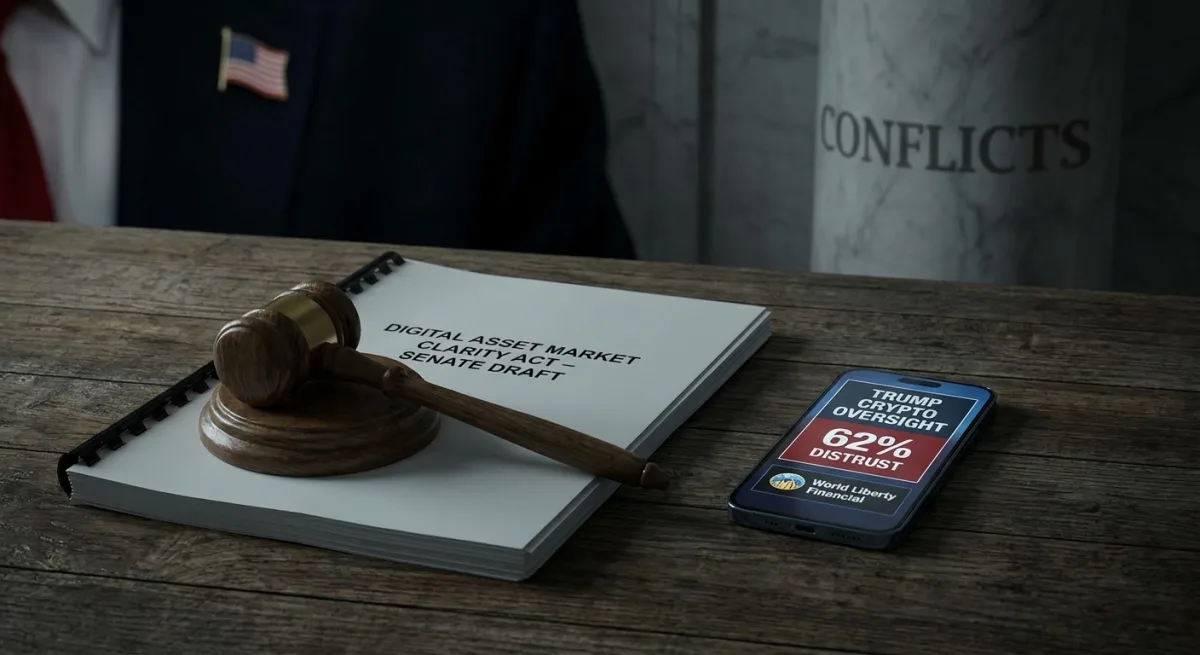
A striking 62% of U.S. voters do not trust the Trump administration's crypto oversight, primarily due to concerns over personal financial conflicts of interest. This data is crucial for cryptocurrency investors, policy advocates, and industry leaders, as it highlights a significant public relations and legislative hurdle for the upcoming U.S. crypto regulatory framework. Understanding this voter sentiment provides clear insight into why bipartisan negotiations over digital asset laws are currently stalled in the Senate.
Despite President Donald Trump's ongoing promises to make the United States the "crypto capital of the world," his broader political approval rating has dipped to 40% in a recent survey of 1,000 registered voters conducted by Public Opinion Strategies. The administration has actively pushed a friendly industry agenda, appointing a crypto czar and issuing executive orders. However, the public remains highly skeptical of government officials mixing personal business with federal regulation.
Key Findings from the Voter Survey
The survey, which carries a credibility interval of 3.5%, evenly split respondents between those who supported Trump and Democrat Kamala Harris in the 2024 election. The data reveals a strong bipartisan consensus against financial conflicts of interest in the digital asset space:
- 73% of voters oppose senior government officials having personal business dealings in the cryptocurrency industry.
- 59% of Republican voters specifically stated they cannot stomach these types of financial ties.
- 45% of respondents are aware that the president and his family have built a profitable personal stake in the crypto sector.
- 17% of the public specifically know that Trump and his sons backed the launch of World Liberty Financial.
The Digital Asset Market Clarity Act Standoff
The cryptocurrency industry's primary goal in Washington is securing a formalized regulatory framework, currently taking shape as the Digital Asset Market Clarity Act. While the legislation has successfully passed the U.S. House of Representatives, it faces a major roadblock in the Senate. Democratic lawmakers are demanding a provision that bans the exact type of personal crypto ties that the majority of voters oppose.
This provision was clearly drafted with the current administration in mind, leading to months of bipartisan negotiations. White House officials have previously stated they will not support a bill that specifically targets the president or his family members. Because the legislation requires 60 votes to pass the Senate, securing Democratic support is mandatory, leaving the bill's future uncertain.
The Regulatory Bottleneck
The intersection of personal business and federal policy is creating a severe bottleneck for U.S. crypto regulation. While the industry initially rejoiced at the administration's pro-crypto appointments, the launch of ventures like World Liberty Financial and the promotion of the $TRUMP memecoin have handed political opponents a powerful counter-argument. The fact that 59% of GOP voters also oppose these financial ties indicates that this is not merely a partisan issue, but a broader demand for ethical boundaries.
If the administration refuses to compromise on the conflict-of-interest provisions within the Digital Asset Market Clarity Act, the industry may lose its best chance at achieving regulatory clarity this year. The data clearly shows that while digital assets are becoming more prominent, the American public is not yet ready to embrace an industry watchdog who holds a personal financial stake in the market they are supposed to regulate.