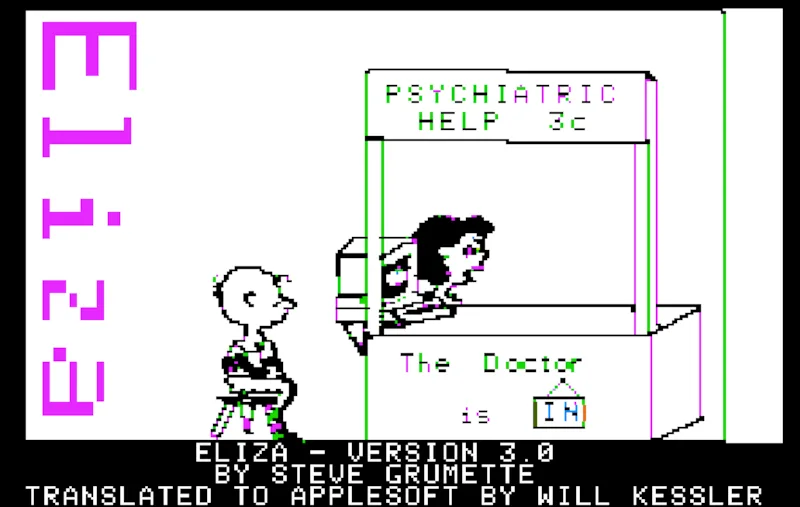
Long before generative AI and massive language models dominated the tech landscape, the computer industry’s definition of artificial intelligence looked vastly different. The Internet Archive has curated a new collection dubbed "Vintage Artificial Intelligence," allowing users to run classic AI software from the 1970s through the 1990s directly in their web browsers via emulation.
Curated by Jason Scott, the collection highlights how early developers tackled machine intelligence with highly constrained hardware. The archive includes multiple versions of Eliza, the pioneering natural language processing program that simulated a Rogerian psychotherapist. Despite its underlying simplicity and reliance on basic pattern matching, Eliza was remarkably effective at mimicking human conversation during its era.
The collection extends far beyond basic chatbots. It features foundational programming languages like Lisp and Prolog, which were once expected to power expert systems that would revolutionize industries. Users can also explore Racter, an early attempt at AI-generated fiction, and Alter Ego, a life-simulation game designed to help players explore complex life decisions. Even Conway’s Game of Life makes an appearance, though its classification as true AI remains a subject of historical debate. Chess enthusiasts will also find Sargon, one of the era's premier chess programs.
While the collection is extensive, some notable classics are missing. The paranoid chatbot Parry - often considered the psychological counterpart to Eliza - is absent, along with the machine learning game Hexapawn and the elusive text-chain builder known as George.
How to Experience Vintage AI
- Navigate to the software library on the Internet Archive website.
- Search for the "Vintage Artificial Intelligence" curated collection.
- Select a title like Eliza or Sargon and click the power button icon to launch the built-in browser emulator.
The Moving Target of Machine Intelligence
The Internet Archive’s collection is more than just a nostalgic trip; it perfectly illustrates the "AI effect," a phenomenon where the definition of artificial intelligence constantly shifts. Once a computer masters a task - whether it is playing chess in Sargon or parsing syntax in Eliza - we no longer consider it true AI, reducing it to mere computation.
Looking at these 1980s expert systems, it is easy to laugh at their simplicity compared to modern neural networks. However, this historical perspective offers a humbling reminder: in 30 years, the massive language models we currently view as cutting-edge will likely look just as primitive to the next generation of developers.