

On October 15, 2026, Tesla and Porsche unveiled new sports cars on the exact same day, showcasing a stark contrast in automotive innovation. According to an analysis by the blog The Last Driver License Holder..., the events highlight how much the industry has shifted since 2015, with Tesla pushing technological boundaries while Porsche relies on nostalgia.
Contrasting Unveilings
During the recent presentations, Tesla showcased a new Roadster that redefines the limits of what is possible. The blog notes that the vehicle can fly, perform stunts, and accelerate from zero to 60 miles per hour in under one second. In contrast, Porsche's unveiling focused heavily on history and the past, applying a nostalgic approach to both its design and technology.
This divergence comes at a time when the two automakers find themselves in vastly different financial positions. Tesla is now profitable and has delivered more than 10 million cars to date. Meanwhile, the nearly 100-year-old Porsche is facing plummeting profits and revenue, and the publication describes the company's electric-car strategy as being in shambles.
A Decade of Reversal
The current landscape represents a massive shift from December 2015. At that time, Tesla was a small company losing hundreds of millions of dollars annually, with only the Roadster and the Model S in its lineup. Porsche, conversely, was a widely loved and proud sports car manufacturer.
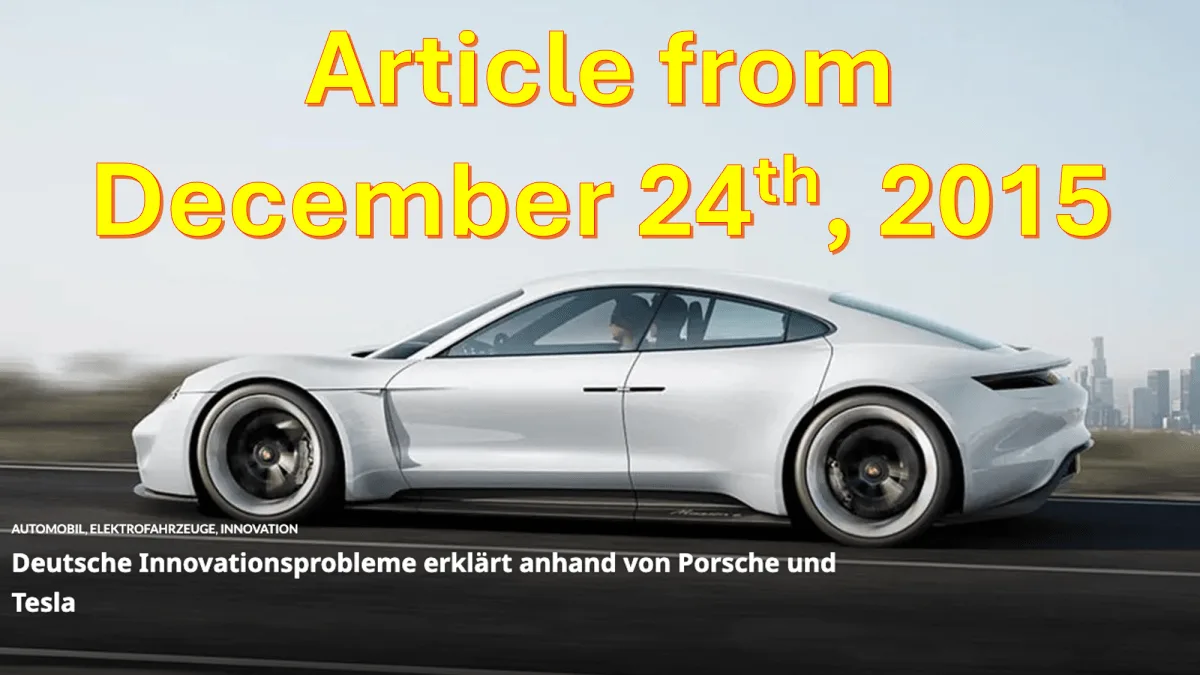
This historical context stems from a viral 2015 article published by the blog's author, titled “German Innovation Problems Explained Using Porsche and Tesla.” The success of that post led to the creation of the blog itself, which now hosts over 2,100 posts on electric and autonomous driving, as well as a book titled The last driver’s license holder… that has been published in five languages.
The Innovation Gap Remains
Reflecting on the simultaneous sports car unveilings, the author concludes that the innovation challenges identified over a decade ago have only deepened. Despite the passage of nearly 11 years, the blog asserts that its original 2015 critique of German automotive innovation is more relevant today than ever before.
This article was written by AI from reporting by thelastdriverlicenseholder.com.