Sony is aggressively defending its digital storefront practices, arguing in a new legal filing that "reasonable consumers" already know they do not actually own the digital games they purchase. The defense comes in response to a class-action lawsuit filed by four PlayStation customers in July, who accuse the console maker of violating a 2025 California law designed to protect digital consumer rights.
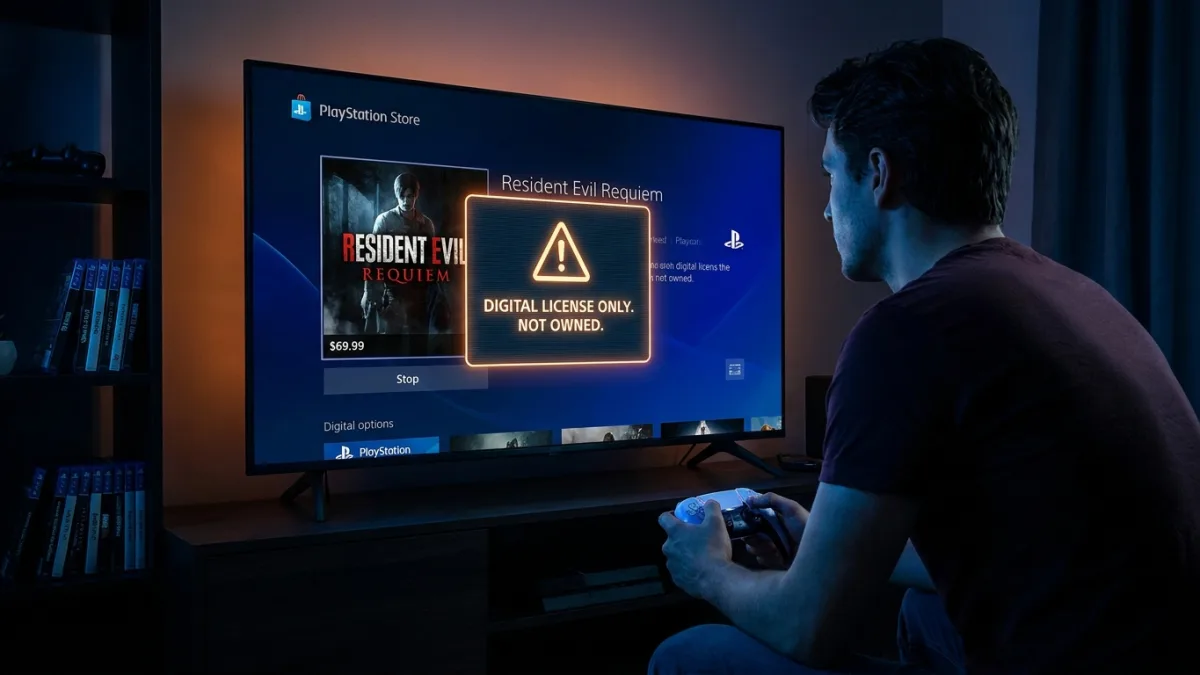
The California legislation requires digital storefronts to explicitly warn buyers that they are purchasing a revocable license rather than permanent ownership. The plaintiffs argue that Sony's current checkout process fails this standard. While the PlayStation Store does provide links to the company's Terms of Service and Software Product Licensing Agreement, the crucial clause stating that "virtual content is licensed, not owned" is buried hundreds of words deep into the legal text.
In an August 21 filing reported by The Game File, Sony's legal team dismissed the claims, stating that "reasonable consumers would not be misled" by the current disclosures. The lawyers used a specific example involving two of the plaintiffs and their purchases of Resident Evil Requiem for $69.99 to illustrate their point.
In the digital age, it is not plausible to allege that reasonable consumers believed they were obtaining 'ownership' of a digital game. Were that the case, then Plaintiff Edward Heycock would not have been able to obtain the game Resident Evil Requiem on February 25, 2026... because Mr. Mendoza, not Sony, would have owned it then.
- Sony Legal Filing
This legal battle arrives at a highly sensitive time for the PlayStation community. Earlier this summer, Sony sparked widespread backlash by announcing plans to completely halt the manufacturing of physical game discs for new PlayStation titles by January 2028. As the industry accelerates toward an all-digital future, the distinction between owning a game and merely renting a license is becoming a central point of friction between publishers and players.
The Dangerous Precedent of "Reasonable" Assumptions
Sony's defense relies heavily on a technicality of digital distribution rather than consumer transparency. By arguing that the mechanics of digital duplication inherently disprove ownership, Sony is sidestepping the core intent of the 2025 California law: making licensing terms explicitly clear at the point of sale, not just in the fine print.
If the court accepts that consumers should simply "know better" without upfront warnings, it could set a precedent allowing other major storefronts like Steam, Xbox, and Nintendo to maintain opaque checkout processes. With physical media officially on the chopping block for PlayStation by 2028, players are rapidly losing their only alternative for true game preservation.
The outcome of this class-action lawsuit will likely dictate how digital storefronts operate nationwide. If Sony loses, the PlayStation Store - and its competitors - will be forced to redesign their user interfaces to prominently display licensing warnings before a transaction is finalized, fundamentally changing how digital ownership is marketed to the public.
This article was written by AI from reporting by eurogamer.net.