The ongoing Elon Musk OpenAI lawsuit has exposed deep cultural rifts from the AI startup's early days, with CEO Sam Altman testifying that Musk's aggressive management style severely damaged company morale. Taking the stand during the trial's third week, Altman painted a picture of a hostile work environment driven by the Tesla CEO's relentless demands. He argued that Musk's approach to leadership was fundamentally incompatible with a scientific environment.
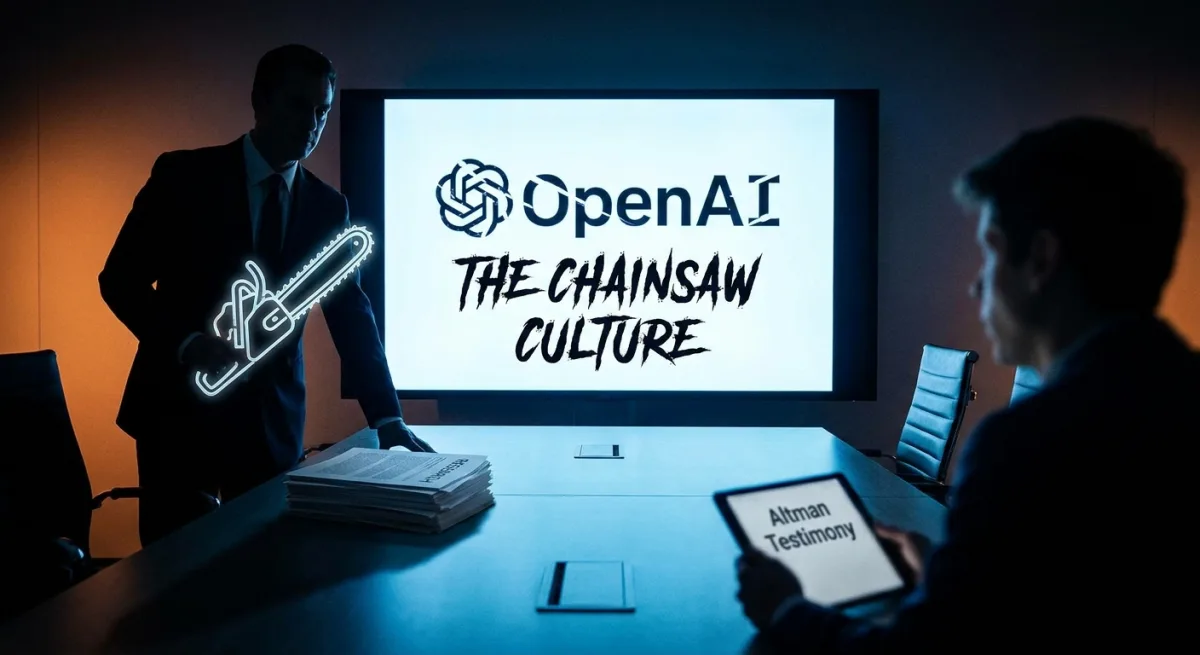
Altman testified that Musk pressured OpenAI president Greg Brockman and former chief scientist Ilya Sutskever to rank their researchers based on immediate accomplishments. If employees fell short, Musk allegedly instructed leadership to "take a chainsaw through a bunch" of the staff. Altman conceded that while this ruthless management style is what the billionaire is known for, it actively hindered the startup's foundational work.
For a research lab where people need, sort of, psychological safety and long periods of time to pursue an idea, this idea that you constantly have to show your results, and if they’re not good enough on a short period, you’re going to get fired. That really didn’t work for the kind of research we went on to successfully do.
- Sam Altman, CEO, OpenAI
When Musk officially left the company in 2018, the public explanation cited potential conflicts of interest with Tesla's own machine learning division. However, the current testimony reveals a much different internal reality. Altman noted that the exit "was a morale boost in some ways," as researchers realized they no longer had to operate under constant fear of termination.
The high-stakes legal battle centers on Musk's claims that Altman and Brockman deceived him into funding the organization, arguing that OpenAI has since abandoned its original mission to benefit humanity. The trial has already featured testimony from major tech figures, including Microsoft CEO Satya Nadella, former OpenAI board member Shivon Zilis, and former OpenAI CTO Mira Murati.
The Hidden Cost of Silicon Valley's "Hardcore" Culture
Altman’s testimony highlights a fundamental clash between two distinct tech philosophies: the rapid, ruthless iteration of product manufacturing versus the slow, methodical pace required for foundational AI research. Musk’s "chainsaw" approach might work for scaling electric vehicle production at Tesla or cutting costs at X, but applying that same pressure-cooker environment to theoretical computer science nearly derailed OpenAI before it could build its flagship models.
This trial is proving to be less about a breach of contract and more about a battle for the historical narrative of who truly built the modern AI industry. By framing Musk's departure as a necessary "morale boost" rather than a tragic loss of talent, Altman is systematically dismantling Musk's claim of being the indispensable architect of OpenAI. If the court sides with Altman's version of events, it could set a legal precedent protecting research-focused startups from the aggressive demands of their early venture capitalists.