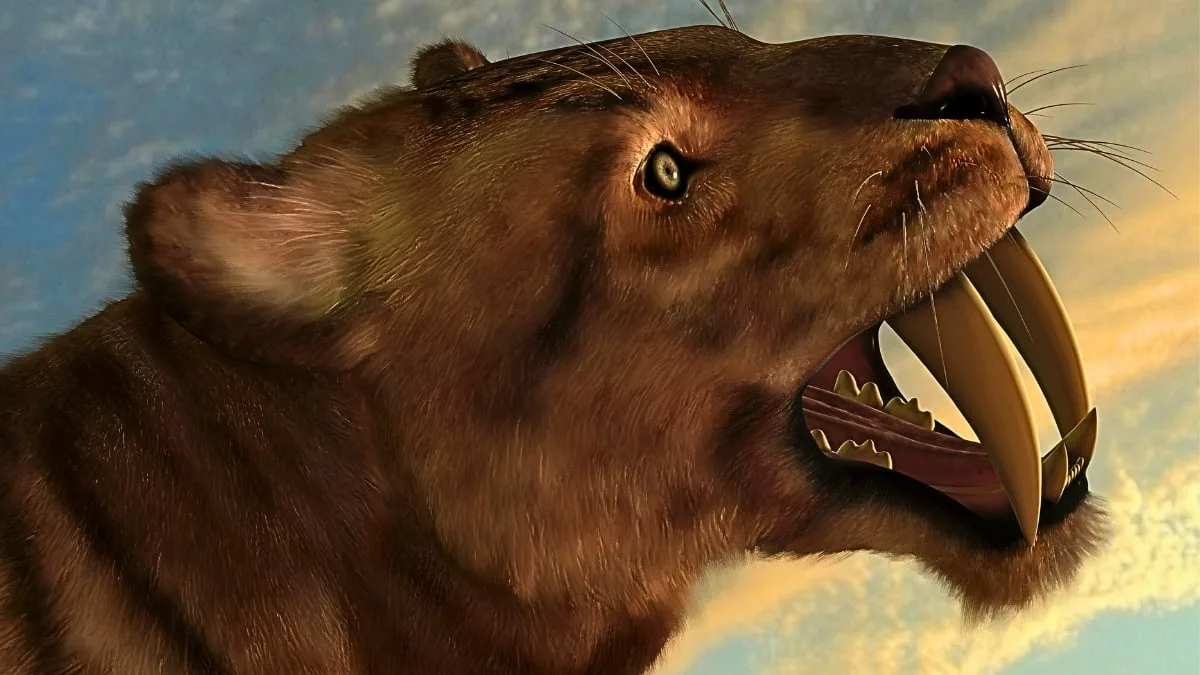
The fearsome saber-toothed cat, Smilodon fatalis, may have been crippled by severe inbreeding and debilitating spinal diseases long before its extinction 12,000 years ago. A new study analyzing thousands of fossils from the La Brea Tar Pits reveals that these 600-pound apex predators suffered from a catastrophic genetic bottleneck that triggered widespread skeletal malformations.
For paleontologists and evolutionary biologists, this research published in the journal Frontiers in Veterinary Science provides a crucial missing link in understanding Pleistocene extinctions. It demonstrates how genetic degradation can silently doom a species, fundamentally altering how scientists view the survival dynamics of ancient predators.
Uncovering a Genetic Bottleneck
Researchers utilized optical methods and computed tomography (CT) scans to examine more than 3,700 vertebrae, representing at least 849 individual Smilodon fatalis specimens. The skeletal remains, preserved in the asphalt seeps of Los Angeles, exposed a population plagued by chronic inflammatory diseases and genetic defects.
The scans revealed over 200 congenital vertebral malformations and nearly 50 fused vertebrae, alongside abnormal bone growths and severe skeletal breakdown. Most alarmingly, researchers identified lumbar vertebrae from three different individuals showing clear signs of spinal nerve tumors (SNTs), a condition closely linked to genetic mutations.
While three cases may seem low, it represents a staggering SNT prevalence of 353 per 100,000 individuals within the studied population. By comparison, the upper-range incidence of similar tumors in modern humans is just 0.38 per 100,000 persons.
The Carnivore Trap
The high concentration of diseased cats in the La Brea Tar Pits is likely no accident. The tar seeps acted as a deadly carnivore trap, where mired herbivores would attract desperate predators. In modern dogs and humans, SNTs cause significant pain, muscle wasting, and lameness.
An ancient predator battling these severe disabilities would have seen its hunting capabilities drastically reduced. Driven by hunger and physical decline, these crippled cats likely abandoned their usual ambush tactics in favor of scavenging easy, trapped prey - ultimately sealing their own fate in the bubbling asphalt.
There is evidence that due to dramatically declining population numbers, there was an increasing occurrence of inbreeding in mammals at the end of the Pleistocene, with different health consequences.
- Frontiers in Veterinary Science
This genetic death spiral was not exclusive to saber-toothed cats. The researchers noted that DNA analysis of permafrost-preserved mammoths also revealed high degrees of inbreeding, potentially causing sensory deficits and diseases like diabetes mellitus before their total extinction.
The Modern Warning in Ancient Bones
The tragic end of Smilodon fatalis serves as a stark, data-driven warning for modern conservation efforts. When an apex predator's population fragments, the resulting genetic bottleneck creates a feedback loop of disease and disability that climate shifts or habitat loss merely accelerate. We are currently witnessing this exact biological vulnerability in isolated populations of modern big cats, such as the Florida panther and the Asiatic cheetah.
This fossil record proves that protecting a species requires more than just preserving its immediate habitat; it requires active genetic management. Without establishing wildlife corridors to ensure genetic diversity, today's endangered predators risk the same silent, internal collapse that wiped out the most fearsome hunters of the Ice Age.