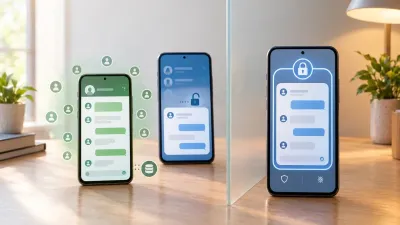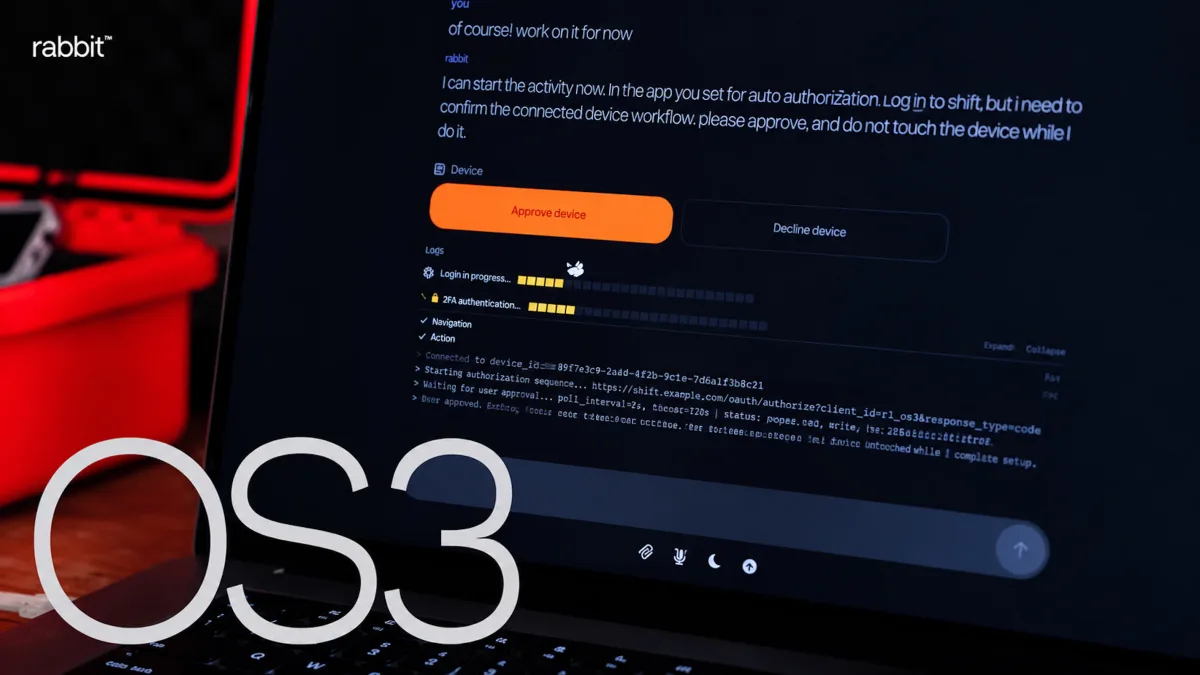
Rabbit is abandoning its hardware-first strategy to launch Rabbit OS3, a free, agentic AI platform that controls Windows, Mac, and Linux computers directly through Telegram and iMessage. The company has ceased manufacturing the controversial Rabbit R1 device to focus entirely on software that integrates with existing hardware. Powered by Direct Large Action Model (DLAM) technology, OS3 uses a local agent installed on a user's machine to interact with desktop programs, manage files, and debug code.
Users can connect up to five computers to a single account, allowing them to send a Telegram message from their phone to update an Excel spreadsheet stored on their office PC. Rabbit CEO Jesse Lyu described the interface as a "brain dump" where users enter a task, and the system automatically pulls together the necessary tools and AI models to complete it. The platform is available now to the public.
I think the challenge is really being extremely limited in resources, team-wise and money-wise, compared to other AI studios that raised billions of dollars.
- Jesse Lyu, CEO, Rabbit
How the Bring-Your-Own-Key Model Works
Rabbit OS3 eliminates monthly subscription fees in favor of a bring-your-own-key (BYOK) system, requiring users to supply their own AI access.
- API Integration: Users must supply their own API keys from providers like OpenAI or Anthropic to power the reasoning engine.
- Local Models: The platform supports connecting local open-source models for users who prefer offline processing and maximum privacy.
- Third-Party Skills: Users can install custom agent skills directly from a public URL, reducing reliance on Rabbit's proprietary services.
Despite early critical reception, Lyu noted the Rabbit R1 was a commercial success, shipping over 100,000 units with a return rate below 5 percent and gross margins of 45 to 50 percent. The company, which employs 15 people and has raised $60 million, recently stabilized after financial pressures and an employee strike triggered by a blocked launch in India. On the privacy front, Rabbit confirmed that OS3 does not store or copy local files, though conversation histories are kept on its servers.
The Smartest Pivot in the AI Hardware Era
Rabbit’s transition from a dedicated gadget to a ubiquitous software layer is a necessary survival tactic. The Rabbit R1, much like the Humane AI Pin, proved that consumers do not want to carry a second device just to talk to an AI. By embedding Rabbit OS3 into Telegram and iMessage, the company is meeting users where they already spend their time.
The BYOK model is particularly strategic for a startup with limited funding. It shifts the massive compute costs of API calls away from Rabbit’s balance sheet and onto the user, solving the financial drain that plagues many AI companies. If Rabbit's upcoming "vibe coding" Cyberdeck fails to gain traction, this software-only approach ensures the company still has a viable path forward as a desktop automation tool.