Poland is officially accelerating its transition away from coal, finalizing the core commercial terms for its first-ever nuclear power plant with the Bechtel-Westinghouse consortium. The landmark agreement sets the stage for a massive 3,750 MW facility that will fundamentally reshape the nation's energy grid. The engineering, procurement, and construction (EPC) contract is expected to be signed by the end of the year.
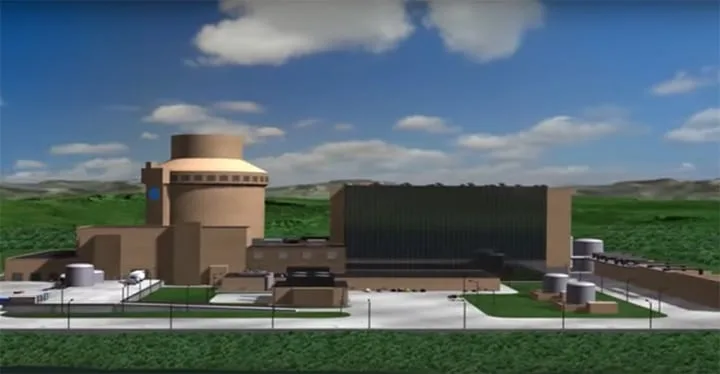
Polskie Elektrownie Jądrowe (PEJ), Poland's state-owned nuclear entity, confirmed the facility will utilize three Westinghouse AP1000 Generation III+ pressurized water reactors. The site at Lubiatowo-Kopalino in the Choczewo commune was handed over to Bechtel in August. Preparatory work, including grading, drainage upgrades, and in-depth geological surveys, is already underway.
This agreement reflects the momentum we’ve built with PEJ, and it’s a vote of confidence in American nuclear technology and know-how.
- Dena Volovar, President of Nuclear, Security & Environmental, Bechtel
Bechtel brings significant historical weight to the project, having supported more than 25,000 projects across 160 countries over 80 years, including the design or construction of 150 nuclear power plants. "The American Westinghouse-Bechtel consortium will be responsible for the construction of the facility," explained Marek Woszczyk, president of PEJ, noting that the first electricity is expected to flow to the Polish grid in 2036.
Reactor Technology and Construction Timeline
The consortium has established an aggressive timeline, with the first nuclear concrete pour targeted for 2028. To meet this deadline, the project will heavily leverage recent experience from the two-unit expansion at Plant Vogtle in Georgia. Bechtel noted that the second of the two new units at the American plant was built 30% more efficiently than the first, a learning curve they intend to apply directly to the Polish site.
The development is already driving significant local economic activity, with about $250 million in contracts awarded to Poland-based companies. Key site work is being handled by local firms including Budimex, Doraco, Unihouse, MSA Security, and Barg M.B Gdańsk. The project currently employs nearly 200 Polish nationals on the core team, with another 100 in the recruitment process, supported by staff-development agreements with three Polish universities.
The Strategic Weight of American Reactors
Poland’s decision to lock in the Bechtel-Westinghouse consortium is about more than just replacing aging coal infrastructure; it is a calculated geopolitical anchor. By selecting American AP1000 technology over French or South Korean alternatives, Warsaw is tightly binding its long-term energy security to Washington. This move ensures that the United States remains deeply invested in Eastern Europe's critical infrastructure for the next century.
The 2036 grid target is ambitious, but the 30% efficiency gain Bechtel demonstrated between the two Vogtle units proves that the steep learning curve of modern nuclear construction can be flattened. If executed on schedule, this 3,750 MW plant will not only decarbonize a massive chunk of Poland's grid but also serve as a blueprint for other Eastern European nations looking to sever their historical reliance on fossil fuels.