Nuclea Energy has reached an all-cash agreement to acquire the entire technology portfolio of Moltex Energy, bringing competing liquid metal and molten salt nuclear cooling systems under a single engineering program. The acquisition centers on advanced pyrochemical recycling and a reactor design capable of generating 300 to 500 megawatts of electricity (MWe) directly from spent nuclear fuel.
This consolidation is critical for the advanced nuclear sector and heavy industries. It provides a viable pathway to commercialize waste-burning reactors that reduce long-lived radioactive waste, while simultaneously offering off-grid power solutions for remote mining operations, island grids, and defense sites.
The WATSS Process and SSR-W Reactor
A central piece of the acquired portfolio addresses nuclear fuel chemistry rather than just reactor hardware. Moltex developed a pyrochemical extraction method known as Waste to Stable Salt (WATSS). This process extracts transuranic actinides from the residual energy left in commercial spent fuel assemblies and blends them into liquid chloride salts, deliberately avoiding the creation of pure plutonium streams.
Scientists have already confirmed the viability of this chemical separation during trials using actual irradiated fuel at Canadian Nuclear Laboratories. This recycled chemical feedstock is specifically designed to power the Stable Salt Reactor-Wasteburner (SSR-W).
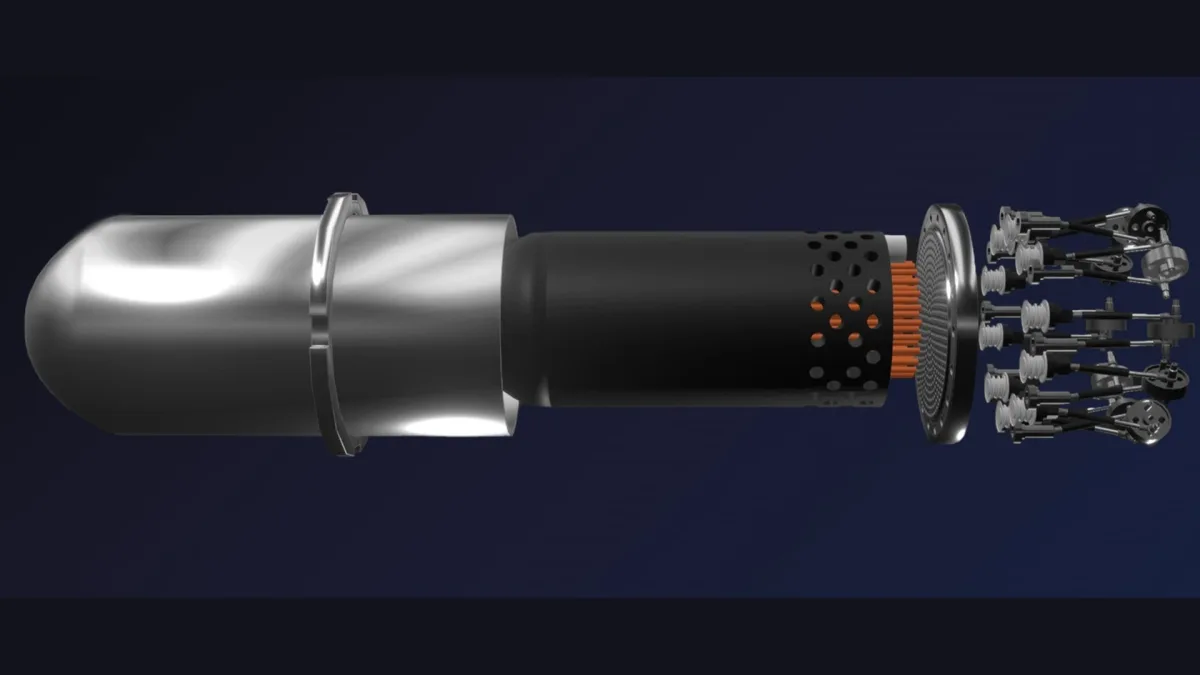
Unlike historical molten salt systems that move radioactive fluids through external piping, the SSR-W locks its molten fuel salt inside stationary tubes submerged in an unpressurized pool of separate coolant salt. Operating on a fast-neutron spectrum, high-energy collisions split the long-lived actinides. The design targets an electrical output between 300 and 500 MWe and relies entirely on natural convection currents to bleed away decay heat without requiring emergency electrical power.
FLEX and Morpheus Microreactors
The acquisition also includes the FLEX reactor, a thermal-neutron system that uses solid graphite blocks to slow down neutrons. It runs on low-enriched uranium fuel salt held in identical static pins. The FLEX design produces coolant temperatures around 750 degrees Celsius (1,382 degrees Fahrenheit), which matches the thermal requirements for synthetic fuel synthesis and heavy manufacturing.
These new assets will complement Nuclea’s flagship project, the Morpheus microreactor. Morpheus utilizes a molten lead coolant and a graphite moderator to supply between 3.5 and 50 megawatts of electricity. Because molten lead provides high thermal capacity at atmospheric pressure, the reactor is compact enough to be assembled entirely within a factory and shipped by truck.
Deal Mechanics and Patent Portfolio
The agreement transfers 80 granted patents spanning nine technical categories, alongside nine pending patents focused on fuel reprocessing. These concepts were refined over a decade through collaborative research with Oak Ridge National Laboratory, Argonne National Laboratory, and Ontario Power Generation.
Because Moltex entered administration, the assets are being sold without extensive seller warranties. Closing the purchase depends on statutory screening under the United Kingdom’s National Security and Investment Act, with a three-month deadline set to satisfy these terms.
The Strategic Value of Nuclear Waste Consolidation
By acquiring Moltex's assets out of administration, Nuclea Energy is not just buying hardware blueprints; it is securing a regulatory-tested chemical fuel cycle. The WATSS process solves one of the most significant bottlenecks for next-generation reactors: securing a reliable fuel supply while simultaneously addressing the political and environmental hurdles of nuclear waste management.
Furthermore, the 300 to 500 MWe target of the SSR-W perfectly bridges the gap between Nuclea's small 50 MW Morpheus microreactor and traditional gigawatt-scale nuclear plants. This positions the company to dominate both the localized micro-grid market and the mid-size industrial power sector, offering a highly diversified portfolio that can meet the specific thermal and electrical demands of heavy manufacturing.
This article was written by AI from reporting by interestingengineering.com.