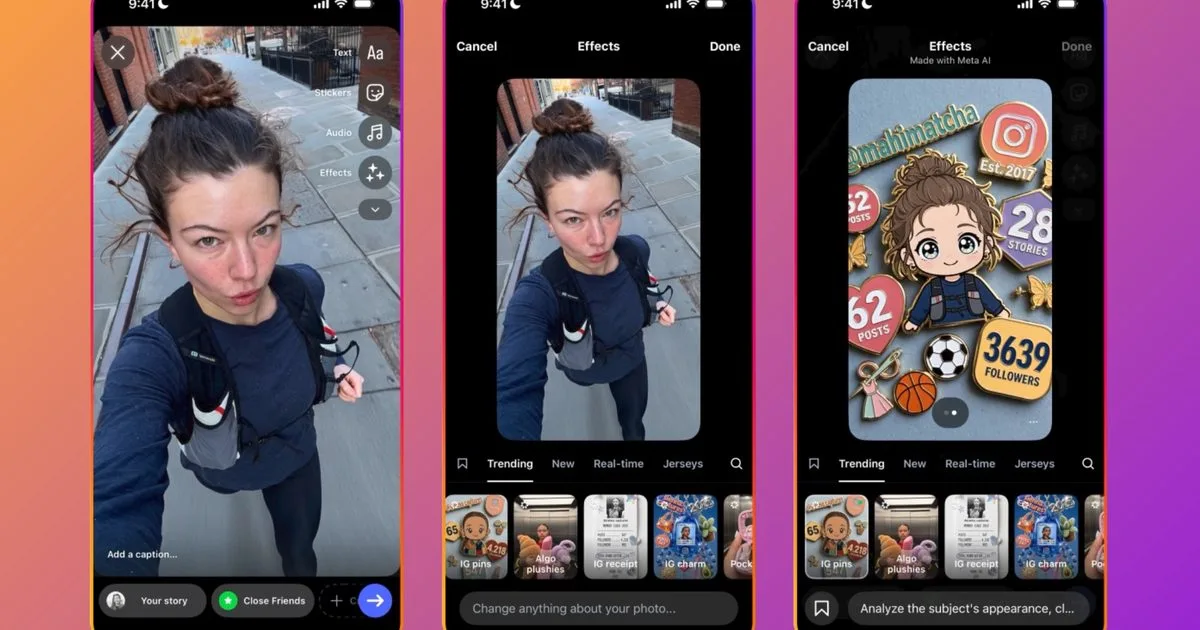
Meta's newly launched Muse Image AI has a hidden catch: it uses your public Instagram photos as visual references to generate AI images of you, and you are already opted in by default. Anyone can tag your public handle in a prompt to create new images featuring your likeness without your consent or knowledge.
Released on July 7, 2026, Meta introduced Muse Image as its most advanced in-house AI image model. However, the system allows users to @-mention any public Instagram account directly inside a creative prompt. The AI then scrapes photos from that specific profile, using them as visual anchors to generate entirely new, synthetic images of that person.
The most alarming aspect is the complete lack of transparency for the person being cloned. Meta's official help page explicitly states, "You will not be notified about content created using AI features at Meta." This means strangers could be generating synthetic media using your face right now, and unless those images are published elsewhere, you would never know. While Meta includes an invisible watermarking system called Content Seal to verify AI origins, it offers no preventative protection against the generation itself.
How to Opt Out of Meta's AI Generation
Because the feature is enabled by default for all public accounts, you must manually disable it. Here is how to protect your likeness:
- Open the Instagram app and navigate to your profile.
- Tap the three-line menu in the top-right corner to access your settings.
- Scroll down to the Sharing and reuse section.
- Toggle off both Posts and Reels under the section labeled "Allow people to use your content on Instagram and with AI features on Meta."
Keep in mind that opting out only prevents future generations. Any AI images already created using your likeness will not be deleted, and switching your account to private carries the exact same limitation. Some users may not see the updated settings menu immediately as the rollout continues.
The Redefinition of Public Identity
The default inclusion of user photos in Muse Image marks a fundamental shift in the social media contract. Historically, having a "public" profile simply meant anyone could view your content. Now, Meta is redefining "public" to mean your identity is open-source material for synthetic remixing. By forcing users to manually opt out rather than asking them to opt in, Meta is prioritizing the rapid adoption of its AI tools over user privacy.
This strategy creates a significant risk for creators and everyday users alike, particularly regarding deepfakes and unauthorized likeness usage. While the Content Seal watermark is a step toward traceability, it places the burden of policing synthetic content entirely on the victim. If other platforms follow Meta's aggressive default-in approach, the concept of a safe, public digital gallery may soon become obsolete.
This article was written by AI from reporting by digitaltrends.com.