Today, the Polestar history is defined by its position as a premium electric vehicle brand, but its roots lie in a fiery 1990s Swedish racing squad. Understanding how a one-person touring car operation evolved into a global EV innovator reveals why modern Polestar vehicles prioritize chassis dynamics over mere straight-line speed. The journey began in 1996 during the inaugural season of the Swedish Touring Car Championship (STCC).
Jan Nilsson, a Formula Ford and Formula 3 veteran known by the nickname "Flash," saw an opportunity in the new series and founded Flash Engineering. With factory support and vehicles provided by Volvo, Nilsson served as the team's sole driver behind the wheel of a Volvo 850. He dominated the STCC's inaugural season, winning the championship and repeating the feat the following year.
With Volvo's backing, Flash Engineering accumulated over 100 wins across 9 seasons, adding four runner-up finishes through 2003. In 2004, Nilsson sold his stake in the team to Christian Dahl, who had joined as chief mechanic three years prior. Dahl officially renamed the company to Polestar in 2005, choosing a name that honored Sweden's geography as the "polar star of the frozen north" while reflecting the team's ambition to secure the pole position.
From Racetrack Dominance to Road Production
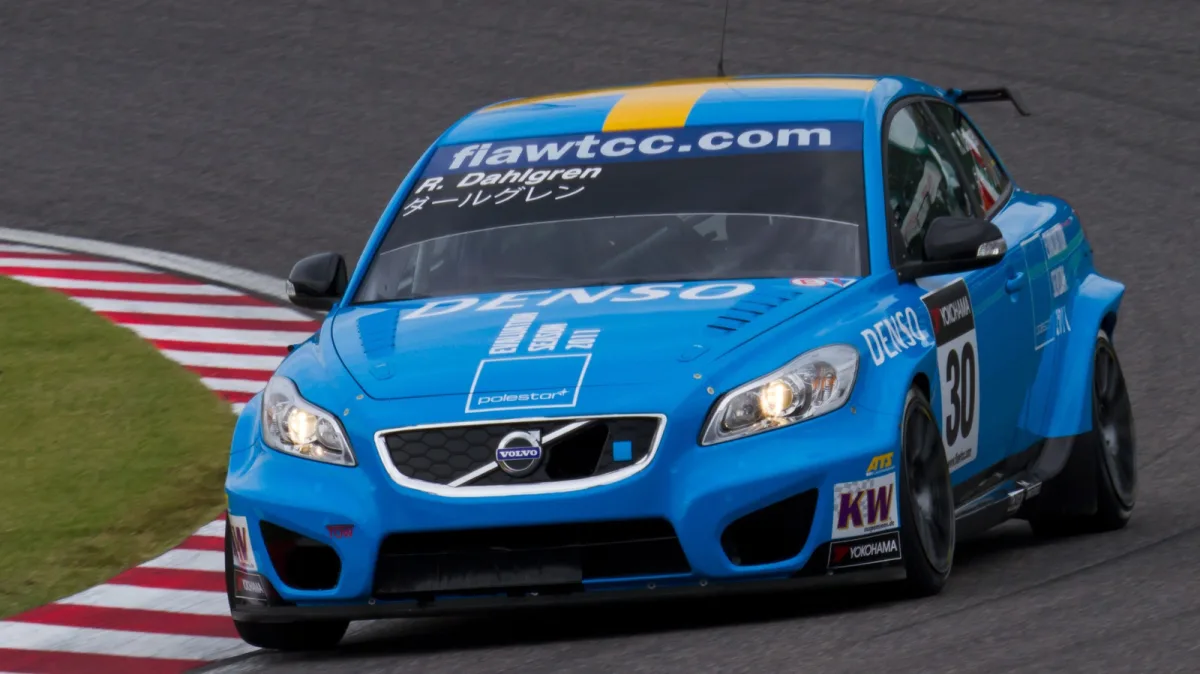
Polestar's pivot toward road cars officially began in 2009, coinciding with Robert Dahlgren winning the STCC driver's championship in a Volvo C30. Off the back of that success, Polestar became Volvo's official performance partner, providing tuning and upgrades for production vehicles. The C30 Polestar Concept demonstrated the company's true engineering potential, boasting 405 horsepower, a 0-60 mph sprint in 4.6 seconds, and an advanced all-wheel drive system.
This concept paved the way for a limited run of 100 tuned Volvo S60s sold exclusively in Australia, marking Polestar's first production vehicle available to the public. Recognizing the brand's value, Volvo purchased the Polestar performance and road car division outright in 2015, including all associated trademarks. By 2017, Polestar transitioned into an independent brand under Geely, launching the Polestar 1 hybrid coupe and the all-electric Polestar 2.
Meanwhile, Dahl retained ownership of the original racing operations, renaming the outfit to Cyan Racing. Even as Polestar shifted its focus entirely to standalone electric vehicles, Cyan Racing continued to campaign Volvos on the track, winning the WTCC drivers' and manufacturers' titles with its S60s. Today, Cyan Racing still builds beautiful roadgoing restomods, ensuring the historical connection between the two entities remains intact.
The Racing DNA Advantage in the EV Era
While many modern EV startups struggle with suspension tuning and driving dynamics, Polestar's origins in the Swedish Touring Car Championship provide a distinct competitive moat. By retaining the engineering philosophy developed under Flash Engineering, the brand avoids the common EV pitfall of building heavy, lifeless vehicles that only excel in straight-line acceleration.
This motorsport heritage explains why models like the Polestar 2 consistently receive praise for their tactile steering and precise chassis control. Furthermore, the split between Polestar's consumer EV focus and Cyan Racing's continued motorsport dominance allows Geely to leverage high-performance combustion engineering insights without diluting Polestar's strict zero-emission branding.
Ultimately, the transition from a single Volvo 850 on a Swedish track to a global electric lineup proves that a legacy in combustion racing can successfully translate into the electric age. It serves as a blueprint for legacy automakers attempting to inject genuine automotive soul into their next-generation battery platforms.