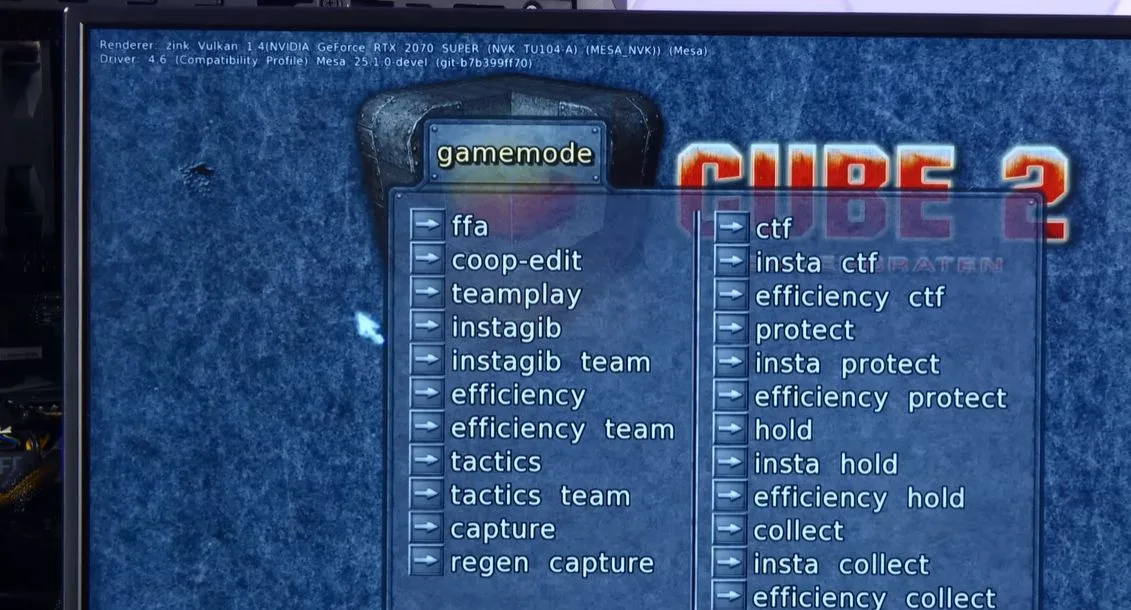
Haiku OS is finally breaking through its biggest limitation: the lack of accelerated 3D graphics. Thanks to a community-driven port of Nvidia's open-source Linux code, users can now run 3D games at playable framerates on the alternative operating system.
Over the past year, developer X512 and the Haiku forums community have successfully ported the Nvidia GPU driver to the OS. As demonstrated in a recent video where Action Retro takes a poke at the driver using an RTX 2070 Super, the software relies heavily on the GPU System Processor (GSP) controller. Nvidia introduced this controller with its Turing architecture, meaning users need at least a GTX 16 or RTX 20 series graphics card to utilize the hardware acceleration.
The performance jump from software-rendered VESA mode to hardware acceleration is massive, turning Haiku into a much more viable daily driver. However, proprietary features like CUDA remain unavailable since they are excluded from Nvidia's open-source release. Some games, like Minecraft, currently face compatibility hurdles due to the newest Mesa library omitting OSMesa.
How to Test the Haiku Nvidia Port
- Start with a fresh nightly build of Haiku OS.
- Ensure your system has a Turing-based GPU or newer (GTX 16-series, RTX 20-series, or later).
- Download the installation package from the GitHub repository (such as the v0.0.2 pre-release).
- Install the driver to replace the default VESA mode and enable 3D acceleration.
Meanwhile, ReactOS is making its own strides in the alternative OS space. A recent playthrough by Aotori Hibiki showcased Half-Life 2 running on an Intel Sandy Bridge PC equipped with a GeForce 8400GS. Because ReactOS is Windows NT-compatible, it natively supports WDDM-style GPU drivers, allowing it to leverage existing Windows drivers.
The ReactOS project is also implementing its first NT6 kernel API calls to support modern Vista-era and newer Windows software. For users seeking an utterly boring, desktop-centric OS that simply works without being another Linux distribution, these developments are highly promising.
The Desktop Market Needs More Than Just Linux
The progress in both Haiku and ReactOS highlights a growing appetite for desktop-centric, single-user operating systems that aren't just another Linux distribution. By piggybacking on Nvidia's open-source Linux modules and Windows NT architecture respectively, these niche projects are bypassing the insurmountable barrier of writing custom GPU drivers from scratch.
If Haiku can stabilize this Turing-based driver, it could finally transition from a nostalgic curiosity into a genuinely practical daily driver for power users. It proves that open-source hardware documentation - even partial releases like Nvidia's - can breathe life into entirely new software ecosystems.
This article was written by AI from reporting by hackaday.com.