

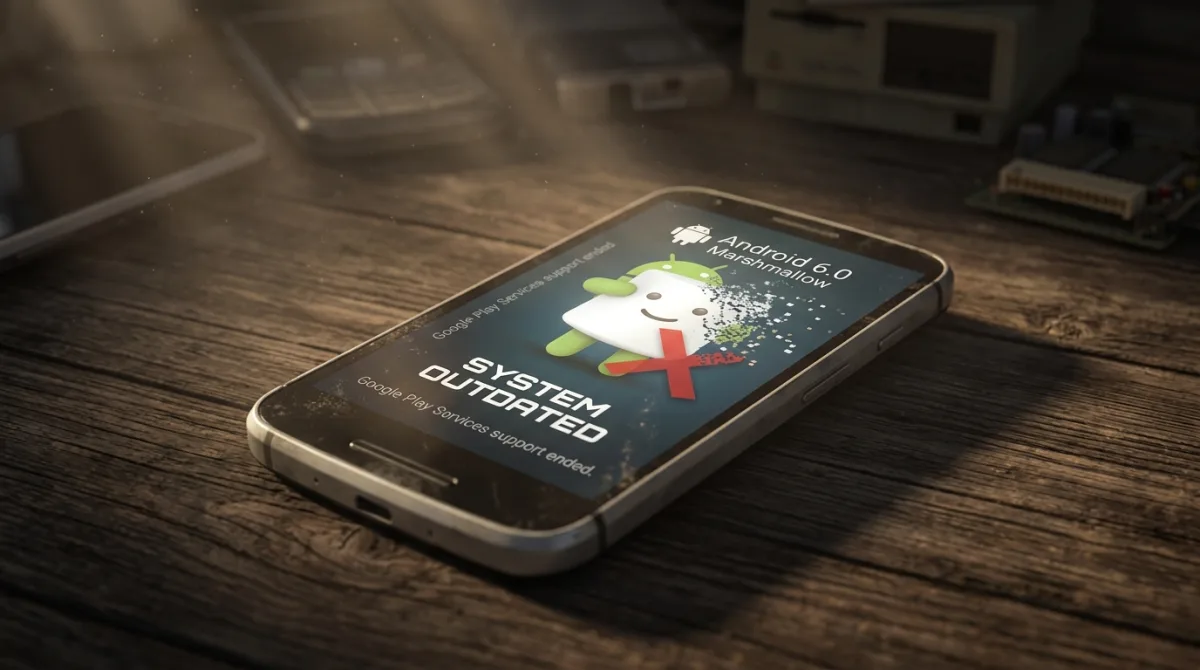
Google has officially pulled the plug on Google Play services for Android 6.0 Marshmallow, marking the end of an era for one of the most enduring operating systems in mobile history. Devices must now run Android 7.0 or newer to access core Google functionalities. This quiet transition concludes a nearly 11-year support run for Marshmallow, making it the longest-supported Android version to date.
The shift was executed without a formal press release, but the evidence is clear across Google's documentation. As highlighted in a recent Reddit thread, the official Google support page has been updated to list Android 7.0+ as the baseline requirement. Archived snapshots from June confirm that Android 6.0 was still supported just weeks ago.
The ripple effects are already visible across the mobile app ecosystem. Earlier this month, the developers of the mobile game Art of War 3: Global Conflict issued a warning to players about the impending cutoff. Meanwhile, the native YouTube app now demands Android 10 and up, though users can still access the video platform via a compatible web browser. Interestingly, Gmail continues to function on Android 6.0+ for the time being.
What This Means for Legacy Device Owners
While there are a few workarounds to keep an Android 6.0 phone operational, staying on a deprecated operating system carries significant risks. Here is how the change impacts daily use:
- Core Functions Remain: Basic cellular operations, including voice calling and SMS texting, will continue to work normally.
- App Breakage: Applications that rely on Google Play services for location tracking, push notifications, or authentication will begin to fail.
- Security Vulnerabilities: Without the latest Play services updates, devices will no longer receive critical security patches, leaving personal data highly susceptible to cybercriminals and unpatched exploits.
The Hidden Success of Modular Updates
Marshmallow surviving for 11 years is not just a fun trivia fact; it is a testament to Google's brilliant strategy of decoupling Play services from core OS updates. Back in 2015, Android fragmentation was at its peak, and carriers routinely blocked system updates. By shifting critical APIs and security frameworks into Play services, Google bypassed the carriers entirely, keeping millions of phones viable for a decade.
Today, the industry has shifted toward massive 7-year full OS update promises, as seen with modern Pixel and Galaxy devices. However, the retirement of Android 6.0 serves as a reminder that even the most resilient software lifecycles must eventually end to make way for modern encryption standards and hardware requirements.
