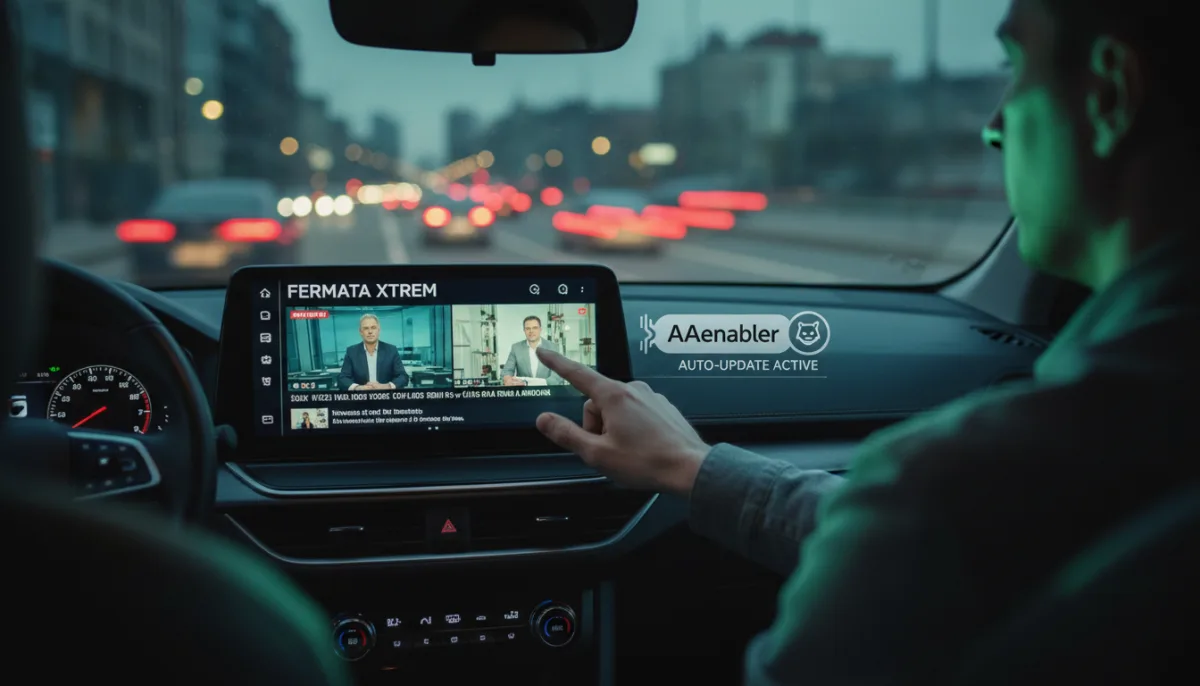
Fermata Xtream, the popular application for streaming live TV on Android Auto, has officially returned with a completely rewritten v1.0.0 update. After announcing a hiatus in June due to the limitations of the original code, the developer has released a new version built entirely from scratch. This overhaul delivers 100% new code designed specifically to resolve previous speed and performance bottlenecks, allowing users to watch live broadcasts without the lag that plagued older builds.
According to the developer, the decision to walk away earlier this year stemmed from the realization that optimizing the legacy codebase was impossible. By rewriting the entire foundation, the app now runs significantly faster while keeping the user interface nearly identical to what long-time users expect. The package name remains unchanged, ensuring a seamless transition, and previous donor licenses are fully valid for this new release.
How to Install and Manage Auto-Updates
Because Google enforces strict limitations on media apps in vehicles, managing updates requires a specific sideloading approach. The developer has introduced a new auto-update mechanism linked directly to GitHub, but it requires a specific installation method to function correctly.
- Use AAenabler for Updates: The app will now automatically update when a new release is pushed to GitHub, but this feature only works if the app is installed via AAenabler.
- Play Store Limitations: Installations routed through Play Store links will not auto-update. The developer advises users to disable auto-updates in the settings for these versions, or leave them enabled solely to receive notifications when a new link is ready.
- Split Repositories: The project is now divided into three distinct GitHub repositories for easier management: the free version, the premium version, and a dedicated repository for AAenabler with Shizuku support.
The Sideloading Shift in Auto Infotainment
This complete rewrite of Fermata Xtream highlights a growing trend among Android Auto developers who are bypassing official distribution channels to deliver unrestricted features. Google strictly limits video playback on dashboard displays for safety reasons, forcing developers of live TV and video apps to rely on tools like AAenabler and Shizuku. By splitting the repositories and building a custom GitHub-based auto-update pipeline, the developer is effectively creating an independent ecosystem outside of Google's control.
For users, this means a slightly more complex initial setup, but it guarantees long-term access to live TV streaming without the risk of sudden Play Store takedowns. The move to a 100% new codebase also suggests that the developer is preparing the app for future Android Auto updates, ensuring that performance remains stable even as Google tightens its in-car software restrictions.