Electric vehicle adoption has officially crossed a massive threshold, with global EV sales surpassing 20 million units in 2025. While the United States struggles with policy shifts and stagnant growth, markets across Europe, China, and emerging economies are rapidly accelerating their transition to electric mobility.
According to the latest data from the International Energy Agency, electric cars now represent roughly one-quarter of all new vehicles sold worldwide. Despite geopolitical tensions and shifting subsidy programs, the economic advantages of electrification are driving unprecedented demand that is expected to climb even higher in 2026.
Europe and China Dominate the Global Market
Europe posted the strongest regional growth in 2025, with electric car sales jumping more than 30%. EVs now account for 28% of all new car sales across the continent. Tighter European Union CO2 emissions standards forced automakers to expand their electric lineups, while soaring fuel prices linked to the Middle East energy crisis highlighted the dramatically lower running costs of EVs, with annual fuel savings increasing by 35%.
However, no market shapes the global landscape quite like China. Electric vehicles represented nearly 55% of all new car sales in the country during 2025, and preliminary 2026 data shows that figure exceeding 60% in recent months. China accounted for nearly 75% of global EV production and exported a record 2.5 million units overseas.
Affordability remains China's ultimate weapon. More than two-thirds of EVs sold in China are now cheaper than their gasoline-powered counterparts. Brands like BYD are reshaping global competition, while battery giant CATL continues to dominate the supply chain, providing roughly 80% of the batteries used in China's booming electric truck market.
Emerging Markets Surge While the U.S. Lags
One of the biggest surprises of 2025 was the explosive EV growth in developing economies. Sales in Southeast Asia more than doubled to reach a 20% market share, led by Thailand, Indonesia, and Viet Nam. Meanwhile, Latin American markets, driven by Brazil and Mexico, surged by 75%, disproving the assumption that electric vehicles are too expensive for emerging economies.
In stark contrast, the United States is increasingly looking like an industry outlier. EV market share remained below 10% in 2025, crippled by the rollback of tax credits and strict restrictions on Chinese automakers. This stagnation raises the stakes considerably for American startups like Rivian and Lucid Motors.
Legacy automakers are also feeling the pressure. While companies currently benefit from profitable gasoline and hybrid sales, delaying EV investments risks long-term competitiveness. Honda has already drawn industry criticism after reportedly canceling several EV projects, a move analysts view as strategically dangerous.
Electric Trucks and Software-Defined Vehicles
The electrification trend has aggressively expanded beyond passenger cars. Global electric truck sales more than doubled in 2025, capturing 9% of the worldwide market. Although upfront costs remain high, falling battery prices are rapidly improving total ownership economics, with Europe expected to reach cost parity between electric and diesel trucks by 2030.
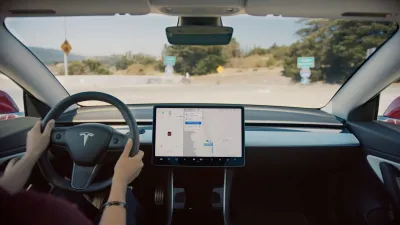
Simultaneously, the industry is shifting toward software-defined vehicles. Pioneered by companies like Tesla and BYD, these highly connected EVs rely on centralized computing, over-the-air updates, and AI-powered driver assistance. This technological foundation has already enabled autonomous taxi services to operate commercially in more than 20 cities globally.
Beyond technology, EVs have become a critical energy security tool. In 2025 alone, global EV adoption displaced an estimated 1.7 million barrels of oil consumption per day. For oil-importing nations, electrification is no longer just a climate strategy; it is a vital economic defense mechanism.
The Strategic Trap of Short-Term Profits
The narrative that consumer demand for electric vehicles is collapsing is a uniquely American illusion that ignores the reality of the global market. The data clearly shows that legacy automakers delaying their EV transitions to milk short-term profits from hybrid and internal combustion vehicles are walking into a strategic trap.
By the time the U.S. market normalizes its policies, Chinese brands will have achieved insurmountable economies of scale in battery manufacturing and software integration. The fact that emerging markets like Southeast Asia and Latin America are adopting EVs at breakneck speeds proves that affordability, not infrastructure, is the true catalyst.
Automakers that scale back their electrification efforts today are losing critical institutional knowledge in battery development and software architecture. In an industry rapidly pivoting to software-defined platforms, this hesitation will turn today's cautious financial strategy into tomorrow's existential crisis.