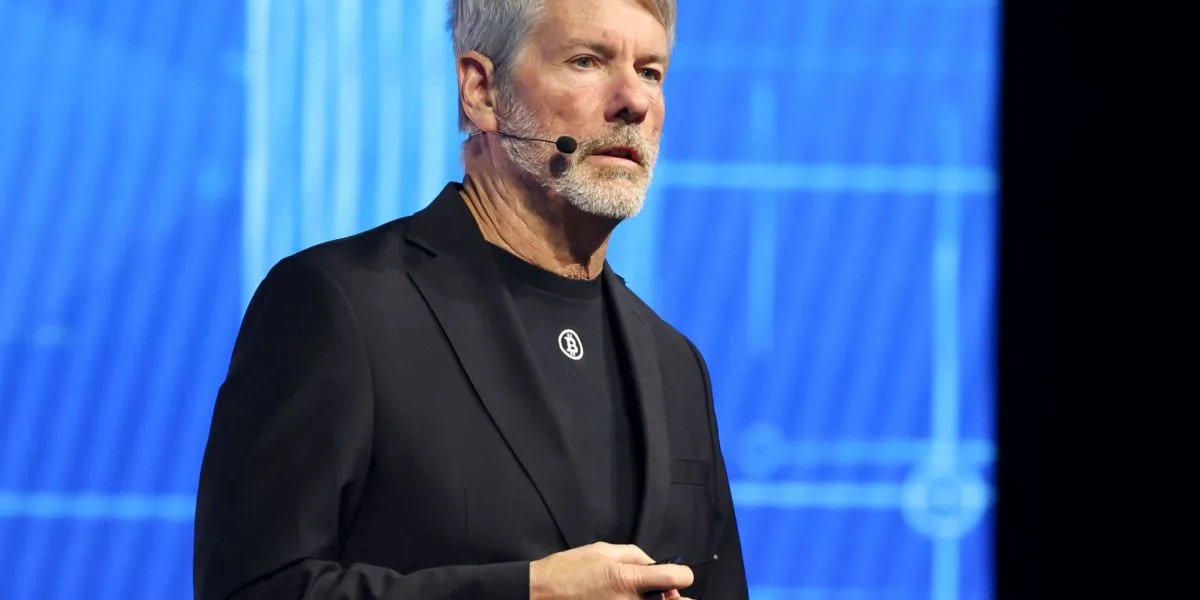
Elon Musk has boldly predicted that artificial intelligence will eventually make money irrelevant, ushering in an era of "universal high income" where goods and services are infinitely abundant. However, crypto billionaire and MicroStrategy founder Michael Saylor strongly disagrees, arguing that human psychology and the relentless pursuit of status will ensure money remains a permanent fixture in society.
Speaking on the Diary of a CEO podcast, Saylor challenged Musk's utopian vision of a post-scarcity economy. While the 61-year-old executive acknowledged that AI will likely make basic necessities dramatically cheaper or even free, he emphasized that abundance at the bottom only raises the baseline for luxury at the top. As basic needs are met, Saylor explained, consumer spending will inevitably shift toward scarce assets that signal wealth.
Everybody’s always going to have a reason to want something more because we’re status-oriented animals. That’s the cynical way to look at it.
- Michael Saylor, MicroStrategy
Saylor pointed to history as proof that technological leaps do not eliminate commerce. He noted that modern conveniences like clean water, advanced medicine, and dental care were once inaccessible even to royalty like Henry VII. Yet, this widespread abundance did not erase the desire for premium experiences. "Everybody gets a car, but how many people get a Porsche?" Saylor asked, illustrating how humanity consistently invents new "trophy assets" to replace democratized goods.
Despite the disagreement on the fate of currency, Silicon Valley leaders largely align on AI's potential to create unprecedented wealth. Google DeepMind Chairman Demis Hassabis recently predicted on a Fortune podcast that AI will trigger a "new renaissance" within 10 to 15 years, driving breakthroughs in energy and medicine. Similarly, venture capitalist Vinod Khosla has warned that while AI will boost average incomes, massive job displacement will require government intervention, suggesting that universal basic income might be the ultimate equalizer.
The Economics of Artificial Scarcity
The debate between Musk and Saylor exposes a fundamental divide in how Silicon Valley views the endgame of artificial intelligence. Musk envisions a Star Trek-style utopia where technology solves the supply side of economics entirely. However, Saylor’s pragmatic view aligns more closely with historical market behavior: technology doesn't destroy markets; it simply moves them up the value chain.
If AI commoditizes intelligence, coding, and basic services, the future economy won't eliminate money - it will just redirect it toward things AI cannot easily replicate. This includes physical real estate, exclusive human experiences, and verifiable digital scarcity, which perfectly explains Saylor's massive corporate bet on Bitcoin. As Khosla rightly points out, the transition period will be turbulent. The real challenge isn't whether money will exist, but how the middle class will earn it when their primary economic output - cognitive labor - is available for free.