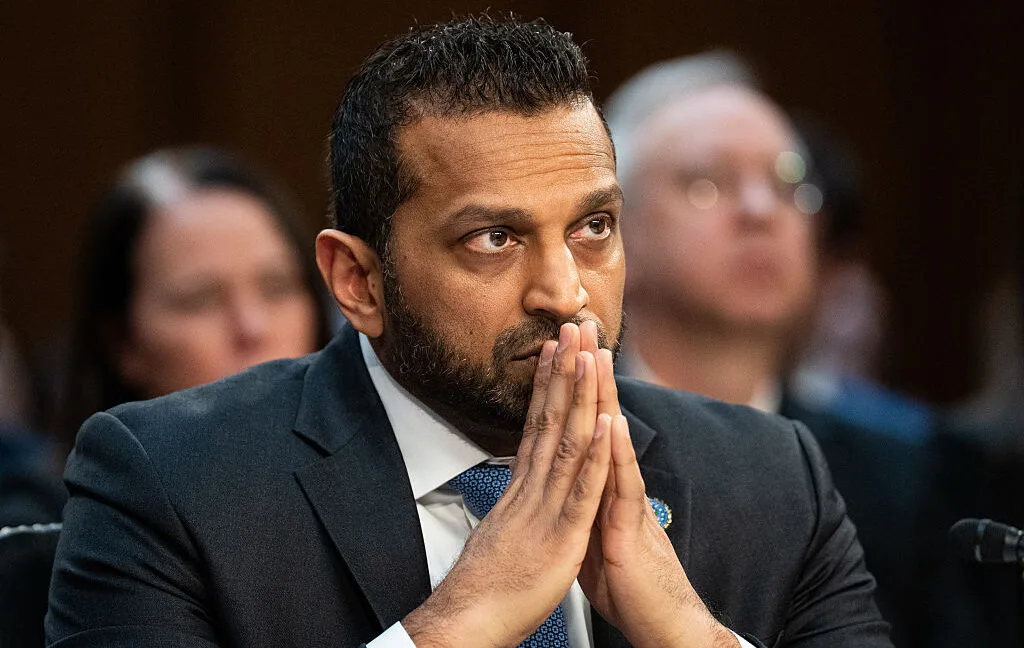
The personal email account of FBI Director Kash Patel has been successfully breached by an Iran-linked cyberespionage group known as the Handala Hack Team. The Department of Justice confirmed the cyberattack, which comes as direct retaliation after Patel publicly vowed to dismantle the group's infrastructure and offered a $10 million bounty for their capture. For cybersecurity professionals and government officials, this incident serves as a stark reminder of the severe operational security risks associated with personal accounts, demonstrating how state-sponsored actors are increasingly targeting the private digital lives of high-ranking individuals.
According to confirmation provided to Reuters by the DOJ, the compromised Gmail address matches an account previously linked to Patel in historical data breaches preserved by the dark web intelligence firm District 4 Labs. While the DOJ suggested the leaked emails appear authentic, the full extent of the data grab remains unverified. The Handala Hack Team immediately weaponized the breach, publishing taunting photographs of Patel from between 2010 and 2019, including images of him sniffing cigars and holding a jug of rum.
The cyberattack is a direct response to recent aggressive law enforcement actions taken by the United States. Earlier this month, the DOJ disrupted several websites operated by the hacker group. In an official press release, Patel issued a stern warning, stating that the FBI would hunt down every actor behind these cowardly death threats and cyberattacks.
In response to the domain seizures and the $10 million reward, the Handala Hack Team escalated their psychological operations. The group published a statement declaring that the world was witnessing the collapse of America's security legends. They further claimed that all personal and confidential information belonging to Kash Patel, including conversations and allegedly classified files, is now available for public download, though independent researchers have not verified the presence of classified government data.
Geopolitical Escalation and Cyber Warfare
Western cybersecurity researchers widely believe that the Handala Hack Team operates as one of several personas utilized by Iranian government cyberintelligence units. The group explicitly positions itself as a pro-Palestinian vigilante collective and loyal followers of the late Supreme Leader Ayatollah Ali Khamenei. This targeted digital strike follows a major military operation by the US and Israel that resulted in Khamenei's death, signaling a dangerous convergence of kinetic military action and retaliatory cyber warfare.
The hackers have utilized this breach to project power and undermine public confidence in US federal law enforcement. By claiming that the impenetrable systems of the FBI were brought to their knees within hours, the group is engaging in classic cyber-enabled psychological operations designed to embarrass US leadership on a global stage. As of this writing, the FBI has not issued a formal technical post-mortem regarding the specific vector used to compromise the personal Gmail account.
My Take
The breach of FBI Director Kash Patel’s personal email highlights a persistent and glaring vulnerability in government operational security: the soft underbelly of personal digital infrastructure. While enterprise government networks are fortified with Zero Trust architectures and hardware security keys, personal Gmail accounts often lack the same rigorous enforcement. The fact that the Handala Hack Team could successfully compromise the FBI Director's personal account immediately after a $10 million bounty was placed on their heads is a massive public relations victory for Iranian cyberintelligence.
This incident underscores a strategic shift in state-sponsored cyber warfare. Instead of solely attacking hardened institutional perimeters, advanced persistent threats (APTs) are increasingly focusing on the personal attack surfaces of key decision-makers to execute psychological operations and doxxing campaigns. The release of decade-old personal photographs is designed specifically to humiliate and degrade the authority of the individual leading the charge against them.
Moving forward, federal agencies must mandate enterprise-grade security protocols - such as mandatory physical FIDO2 security keys and advanced threat protection - for the personal accounts of high-ranking officials. If the intelligence community does not bridge the gap between professional and personal digital security, adversarial nations will continue to exploit these blind spots to undermine American law enforcement credibility on the global stage.
This article was written by AI from reporting by arstechnica.com.