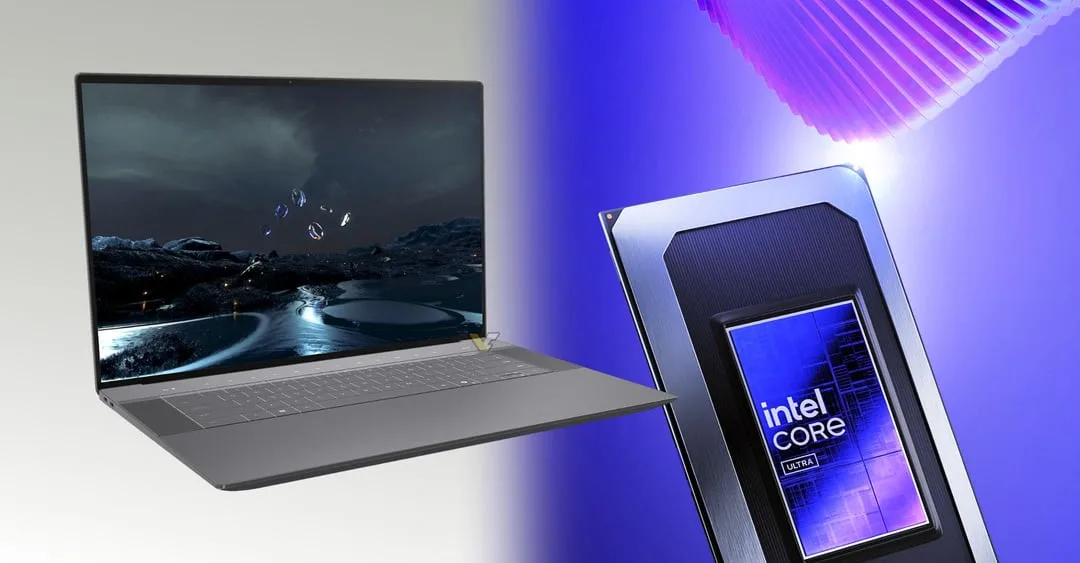
The new Dell XPS 16 battery life results have shattered expectations, setting a new benchmark for laptop efficiency. Powered by Intel's latest Panther Lake architecture and a groundbreaking 1-120Hz screen from LG Display, this configuration has officially outperformed Apple and Qualcomm in standardized endurance tests.
For mobile professionals and power users who demand all-day reliability without carrying a charger, this development represents a massive leap forward. It proves that Windows laptops can finally deliver multi-day battery life without relying on massive, heavy battery packs or sacrificing display fluidity.
According to recent testing by Notebookcheck, the Dell XPS 16 equipped with an Intel Core Ultra 325 processor achieved nearly 27 hours of continuous Wi-Fi web browsing. Remarkably, the system managed this feat with a relatively modest 70 watt-hour (Wh) battery, drawing as little as 1.5 watts while idle. This makes it the most efficient laptop ever evaluated in the publication's Wi-Fi test history, which dates back to 2014.
The results place this specific Dell configuration ahead of every Apple MacBook and MacBook Pro tested to date. In fact, only two laptops have ever recorded longer times in this specific benchmark.
One utilized a Qualcomm Snapdragon X Plus chip paired with a larger 84Wh battery and a standard 60Hz screen. The other relied on a massive dual-battery setup totaling 149Wh, which was also limited to a 60Hz refresh rate.
To achieve these record-breaking numbers, buyers must select a very specific hardware configuration. The maximum efficiency is only possible on the model featuring a 1920 x 1200 resolution, non-touch LCD panel. Opting for the higher-resolution tandem OLED screen will significantly reduce overall runtime, and real-world workday usage involving heavier applications will naturally yield lower results than the 27-hour mark.
The secret weapon behind this endurance is LG Display's new panel technology, branded as Oxide 1Hz. LG has become the first manufacturer globally to mass-produce a 1-120Hz variable refresh rate LCD for laptops, allowing the screen to drastically reduce power consumption during static tasks. The company plans to introduce an OLED version of this technology in 2027.
Meanwhile, Intel is expanding its display partnerships to push efficiency further. Last October, the chipmaker announced collaborations with Chinese panel maker BOE to develop similar 1Hz-capable computer screens.
While revolutionary for laptops, variable refresh rate technology has been a staple in mobile devices for years. The 2019 Apple Watch Series 5 utilized a 1-60Hz screen to preserve battery life. Similarly, smartphones like the 2021 Samsung Galaxy S21 Ultra, the OnePlus 9 Pro, and Apple's 2022 iPhone Pro models adopted 1-120Hz capabilities to balance smooth scrolling with power efficiency.
My Take
The record-breaking performance of the Dell XPS 16 signals a critical turning point in the Windows versus Mac efficiency war. By combining Intel's Panther Lake architecture with LG Display's Oxide 1Hz technology, PC manufacturers are finally addressing the idle power draw issues that have long plagued x86 systems. The fact that a 70Wh battery can outlast larger 84Wh and 149Wh configurations proves that intelligent power management and variable refresh rates are far more effective than simply increasing battery capacity.
Looking ahead, the mass production of 1-120Hz laptop displays will likely become the new standard for premium ultrabooks by 2027, especially once LG introduces the OLED variants. For consumers, the immediate takeaway is clear: if battery life is your absolute priority, the base 1920 x 1200 LCD configuration of the XPS 16 is currently the undisputed champion. However, the industry's rapid adoption of this display technology means we will soon see these extreme efficiency gains across a much wider range of devices and price points.
This article was written by AI from reporting by theverge.com.