Finding an educational game that actually keeps kids engaged without feeling like a digital textbook is a constant struggle for parents. This Chemistry Creatures review reveals a rare exception: an augmented reality (AR) experience by UK-based developer Limbotech that seamlessly blends physical cards with a mobile app to make chemical reactions genuinely fun. Available on iOS and Android, this game turns the periodic table into a puzzle-solving adventure.
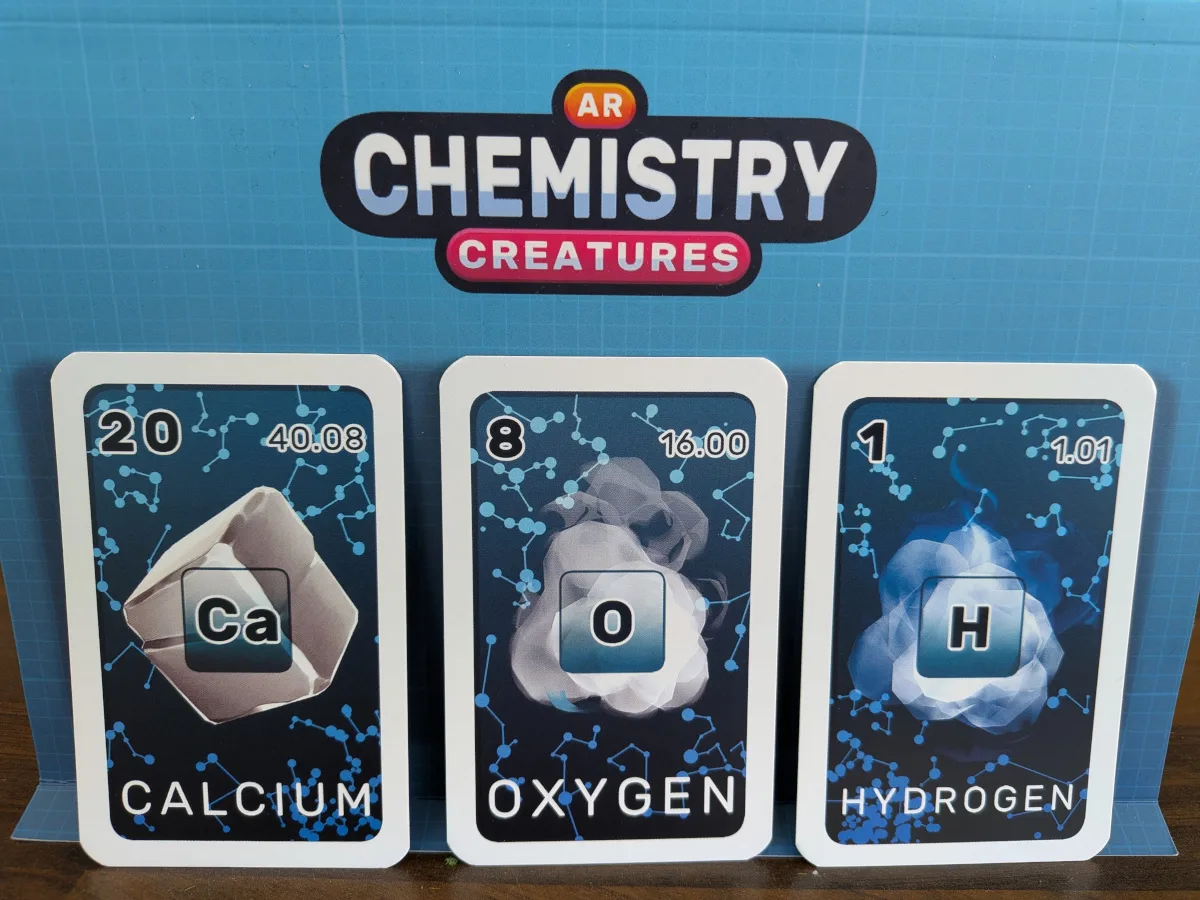
The core package relies on a physical deck of cards featuring the first 20 elements of the periodic table. Players use these cards in tandem with the mobile app to complete various missions, helping the digital creatures overcome obstacles by crafting the correct chemical compounds. It is designed for children aged seven and up, though younger kids can easily enjoy it with a bit of parental guidance.
How the Augmented Reality Gameplay Works
Before diving into the missions, the AR features alone offer a compelling experience. When you hold your phone over the physical cards, the app's default setting displays a vibrant animation for the specific element. You can scan multiple cards simultaneously, which is a mandatory mechanic for solving the game's puzzles.
By pressing a tab in the bottom right corner of the screen, the view switches to a Top Trumps-style datacard. Another tap reveals a detailed Bohr electron shell animation. This interactive visualization allows players to explore the atomic structure of elements in a highly engaging way, ensuring that the educational foundation remains strong even outside the main campaign.
Basic vs. Expert Modes: Crafting Compounds
The game features 100 replayable missions, offering hours of content. Each mission presents a problem - such as a creature needing to extinguish a fire or grow stronger - and provides a selection of elements to use. Crucially, the game includes "red herring" elements to test the player's critical thinking, ensuring that not every provided card is part of the solution.
Players can tackle these challenges in two distinct difficulties:
- Basic Mode: Players only need to select the correct elements. For example, combining Water and Oxygen prompts the game to ask if you want to create water (H2O) or hydrogen peroxide (H2O2).
- Expert Mode: This mode significantly increases the challenge by requiring players to specify the exact molecule ratios. Knowing you need Aluminum and Sulfur is not enough; you must know the precise quantities of each atom.
If a player struggles, they can reveal up to three hints per mission. Creating an incorrect compound reduces the mission's three-star rating, encouraging players to learn from their mistakes and try again.
The Educational Value Nobody Is Talking About
What makes Chemistry Creatures stand out in a crowded market of underwhelming "edutainment" apps is its refusal to compromise on difficulty. The game is surprisingly challenging, which drastically increases its longevity. For instance, solving a battery-related puzzle requires knowing that Lithium Sulfide is an active component - a fact that forces players to consult hints and actively learn valence chemistry rather than just guessing blindly.
Based on the strength of this initial 20-card deck, the potential for expansion is massive. Limbotech could easily introduce advanced modules covering organic chemistry or radioactive decay for older students preparing for high school exams. By gamifying the trial-and-error process of chemical reactions, Chemistry Creatures proves that complex science can be highly accessible when paired with slick AR technology and thoughtful puzzle design.