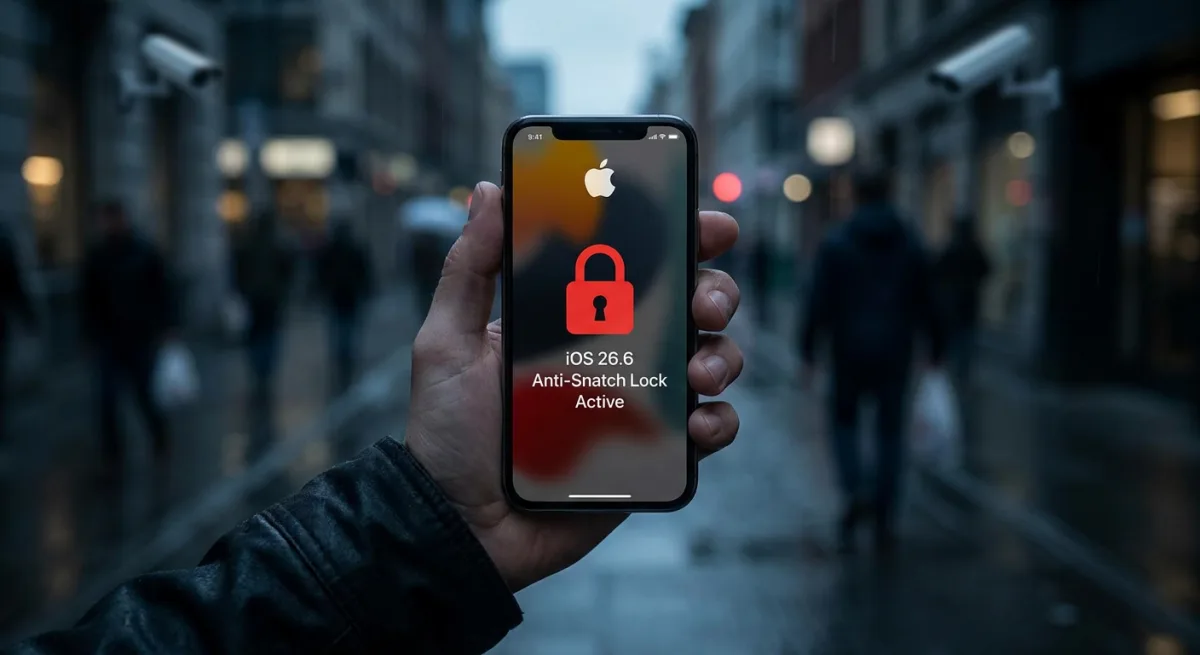
Apple has officially released the second public betas for iOS 26.6, iPadOS 26.6, and macOS Tahoe 26.6, introducing early signs of a highly anticipated anti-snatching security feature. This new mechanism is designed to instantly lock an iPhone if it detects being forcefully grabbed from a user's hand, addressing a growing trend in physical device theft. The software arrives just one day after the developer betas and three weeks after the initial public testing phase began.
Alongside the mobile and desktop updates, Apple also seeded the second public betas for watchOS 26.6 and tvOS 26.6. Beyond the anti-snatching code, iOS 26.6 includes a niche alert that warns users when they have blocked too many contacts, though the threshold is set in the thousands. Otherwise, these updates focus heavily on under-the-hood bug fixes and security patches as Apple wraps up the "26" software cycle ahead of the iOS 27 and macOS Golden Gate launches this fall.
How to Install the iOS 26.6 Public Beta
- Register your Apple Account on the official Apple Beta Software Program website.
- Open the Settings app on your iPhone or iPad.
- Navigate to General, then tap on Software Update.
- Select the public beta option to download and install the latest release over-the-air.
For users not on the beta track, Apple recently rolled out iOS 26.5.1 to the general public. This minor update specifically targets and resolves a known charging issue affecting the newly released iPhone Air and the entire iPhone 17 lineup.
Physical Theft Deterrence Takes Center Stage
The development of an anti-snatching feature in iOS 26.6 represents a significant pivot in Apple's security strategy. While previous deterrents like Activation Lock and Stolen Device Protection focused on preventing thieves from accessing data or resetting the device after the fact, this new mechanism acts in real-time. By utilizing the iPhone's onboard sensors to detect the specific physical motion of a snatch-and-grab, Apple is attempting to neutralize the value of the hardware the exact second a crime occurs.
This proactive approach is crucial as street-level smartphone thefts increasingly target unlocked devices in active use. If this feature ships in the final release, it could drastically reduce the incentive for physical device theft, bridging the gap between digital encryption and physical security.