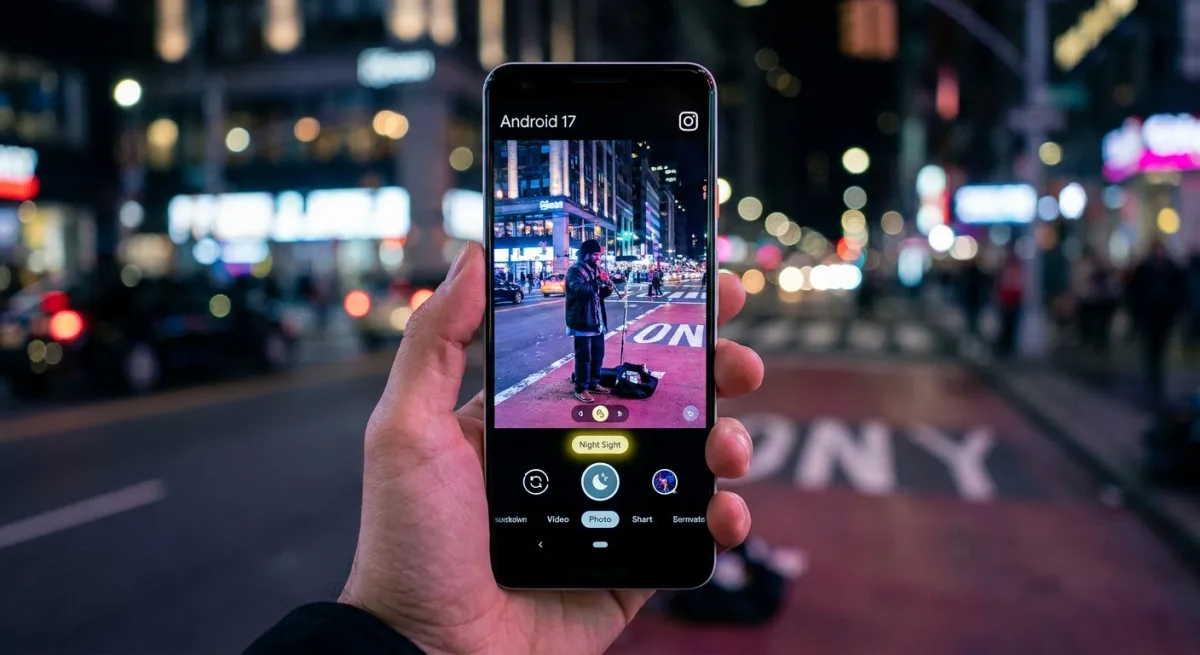
The upcoming Android 17 update is finally fixing the notorious Instagram camera quality gap that has plagued users for years. Historically, Android users have faced a frustrating reality: flagship phones with massive 200-megapixel sensors capture stunning photos in the native camera app, only to produce compressed, low-quality uploads on social media. Google is now addressing this disparity at the platform level through an announced a partnership with Meta, optimizing how Instagram handles media on supported Android flagships.
This update specifically targets the creator economy and everyday users who rely heavily on social platforms. Rather than forcing developers to navigate hundreds of different processing pipelines, Android 17 provides Instagram with a better-supported path directly into the operating system's camera and media stack. The goal is to ensure that premium hardware no longer looks cheap when broadcasting to the world.
New Instagram Camera Features in Android 17
By granting deeper system access, Google is enabling several computational photography features to work natively inside the social app. These improvements mean creators will no longer have to choose between convenience and quality.
- Night Sight Integration: Instagram's in-app camera can now utilize Google's advanced low-light processing on supported devices, drastically improving nighttime shots.
- Native Video Stabilization: Built-in stabilization will function directly within the Instagram camera, eliminating the shaky, found-footage look from walking shots and pans.
- Ultra HDR Support: Flagship devices running Android 17 will get full capture and playback support for Ultra HDR directly on the platform.
Android-Exclusive AI Tools for Instagram Edits
The improvements extend beyond the initial capture and into the post-production pipeline. Instagram's Edits app, which launched in early 2025 as a direct competitor to CapCut, is receiving a suite of on-device AI features that are entirely exclusive to Android.
- Smart Enhance: A one-tap upscaling button that instantly improves the resolution and clarity of uploaded media.
- Sound Separation: An on-device tool that isolates the creator's voice from wind and background noise, saving vloggers from having to scrap takes due to poor audio conditions.
- Screen Reactions: A feature exclusive to Pixel devices that allows users to record their screen and front-facing camera simultaneously.
The Samsung Strategy Goes Mainstream
While Google is taking a victory lap with Android 17, Samsung actually wrote the playbook for this integration. Samsung forced the issue during the Galaxy S24 launch in 2024 by partnering with Instagram and Snapchat to support native HDR uploads. By proving that social networks would cooperate if a manufacturer applied enough pressure, Samsung laid the groundwork that Google is now scaling across the broader Android ecosystem.
Google is suddenly catering to this specific workflow because the creator economy directly drives mainstream smartphone perception. In markets like the US, where iPhone ownership remains dominant among teens, Android has a youth-perception problem. With the average Gen Z user spending more than four hours a day on social media, compressed uploads actively harm the brand's reputation. By giving influencers tools that work flawlessly on Android, Google is turning them into passive billboards, proving that if the hardware is good enough for a working creator, it is good enough for the everyday buyer.
This article was written by AI from reporting by androidpolice.com.