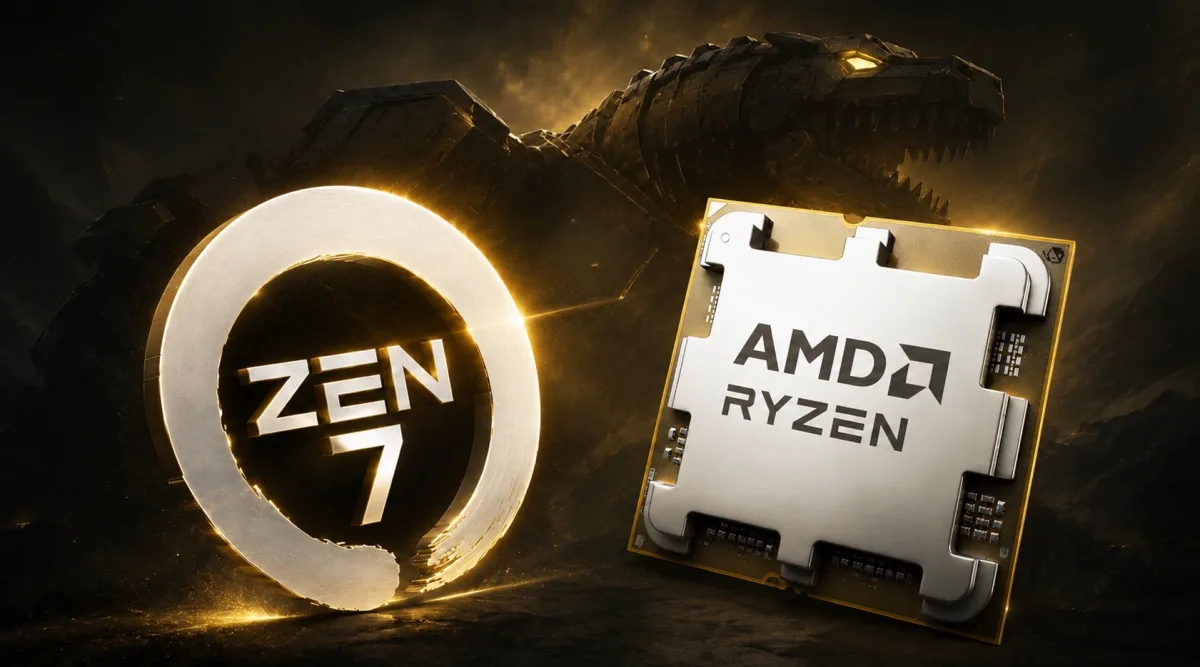
AMD is preparing to push its AM5 desktop platform to its absolute limits, with the upcoming AMD Ryzen Zen 7 architecture expected to be the final processor family for the socket. Following a recently extended roadmap that guarantees AM5 support through 2029 and beyond, PC builders can expect at least two more major architectural leaps before a mandatory motherboard upgrade.
For PC enthusiasts and system integrators, this extended lifespan solidifies AMD's competitive advantage in platform longevity, mirroring the legendary run of the AM4 socket. Before Zen 7 arrives, AMD will introduce its Zen 6 "Olympic Ridge" family, which promises upgrades to core counts, clock speeds, and cache on an improved process node.
Zen 7 is currently targeting a 2028 release for servers, meaning desktop Ryzen variants will likely land in early 2029. These processors are expected to utilize TSMC's A16 or A14 process nodes and introduce AI Computex Extensions (ACE).
We have confidence that we'll be bringing new products and architectures into the AM5 platform through 2029.
- David McAfee, AMD
The decision to keep Zen 7 on AM5 heavily implies it will retain DDR5 memory support. AMD's 7th Gen EPYC "Florence" processors remain on the SP7 and SP8 platforms, which utilize DDR5. Instead of DDR6, AMD is likely referring to faster MRDIMM (17,600 MT/s) and LPDDR5X (12 GT/s+) technologies as its next-generation memory standards.
The company has historically stated it only changes sockets when a significant leap in memory or I/O technology necessitates it. While PCIe 6.0 capabilities have arrived on 6th Gen EPYC CPUs, consumer benefits remain theoretical, as Gen6 client SSDs are still years away.
The Road to AM6 and Zen 8
Looking beyond 2030, the Zen 8 architecture will necessitate the transition to the AM6 platform. This new socket will introduce native support for DDR6 memory and PCIe 6.0, aligning with the 8th Generation EPYC "Ravenna" family's shift to newer server platforms.
| Processor Generation | Architecture | Process | Platform | Memory Support | Launch |
|---|---|---|---|---|---|
| AMD Ryzen 7000 | Zen 4 "Raphael" | 5nm | AM5 | DDR5-5200 | 2022 |
| AMD Ryzen 9000 | Zen 5 "Granite Ridge" | 4nm | AM5 | DDR5-6000 | 2024 |
| AMD Ryzen 10K (TBA) | Zen 6 "Olympic Ridge" | 2nm | AM5 | DDR5 (TBA) | 1H 2027 |
| AMD Ryzen 20K (TBA) | Zen 7 "TBD" | 1.4nm? | AM5 | DDR5 (TBA) | 1H 2029? |
| AMD Ryzen 30K (TBA) | Zen 8 "TBD" | 1.2nm? | AM6 | DDR6 (TBD) | 2030+ |
The Socket Strategy That Intel Cannot Match
AMD’s commitment to supporting the AM5 platform through 2029 is not just a technical roadmap; it is a highly effective customer retention strategy. By ensuring that a motherboard purchased in 2022 can potentially house a cutting-edge Zen 7 processor in 2029, AMD drastically lowers the total cost of ownership for PC gamers and workstation users. This starkly contrasts with Intel’s historical cadence of forcing motherboard upgrades every two generations.
Furthermore, delaying the AM6 and DDR6 transition until Zen 8 is a calculated move. It prevents early adopters from paying the exorbitant "early tax" on next-generation memory before the manufacturing ecosystem matures. By waiting until 2030+, AMD ensures that when AM6 does launch, it delivers a tangible performance leap rather than just a spec-sheet update.