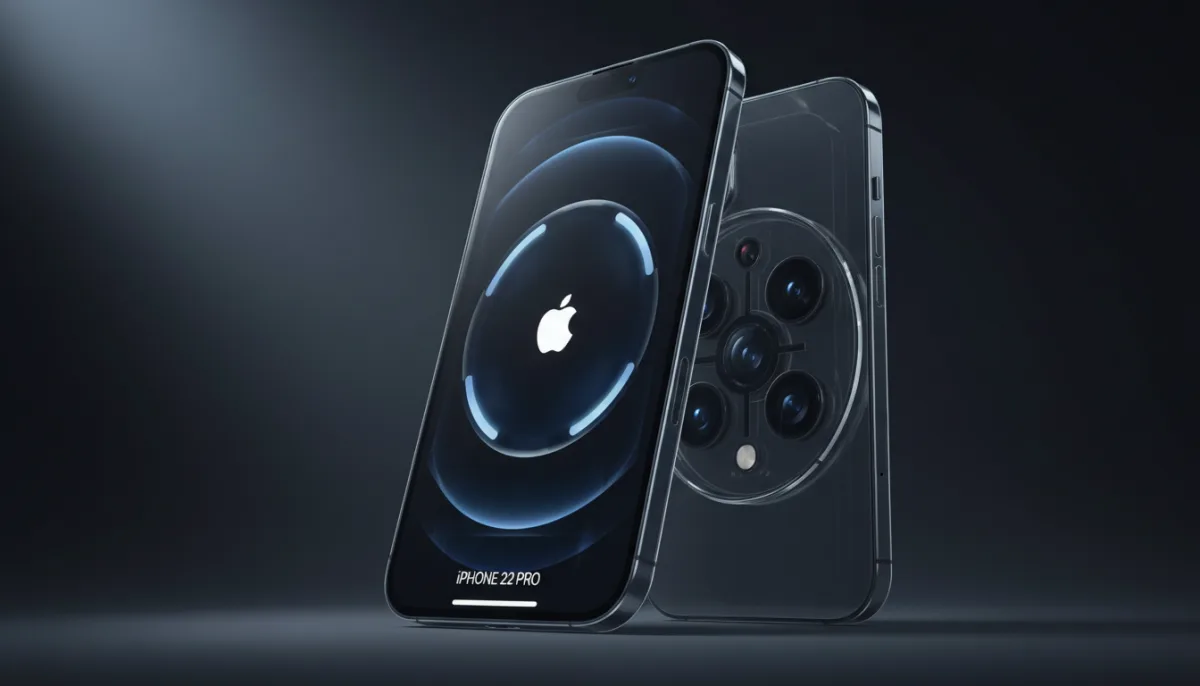
Apple's 2028 iPhone is already shaping up to be the polished realization of the radical redesign planned for the 2027 anniversary model. While the 20th-anniversary device will introduce a near-borderless display that curves around all four edges, early supply chain leaks indicate the 2028 iteration will resolve the inevitable first-generation compromises. For users currently eyeing the iPhone 18 Pro on a standard two-year upgrade cycle, this 2028 model represents their actual next device.
Understanding these early hardware shifts - from advanced display cathodes to 1.4-nanometer silicon - provides a clear roadmap of whether to upgrade now or hold out for the refined all-glass chassis. Apple's goal of moving the Face ID system beneath the display remains a priority, and the 2028 timeline offers the technological runway needed to achieve an uninterrupted screen.
Six Major Upgrades Coming to the 2028 iPhone
- Expect a refined curved-glass display using transparent indium zinc oxide cathodes.
This ensures less image distortion, more even brightness, and fewer heat issues at the curved edges compared to the magnesium-silver alloy planned for 2027, according to ETNews. - Anticipate a Hole-Punch Dynamic Island instead of a fully hidden system.
This enables Apple to continue shrinking the cutout, as DSCC's Ross Young notes under-display Face ID is unlikely to be ready for 2027, leaving 2028 as the candidate for a true cutout-free front. - Prepare for narrower bezels across the entire front panel.
This achieves a design closer to a true all-screen front, directly enabled by the switch to the more transparent cathode material. - Watch for the integration of Tandem OLED technology.
This delivers improved brightness, a longer lifespan, and better power efficiency by stacking two organic light-emitting layers, a method Apple already uses in the M4 iPad Pro. - Track the shift to the 1.4-nanometer "A22 Pro" chip built on TSMC's A14 node.
This guarantees up to 15% better performance than a 2nm chip, or the same performance with 30% lower power draw, according to Bloomberg's Mark Gurman. - Look for a massive 200-megapixel periscope telephoto camera.
This allows photos to be cropped further or reproduced at larger sizes without a loss of quality, a feature corroborated by both Digital Chat Station and Morgan Stanley.
The Two-Year Upgrade Trap
The most critical takeaway from these early 2028 iPhone rumors isn't just the hardware itself, but what it signals about Apple's current release strategy. By pushing the true "perfected" all-glass, curved-edge design to 2028, Apple is effectively turning the highly anticipated 2027 anniversary model into a public beta test. The shift from magnesium-silver to indium zinc oxide cathodes explicitly acknowledges that the 2027 display will suffer from edge distortion and thermal inefficiencies.
For consumers, this creates a strategic dilemma. Buyers upgrading to the iPhone 18 Pro this year will naturally align with the 2028 release cycle, perfectly positioning them to skip the experimental 2027 model entirely. If TSMC successfully scales the 1.4-nanometer A14 node for the A22 Pro chip, the performance-per-watt leap will make the 2028 device the actual super-cycle upgrade, leaving the 20th-anniversary edition as a collector's item rather than a practical daily driver.