A new analysis of calcite crystals preserved inside a prehistoric bone has pushed the timeline of the Lingjing archaeological site back to 146,000 years ago. This 20,000-year revision places the creation of complex stone tools squarely in the middle of a severe ice age, upending the long-held archaeological assumption that human innovation primarily flourished during warm, abundant climate intervals.
Excavations in central China have yielded disc-shaped stone cores crafted by Homo juluensis, an early human relative possessing unusually large brains and traits shared with both European Neanderthals and archaic East Asian populations. Rather than randomly smashing rocks, these early humans treated the stone cores as three-dimensional objects. They designated specific sides as striking surfaces to control the angles required for producing sharp, functional flakes.
This was not casual flake production, but a technology that required planning, precision, and a deep understanding of stone properties and fracture mechanics.
- Yuchao Zhao, Field Museum
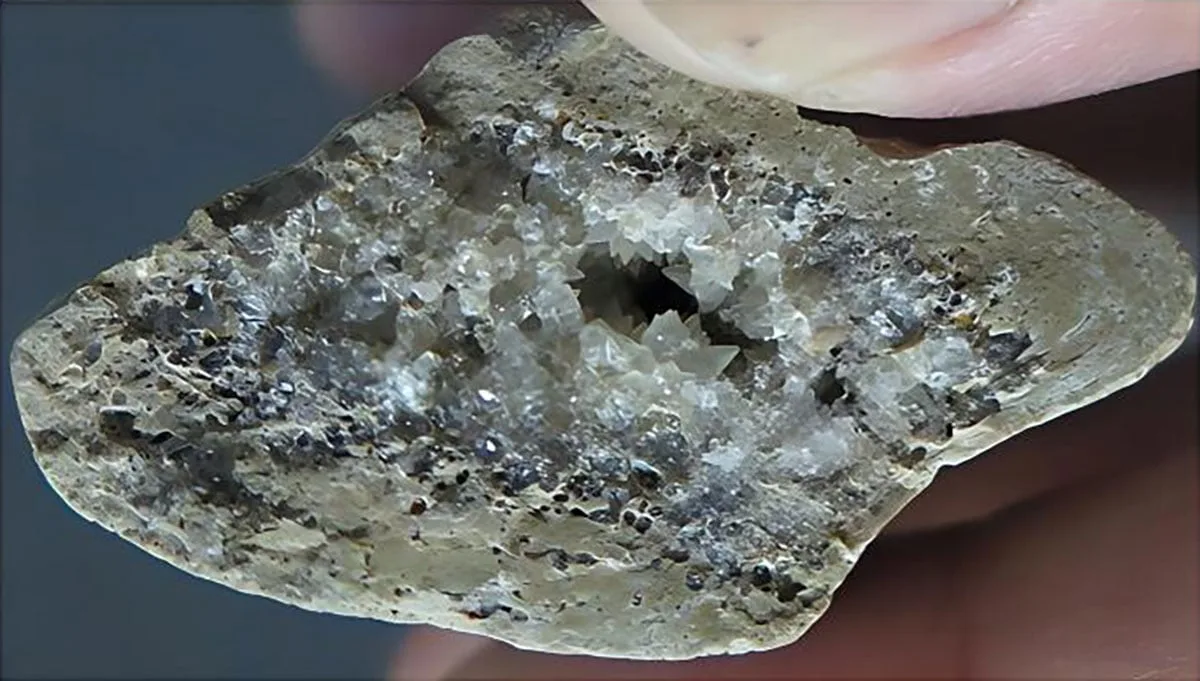
The timeline revision relied on a natural geological clock found alongside the stone artifacts. Researchers examined a rib from a deer-like animal butchered at the site, which contained sparkling calcite crystals. Because calcite traps trace amounts of uranium that slowly decay into thorium over time, measuring the ratio of these elements allowed scientists to pinpoint the 146,000-year age.
"Even though these tools are just a little bit older than we’d previously thought, the entire story is changed," Zhao explained, noting that the shift places the artifacts in a harsh glacial period rather than a warm interglacial one. The findings, published in the Journal of Human Evolution, challenge the outdated narrative that East Asian populations during the late Middle Pleistocene lagged behind their counterparts in western Eurasia and Africa in technological development.
Innovation Forged in Freezing Temperatures
The 20,000-year shift in the Lingjing timeline might seem minor on an evolutionary scale, but it fundamentally rewrites the environmental catalyst for human cognition. By moving the tool production from a warm interglacial period to a harsh glacial epoch, the data suggests that extreme climate stress - rather than environmental abundance - acted as the primary driver for advanced problem-solving in East Asia.
This aligns with a growing body of evidence across global archaeological sites indicating that scarcity forces technological leaps. For Homo juluensis, the necessity to maximize caloric intake from butchered animals in a freezing climate likely necessitated the precise fracture mechanics seen in their stone cores. Ultimately, this discovery dismantles the Eurocentric view of Middle Paleolithic development, proving that sophisticated cognitive adaptation was a global response to planetary climate shifts.
This article was written by AI from reporting by scitechdaily.com.