

Table of Contents
Revolutionary Non-Destructive Imaging Unlocks Martian Secrets
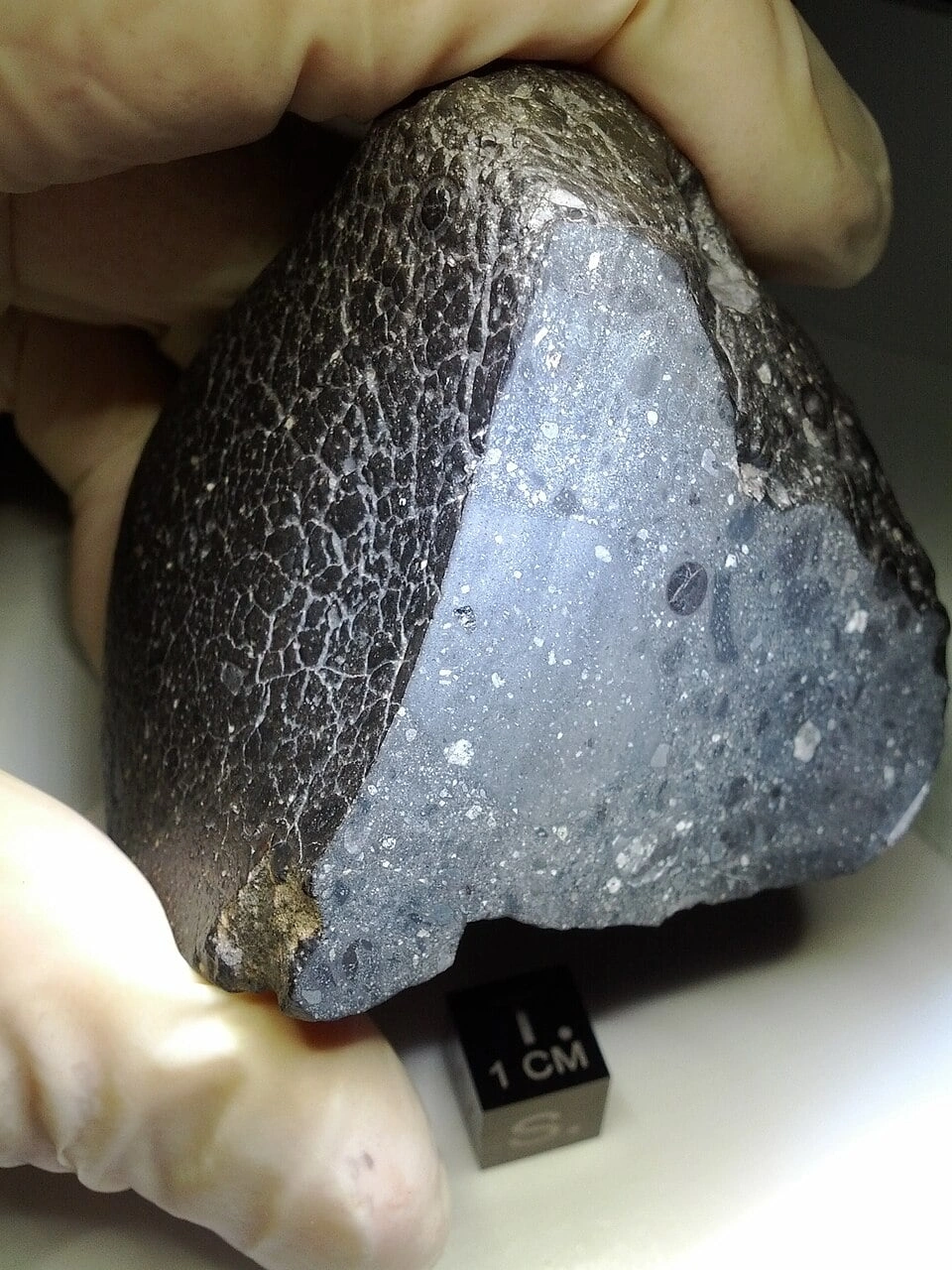
Scientists have employed cutting-edge neutron and X-ray tomography to peer inside the Miller Range 03346 (MIL 03346) nakhlite, a renowned Martian meteorite discovered in Antarctica in 2003. This 715-gram rock, weighing about 1.58 pounds, preserves evidence of water interaction from roughly 630 million years ago. The non-destructive scans revealed isolated patches of hydrous minerals, indicating that water likely originated from melted subsurface ice rather than a large-scale hydrothermal system.
The Power of Neutron Tomography in Planetary Science
Neutron tomography excels at detecting hydrogen-rich materials because neutrons interact strongly with hydrogen atoms, making hydrous phases visible in three dimensions without damaging the sample. Combined with X-ray tomography, which maps denser structures, researchers obtained detailed 3D images of the meteorite's interior. This approach allowed mapping of altered minerals like iddingsite, confirming their Martian origin through elevated deuterium ratios and chemical compositions matching in-situ Mars data.
Electron backscatter diffraction (EBSD) and scanning electron microscopy (SEM) further validated the tomography results, showing no widespread interconnectivity in the altered phases. The limited extent and low water-rock ratio point to brief fluid activity, possibly triggered by a small impact event melting local ice about a month long, at temperatures below 100°C.
Implications for Mars' Water History and Habitability
Previous studies hinted at a distinct hydrogen isotope reservoir on Mars, separate from the mantle and atmosphere. MIL 03346's data supports a near-surface ice or hydrated crust reservoir that exchanged with diverse Martian rocks. This reservoir's size suggests it avoided isotopic equilibrium with the atmosphere, preserving its unique signature.
- Isolated hydrous patches rule out fluid migration from distant sources.
- Uncoupling of water concentrations from chlorine levels favors ice over hydrated rock.
- Short-duration, low-volume fluids imply peripheral impact effects in the nakhlite source region.
These findings challenge notions of extensive late-stage water circulation on Mars, reducing prospects for microbial life in that era. Nakhlites, ejected from depths around one kilometer, represent geology from 150-586 million years ago, predating recent surface features.
Broader Applications for Future Mars Sample Returns
The technique's non-destructive nature positions it ideally for NASA's Perseverance rover samples, expected back around 2030. Prioritizing such scans preserves material for destructive analyses like noble gas or organics.
Facilities like ISIS Neutron Source and Diamond Light Source demonstrate neutron tomography's value for extraterrestrial samples. Complementary X-ray work at sites like Berkeley Lab's Advanced Light Source has shown how shock dehydration forms merrillite in meteorites, informing water budgets.
Other meteorites, like NWA samples, indicate surface water presence 4.45 billion years ago via crustal fragments. Combined methods could characterize Rosalind Franklin rover returns, optimizing rare sample use.
Context Within Martian Meteorite Research
Nakhlites like MIL 03346 and Lafayette share alteration histories, with fluids derived locally. Unlike lunar samples from Apollo, Mars meteorites offer our sole direct rock access, bridging orbiter data on subsurface ice and geomorphology.
This discovery underscores evolving tools in planetary science: from isotope studies confirming third water reservoirs to 3D imaging revealing fluid dynamics. It refines models of Mars' hydrogeology, emphasizing episodic, localized activity over sustained systems late in the planet's history.