

Table of Contents
James Webb Space Telescope's Spectroscopy Capabilities
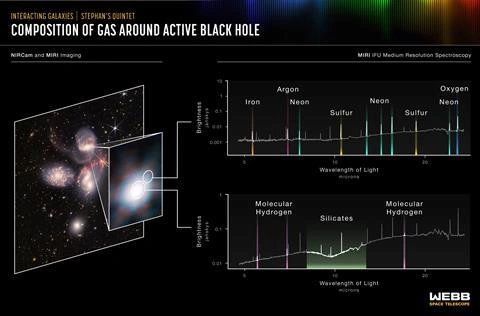
The James Webb Space Telescope (JWST) features advanced spectrometers that analyze infrared light from 0.6 to 28 µm, enabling detection of specific molecules and gases based on their unique spectral fingerprints.
Its instrumentsNIRCam, NIRSpec, NIRISS, and MIRIspecialize in near- and mid-infrared spectroscopy. NIRSpec and NIRISS handle 0.6-5 µm, while MIRI covers 4.9-27.9 µm, overlapping in the 5-28 µm range of interest.
Key Instruments for 5-28 µm Detection
MIRI, the Mid-Infrared Instrument, is primary for 5-28 µm observations, supporting imaging, low-resolution spectroscopy, medium-resolution spectroscopy, and coronagraphic imaging. NIRSpec provides near-infrared coverage up to 5 µm with modes like multi-object spectroscopy using a microshutter array (MSA) of 248,000 tiny shutters for up to 100-200 targets simultaneously.
- NIRSpec: Low-resolution prism (R~100), medium-resolution grating (R~1000-2700), integral field unit for spatial spectral mapping.
- MIRI: Medium-resolution spectroscopy (MRS) with grating wheel for wavelength selection; low-resolution options.
What Can JWST Detect?
No spectrometer detects all substances; detection depends on molecular emission or absorption lines falling within 5-28 µm. JWST reveals infrared spectra to identify atoms and molecules by their light patterns, like fingerprints.
In this range, JWST excels at cooler objects (around 100 K or -173°C), peering through cosmic dust to study distant galaxies, exoplanets, and Solar System bodies.
Specific Substances and Gases
- Water vapor (H2O): Strong lines in mid-infrared, detectable in exoplanet atmospheres and comets.
- Carbon dioxide (CO2): Absorption features around 4.3 µm and 15 µm, key for planetary atmospheres.
- Methane (CH4): Bands near 3.3 µm and 7.7 µm, useful for gas giants and exoplanets.
- Carbon monoxide (CO): Fundamental band at 4.6-5 µm, observed in star-forming regions.
- Ammonia (NH3): Features in 5-10 µm for outer planet studies.
- Silicate dust: Emission at 10 µm and 18 µm from circumstellar disks.
- Polycyclic aromatic hydrocarbons (PAHs): Mid-infrared bands indicating organic chemistry.
These detections support studies of exoplanet compositions via transit spectroscopy, early universe galaxies, and Kuiper Belt Objects.
Spectroscopy Modes and Efficiency
Webb offers six modes: wide-field slitless (NIRCam/NIRISS for broad surveys), single-object, multi-object (NIRSpec MSA), integral field units (IFUs) for 3D data cubes, and time-series for variables like exoplanets.
IFUs slice images into spectra per pixel, ideal for galaxies or nebulae. MSA enables efficient surveys of faint, distant objects.
Limitations in 5-28 µm
Substances with lines outside this band (e.g., UV emitters) are invisible to JWST, unlike Hubble's visible/UV focus. Very hot gases (>1000 K) emit shorter wavelengths. MIRI's MRS had friction issues in a grating wheel in 2022, but operations continue.
Resolution varies: R~1000-2700 for detailed line profiles; higher for some NIRSpec modes.
Impact on Astronomy
JWST's spectrometers transform infrared astronomy, observing supernovae, gamma-ray bursts within 48 hours, and unprecedented exoplanet atmospheres. MIRI supports Solar System to early universe goals.
NIRSpec, built by ESA's Airbus with NASA components, and Canadian NIRISS/FGS enhance precision pointing and exoplanet characterization.
Over 70% of JWST time involves spectroscopy, revealing chemical evolution across cosmic history.