

Table of Contents
Discovery of a Potential Sky Spectacle
Comet C/2026 A1 (MAPS) emerged as a faint 18th-magnitude object on January 13, 2026, spotted by French astronomers Alain Maury, François Attard, Giovanni Parrott, and Antoine Signoret via the MAPS survey. Located in Columba constellation, it required large telescopes for initial views. Pre-discovery images from December 2025 refined its orbit, confirming membership in the Kreutz comet familyfragments from a massive progenitor shattered centuries ago.
Kreutz Family: Sungrazers' Fiery Legacy
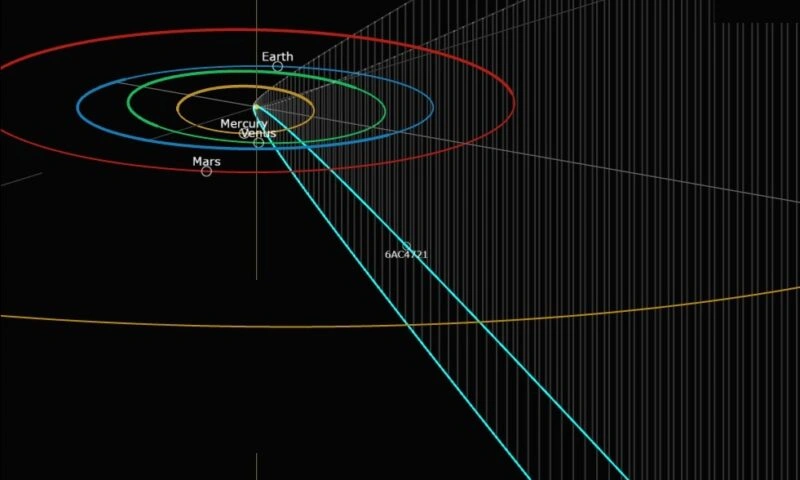
Kreutz comets dive perilously close to the Sun, orbiting retrograde with high inclinations around 144 degrees. C/2026 A1's perihelion distance is just 0.005454 AUcloser than the photosphereon April 4, 2026, at 13:31 UT. Speeds exceed 2 million mph (3 million km/h), exposing it to thousands of degrees Fahrenheit and tidal shredding. Historical examples like the Great Comet of 1887 became 'headless wonders,' surviving as tailless gas streams.
- Orbital Key Parameters: Eccentricity 0.999951, semi-major axis 111 AU, period ~1174 years.
- Absolute Magnitude: 15.6, slope 4.0faint now, but potential brightener.
Survival Odds and Brightness Prospects
Circular 5658 warns its faint magnitude suggests perihelion doom. Yet observer Jakub Černý argues Kreutz comets defy norms; this mid-size member (possibly > Comet Lovejoy, up to 2.4 km diameter) could endure, yielding naked-eye visibility or daylight glimpses. Past Kreutz stars like C/1965 S1 and Great Comet of 1843 hit negative magnitudes. If intact, expect vaporized ices forming gas/dust tails via solar heating.
Observation Challenges
Peak brightness coincides with solar proximity, limiting visibility to brief windows near the Sun. Light curves from COBS show steady development, with forward scattering possible if dust-rich. Current position tracks via ephemerides; binoculars may suffice later if it brightens.
Astronomical Significance
This unprecedented early detection11.5 weeks pre-perihelionbeats prior Kreutz records, enabling global monitoring. MAPS survey's 60-megapixel cameras process terabytes nightly, sifting Milky Way fields for transients. Initial orbits fluctuated between asteroid-like and cometary, but high inclination (144.5°) sealed its comet status. As Earth-based observers gear up, C/2026 A1 tests sungrazer survival models, potentially dazzling early spring skies or vaporizing spectacularly.
Track updates via observatories; its fate hinges on nucleus size and solar encounter resilience. (748 words)