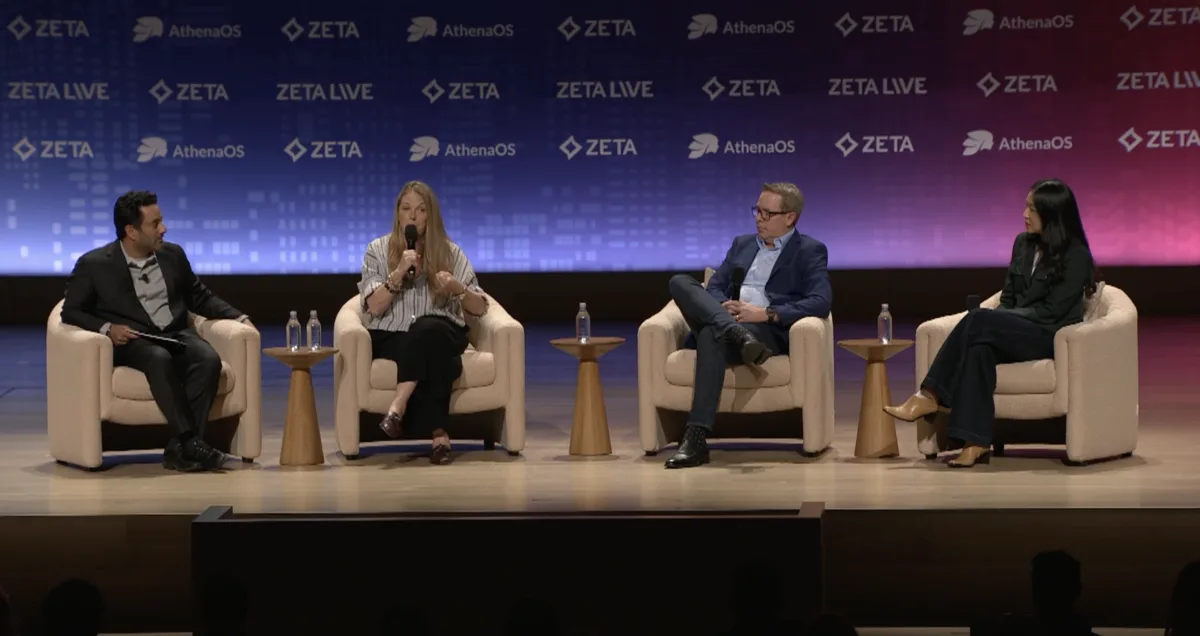
Marketing leaders from PepsiCo, Babylist and Sharp Electronics outlined their Zeta Live AI search and marketing strategies during an October 8 panel in New York City, according to Chief Marketer. Rather than simply automating basic tasks, the executives described using artificial intelligence to manage brand discoverability, scale email production and extract insights from customer service data.
At universal baby registry Babylist, Chief Marketing Officer Jill Cress said AI has transformed the company's email operations. After sending 5 million emails two years ago, the team expects to reach 1 billion emails and push notifications in 2026.
According to Cress, that rapid expansion has created a new hurdle around preserving a consistent brand voice. She noted that the company's tone, edge and authority are becoming slightly diluted because teams are not consistently feeding updates back into the context layer.
Babylist Balances Automation and Brand Trust
Instead of manually building messages, writing subject lines and running quality assurance, Babylist's email marketers now manage AI agents. Cress explained that this shift lets marketers embed themselves more deeply within product squads, where they can focus on design and speed up strategic work.
While Cress did not share exact metrics, she said open rates, click-through rates and overall business impact have all improved. Even so, the company draws clear boundaries between tasks suited for AI and areas that require human hands.
Babylist’s moat is our trust. Ensuring that humans are writing [our independent reviews] is incredibly important, and we take that very seriously.
Jill Cress, CMO, Babylist
The company is also testing AI to accelerate certain writing tasks and to generate and adapt visual assets that once required traditional photo shoots. According to Cress, the AI-generated imagery is outperforming the brand's earlier photo shoots, though maintaining the company's voice amid higher output still demands close human oversight.
PepsiCo Rethinks Search and Discoverability
For Mark Kirkham, CMO of PepsiCo Beverages U.S., artificial intelligence is reshaping how marketing teams must view search. Pointing to TikTok's growing role in search habits, Kirkham questioned why marketers continue to separate traditional search from AI-powered or agentic search, comparing the split to how commerce and ecommerce were treated 20 years ago before merging into one concept.
“A search is a human behavior. That’s the human behavior you’re solving for,” Kirkham said. “What’s the technology that’s going to make it quicker, faster, more efficient, more accurate?”
Kirkham said PepsiCo is seeing its biggest immediate AI impact in brand discoverability, which has become critical as generative AI platforms recommend only a narrow selection of brands. He cited Gatorade as a product whose scientific benefits require consumer education as users increasingly look up information on platforms such as Reddit and Gemini.
On the creative production side, PepsiCo uses AI to test concepts and build animatics more quickly, cutting down on work that previously demanded substantial time and budget. However, when asked whether AI actually improves creative quality, Kirkham said he did not know, adding only that the team is getting better at the process.
Sharp Turns Customer Data Into Action
At Sharp Electronics, AI helps turn everyday customer service data into cross-departmental insights, according to Grace Dolan, President of the company's U.S. Consumer Division. Sharp operates a 35-person call center alongside a nationwide repair network of 550 staff members, generating thousands of daily data points that previously went unused.
With AI, Dolan receives daily reports detailing why customers are calling and what new product issues are emerging. Those findings alert sales teams to potential problems and help marketing staff decide which topics to address in customer FAQs, which Dolan described as simply making smarter use of existing information.
Sharp also assigned a single team member who is passionate about AI - rather than a formal chief AI officer - to help colleagues track AI developments. That employee writes an internal newsletter and puts together case studies highlighting how different teams apply the technology across the business.
Despite that progress, Dolan warned against viewing the company's AI adoption as complete. “I think we’re still figuring it out,” she said. “We’re learning, and we talk about it a lot, and we always feel behind.”
This article was written by AI from reporting by multichannelmerchant.com.