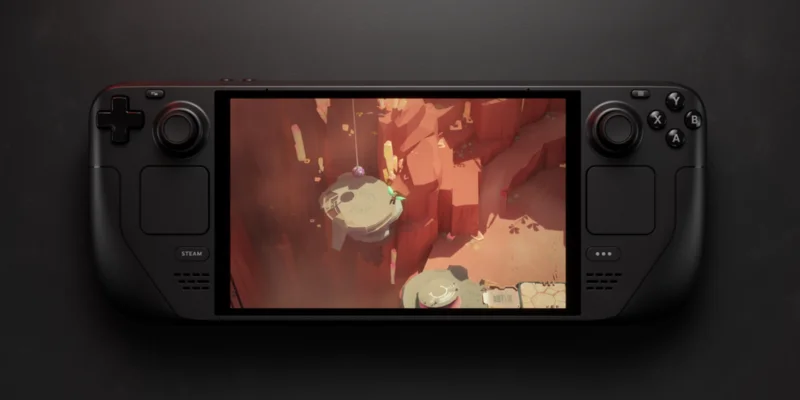
The highly anticipated Steam Deck 2 release date remains on hold because the silicon required to power it simply does not exist yet. While competitors flood the market with incremental handhelds, Valve is refusing to compromise its strict 3W to 15W power envelope and 2-6 hour battery life for a minor performance bump. Following the recent announcements of the new Steam Machine, Steam Frame headset, and Steam Controller, fans noticed the glaring absence of a new handheld device.
In a recent interview with IGN, Valve software engineer Pierre-Loup Griffais clarified that the company is treating the device like a traditional console generation, similar to the PS5 or Xbox. Valve has no interest in releasing a device that only offers a 20-30% performance boost. Currently, chips like the AMD Ryzen Z2 Extreme are powering rival handhelds, but they achieve their best results at higher thermal design powers (TDPs) of 25W to 30W. Off-the-shelf laptop and mobile chips are currently too power-hungry to meet Valve's strict efficiency standards.
Maintaining a fixed hardware target is one of the platform's greatest strengths. Developers working on demanding titles like Elden Ring or Cyberpunk 2077 can optimize for a single set of specifications, mirroring console logic rather than PC logic. Releasing a minor hardware revision every year would risk fragmenting the user base and diluting the reliability of the Steam Deck Verified badge. Instead, Valve wants the next iteration to serve as a definitive baseline for the next four to five years of gaming.
The Three Technologies Valve Needs for Steam Deck 2
To achieve a generational leap without turning the handheld into a loud, overheating device with a 45-minute battery life, three specific hardware advancements must converge. Valve is currently waiting for these technologies to mature and become financially viable for a $400 to $600 price point.
- Advanced Node Shrink: The current Steam Deck OLED utilizes a 6nm process. Valve is waiting for TSMC's N3 (3nm) or upcoming N2 (2nm) nodes, which will deliver significantly higher clock speeds at the strict 15W limit while keeping the device thin and quiet.
- Next-Generation Architecture: Moving past the current custom Zen 2 and RDNA 2 APU, Valve is expected to skip a generation. The company is eyeing AMD's rumored RDNA 5 graphics architecture for native hardware ray tracing and AI upscaling, paired with Zen 6 CPUs for better area efficiency.
- LPDDR6 Memory: System RAM is shared with the GPU in an APU, making memory bandwidth a major bottleneck. Valve needs the upcoming LPDDR6 standard, targeting speeds north of 10GB/s, to handle 1080p or high-refresh-rate gaming without requiring a dedicated heat pipe for the RAM modules.
How to Maximize Your Current Steam Deck's Performance
While waiting for the late 2026 or 2027 release window, Valve is actively using software to pick up the slack. You can squeeze more life out of your original hardware by leveraging system-level optimizations.
- Keep your system updated with the latest SteamOS releases, which continuously deliver better drivers and background efficiency improvements.
- Enable AMD FidelityFX Super Resolution (FSR) in supported games to boost frame rates artificially without increasing the power draw.
- Utilize the lightweight Linux stack to manage your TDP manually, ensuring your 15W limit feels as powerful as a 25W Windows handheld.
My Take: Why Valve's Patience Will Pay Off
Valve's decision to delay the Steam Deck 2 until late 2026 or 2027 is a masterclass in brand protection. By refusing to release a minor hardware revision every 12 months, they are avoiding the rapid depreciation and buyer's remorse that currently plagues the broader PC gaming handheld market. Consumers who invest in a Steam Deck know their hardware will remain the baseline for years, which builds immense trust in the ecosystem.
Furthermore, relying on SteamOS updates and FSR to bridge the gap highlights the massive competitive advantage of a custom Linux stack over brute-force Windows alternatives. When the required 3nm chips and LPDDR6 memory finally mature, the next iteration won't just be a faster device. It will fundamentally redefine the performance-per-watt expectations for portable gaming, proving that efficiency is far more valuable than raw, battery-draining power.
This article was written by AI from reporting by xda-developers.com.