Tesla has officially integrated a Starlink satellite antenna into its latest Cybercab prototype, raising immediate questions about the necessity of space-based internet for a vehicle that drives itself. While the $30,000 robotaxi relies entirely on its onboard AI4 computer for autonomous navigation, the addition of satellite connectivity introduces unexpected hardware costs to a vehicle designed for dense, cellular-rich urban environments.
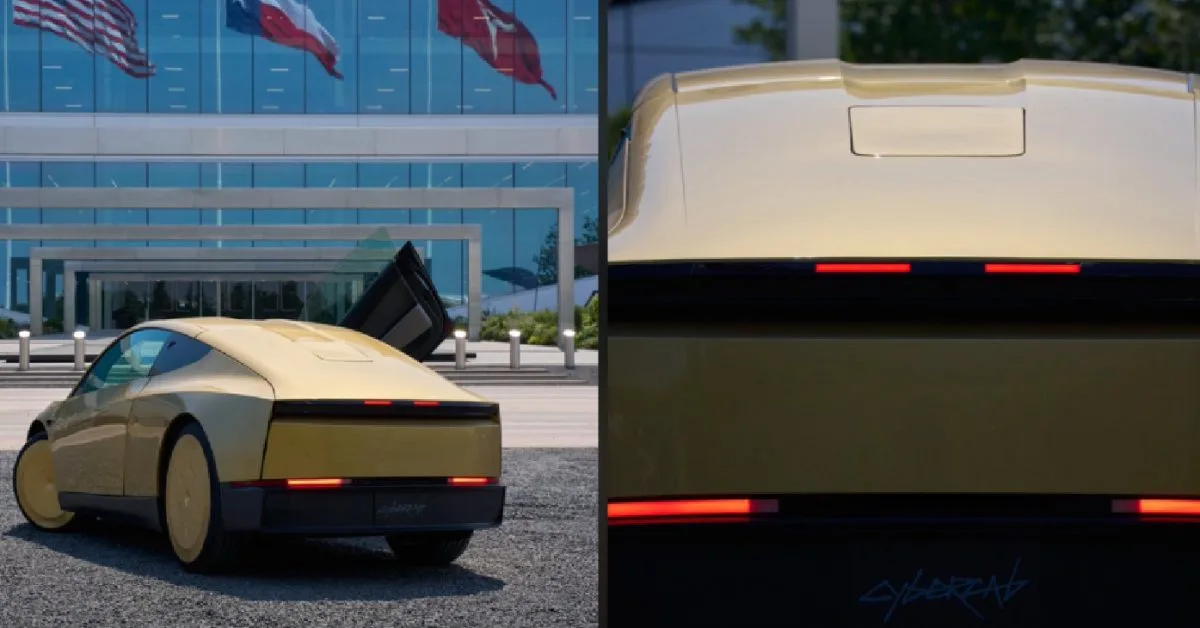
Photos shared by Tesla's dedicated robotaxi account showcase a gold Cybercab parked at Gigafactory Texas, featuring a low-profile Starlink dish mounted flush with the roof. This physical prototype follows a digital rendering teased in July, confirming that the hardware integration is now moving into active production. Despite the visual confirmation, Tesla provided no technical specifications or timeline for a broader rollout.
The core engineering of the Cybercab makes the Starlink antenna technically redundant for basic operation. The vehicle operates using Tesla's proprietary AI4 computer, which processes driving decisions locally without requiring an active internet connection. Furthermore, the robotaxi service is currently restricted to major urban centers like Austin, Houston, Dallas, and Miami - areas where standard cellular networks already provide robust coverage for remote monitoring and passenger support.
Unveiled in October 2024, the two-seat Cybercab was pitched as an affordable autonomous solution devoid of traditional steering wheels or pedals. Production has already commenced at Giga Texas, with over 100 units spotted in factory lots by mid-year, though regulatory hurdles still prevent Tesla from operating them without human supervision.
The Hidden Economics of Satellite-Connected Autonomy
The decision to equip a budget-focused urban robotaxi with premium satellite hardware appears driven more by corporate synergy than immediate engineering needs. Adding a Starlink terminal introduces unnecessary weight, upfront manufacturing costs, and a recurring subscription bill to a vehicle that is supposed to be hyper-optimized for cost-efficiency. In dense cities, standard 5G cellular connectivity is vastly superior and cheaper for telemetry data.
This integration effectively creates a guaranteed, recurring revenue pipeline from Tesla to SpaceX, another company under Elon Musk's control. While Tesla frames the antenna as a safeguard for tracking vehicles in remote areas, true intercity or rural autonomous operation remains years away from regulatory approval. Until the Cybercab expands beyond city limits, the Starlink dish serves primarily as a strategic financial bridge between Musk's ventures rather than a critical component for passenger safety.