Dealerships are aggressively pushing for your next oil change as the sky-high profits from pandemic-era car sales crash back to reality. With vehicle inventory normalizing and profit margins shrinking, the automotive industry is pivoting hard toward dealership car service to protect its bottom line.
During the early 2020s, a constricted car supply and weak competition allowed car sellers to rake in massive profits. Now, as supply meets demand, average pretax profits for public dealerships have plummeted from a pandemic peak of $6.8 million in 2022 to roughly $3.9 million in 2025, according to Kerrigan Advisers data cited by CNBC.
The Battle Against Independent Shops
To offset these losses, dealerships are targeting the $164.6 billion service and parts sector, which has exploded by 48% over the past five years. However, they face fierce competition from independent chains like Jiffy Lube, Meineke, and Walmart. A recent Ducker Carlisle report reveals that 42% of Americans now identify these independent chains as their primary service provider, a massive jump from just 20% in 2020.
Tim Pohanka, executive vice president of Pohanka Nissan Hyundai, explained that the compressed margins in the core business of selling cars have singled out service as "the biggest opportunity." Dealerships are fighting their reputation for pricey repairs by doubling down on the customer experience.
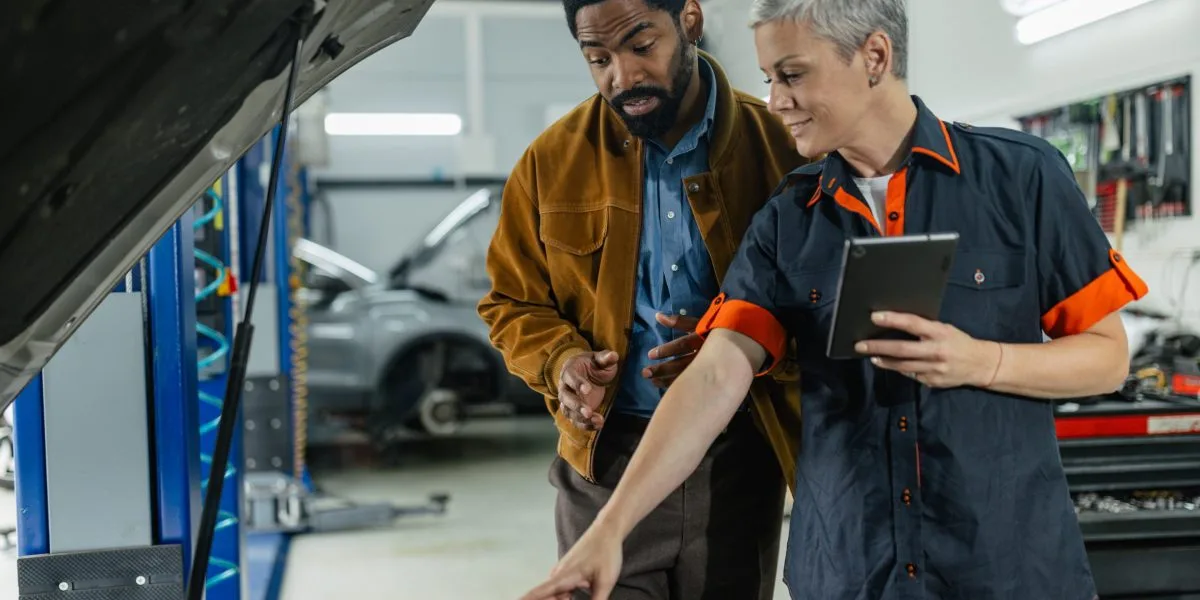
To win back drivers, many locations now offer flexible walk-in appointments, service financing options, and full-transparency video updates showing the vehicle's condition during inspections. Dealerships argue that their factory-trained technicians and specialized equipment justify the premium pricing.
Aging Fleets and Recurring Revenue
This shift in strategy aligns with changing consumer habits, as drivers hold onto their vehicles longer than ever. The Bureau of Transportation Statistics reports that the average age of a passenger car on U.S. roads reached 14.5 years last year, up from 11.5 years a decade ago.
Establishing a recurring revenue stream through maintenance helps stabilize dealership businesses against supply chain disruptions and tariffs. Furthermore, customers who regularly service their vehicles at a specific dealership are significantly more likely to purchase their next car from the same lot.
If you’re not engaged in the service industry, and you’re relying only on sales, then you’re really setting yourself up for a potential problem if something goes wrong.
- Tim Pohanka, Pohanka Nissan Hyundai
The Transparency Tax
The pivot toward service revenue is a double-edged sword for consumers. On one hand, the fierce competition with independent shops is forcing dealerships to modernize their service bays with digital transparency tools and flexible financing. The introduction of video walkarounds is a direct response to decades of consumer mistrust regarding "recommended" dealership repairs.
However, with average new-vehicle transaction prices hovering near $49,855, buyers are already financially stretched. Dealerships will need to prove that their specialized access to manufacturer data and factory-trained technicians provides tangible value over a quick lube shop. If they fail to bridge that trust gap, the $164 billion service market will continue to bleed out to independent chains.
This article was written by AI from reporting by fortune.com.