For months, Google's Gemini Notebook seemed like the untouchable core of AI research workflows. However, OpenAI's ChatGPT Pro Work mode is quietly cannibalizing specialized research apps by bundling advanced workspace features into a single ecosystem. This shift is critical for researchers, students, and professionals who are currently juggling multiple AI subscriptions and looking to consolidate their daily workflow into one platform.
The transition away from dedicated tools rarely happens overnight. Users often bounce between platforms before realizing that a unified ecosystem simply reduces friction. While Gemini Notebook remains an excellent tool for isolated document analysis, the sheer breadth of features available in a single ChatGPT Pro subscription is proving difficult to ignore.
How ChatGPT Pro Work Mode Replaces Gemini Notebook
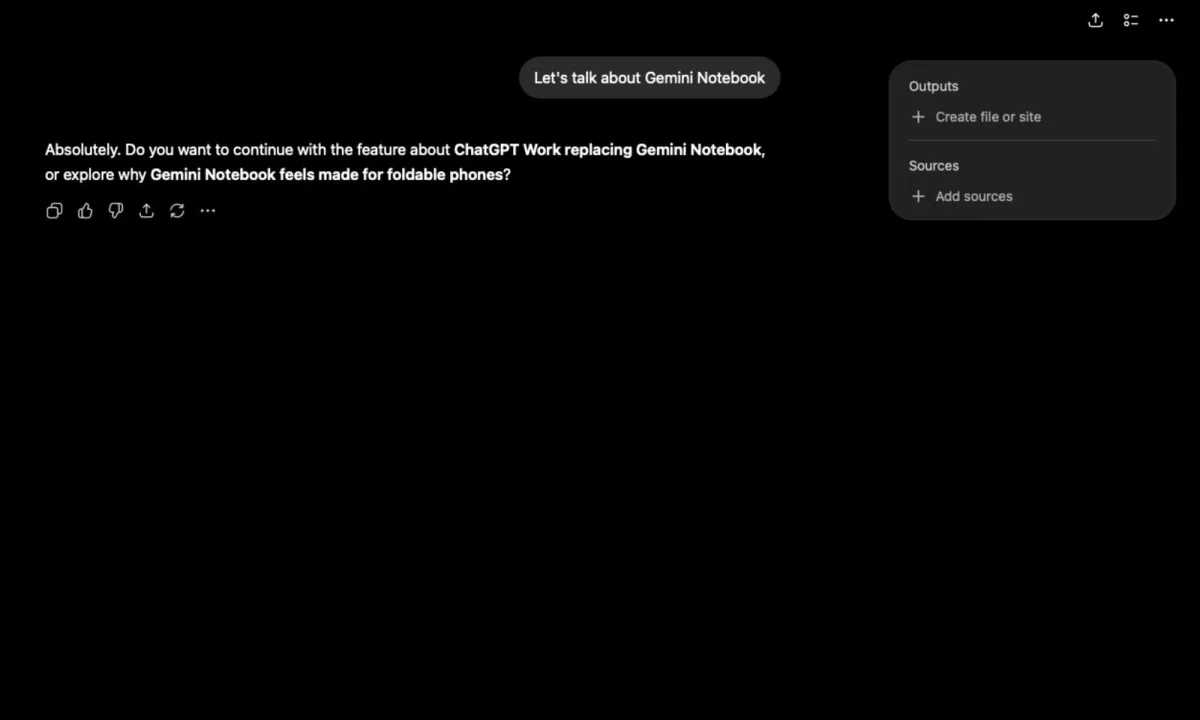
Using ChatGPT Pro Work mode feels surprisingly similar to the Gemini Notebook experience, but with deeper integration into a broader AI ecosystem. The process begins with a simple conversational prompt, which prompts the AI to build a dedicated workspace around that specific idea. This workspace is divided into two highly organized panels: Outputs and Sources.
The Sources panel acts as the foundational reference library for the project. While the AI can pull in references automatically, users retain the flexibility to manually upload their own trusted sources to prevent AI hallucinations and ensure absolute accuracy. The Outputs panel is where the research transforms into tangible assets, allowing users to generate formatted documents, detailed spreadsheets, or even fully structured websites directly from the gathered data.
Because all sources remain visible alongside the active conversation, users can easily ask follow-up questions, challenge the AI's conclusions, or quickly jump back to the original material to fact-check specific claims. This creates a dynamic, iterative research environment rather than a static information dump.
Actionable Steps: Building Your AI Workspace
To replicate a professional research workflow within ChatGPT Pro, follow these core steps:
- Initialize the Workspace: Start with a broad, conversational prompt (e.g., "Let's talk about X topic") to trigger the Work mode interface.
- Curate the Sources Panel: Manually upload your verified documents and links to the Sources panel to ensure the AI bases its analysis on trusted data rather than general web scraping.
- Generate Tangible Assets: Use the Outputs panel to command the AI to convert your conversational research into a structured format, such as a spreadsheet or a website mockup.
- Iterate and Refine: Keep the workspace active by asking follow-up questions and removing outdated references from the Sources panel as your project evolves.
The Ecosystem Advantage: Shopping Mode and Automations
The primary reason users are abandoning Gemini Notebook isn't just because Work mode is capable; it is because of the surrounding ecosystem. Once a research session concludes, users do not have to switch to another app to manage their day. ChatGPT Pro acts as a persistent digital assistant, capable of scheduling reminders, delivering morning briefings, and automating repetitive daily tasks.
This ecosystem extends into practical daily utility with the new Shopping mode. Instead of opening dozens of browser tabs to compare product reviews, users can simply ask the AI to find an item - like an ergonomic office chair with lower back support. Within minutes, the AI shortlists options, compares features, and highlights pros and cons, drastically reducing the time spent on tedious consumer research.
The Super-App Strategy Redefining Productivity
OpenAI is no longer just building a conversational chatbot; they are actively constructing an operating system for productivity. The gravity of this "Super-App" strategy is immense. When a single $200-per-month subscription allows you to research complex topics, generate images, create short videos, build websites, and even shop for office furniture, specialized tools like Gemini Notebook begin to feel like unnecessary extra steps.
This consolidation highlights a broader trend in the AI industry: workflow lock-in. Once a user entrusts their daily briefings, task automations, and core research to a single platform, the friction of leaving that ecosystem becomes too high. For Google to keep Gemini Notebook relevant, it must urgently integrate it deeper into the broader Google Workspace ecosystem, rather than leaving it as a standalone, isolated experiment.