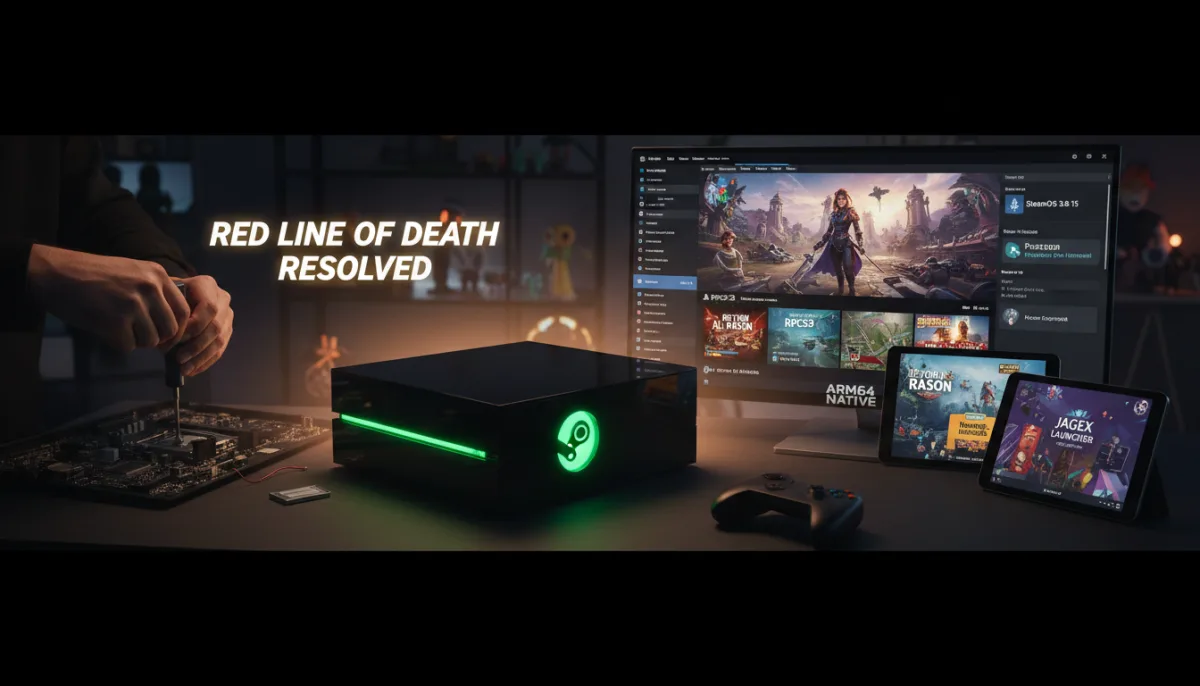
The Linux gaming ecosystem is receiving a massive wave of critical updates, starting with a highly anticipated official fix from Valve for the dreaded "Red Line of Death" (RLOD) hardware failure on Steam Machines. Alongside this hardware revival, developers are rolling out significant software patches, including SteamOS 3.8.15 and new Proton Experimental fixes that dramatically improve compatibility for major Windows titles on Linux platforms.
These updates arrive as the broader open-source community hits major milestones in both game preservation and hardware development. From PlayStation 3 emulation breakthroughs to new ARM64 support for grand-scale strategy games, the latest developments offer substantial quality-of-life improvements for PC gamers and hardware enthusiasts alike.
How to Fix the Steam Machine 'Red Line of Death'
For years, many Steam Machine owners have been plagued by the "Red Line of Death," a fatal boot error that leaves the console completely unresponsive. Valve's official Reddit account has finally responded to victims with a definitive, simple cure to revive these flat-lining cubes.
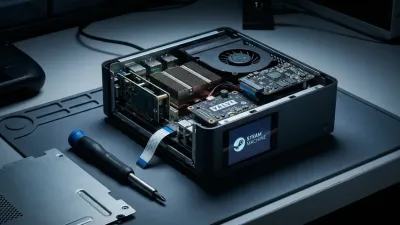
According to Valve's step-by-step instructions, users can bring their affected hardware back to life by performing a basic motherboard reset. Here is the official method to restore functionality:
- Disconnect the Steam Machine from all power sources.
- Open the console casing to access the internal motherboard.
- Locate and clear the CMOS (Complementary Metal-Oxide-Semiconductor) by either removing the coin-cell battery for a few minutes or using the dedicated reset jumper.
- Reassemble the unit and power it on to bypass the RLOD state.
SteamOS 3.8.15 and Proton Experimental Upgrades
Valve continues to refine the software experience for the Steam Deck and other Linux-based systems with the release of SteamOS 3.8.15, which introduces a critical performance fix. Simultaneously, the company has rolled out the SteamOS 3.8.23 Beta for users willing to test upcoming features.
On the compatibility front, the latest Proton Experimental update brings targeted fixes for running Windows games on SteamOS and Linux. The patch specifically addresses issues in Diablo IV, Marvel Rivals, and various titles built on the RPGMaker Engine. This experimental rollout closely follows Valve's recent launch of the stable Proton 11 version.
Emulation Milestones and ARM64 Support
In a massive win for video game preservation, the open-source PlayStation 3 emulator RPCS3 has officially reached a milestone where 75% of all PS3 games are now fully playable on PC. This achievement is particularly critical as Sony continues to shift away from physical discs, making software emulation a vital tool for archiving gaming history.
Meanwhile, the grand-scale open-source RTS game Beyond All Reason has received a major engine upgrade. The update introduces native ARM64 support, signaling a growing trend of complex PC games adapting to ARM-based architectures for better efficiency and cross-platform potential.
Hardware, Policy, and Other Notable Updates
Beyond Valve's ecosystem, several other significant tech and gaming developments have surfaced this week:
- Jagex Launcher Linux Beta: Jagex has officially released a Linux Beta for its launcher, making it significantly easier for players to access Old School Runescape natively.
- Humble Handhelds Bundle: A newly launched game bundle specifically curated for portable PCs like the Steam Deck and Lenovo Legion Go is now available.
- Valve 2027 Sales Calendar: Valve has officially announced its schedule for themed sale events and game genre festivals for the first half of 2027.
- HackRF Pro SDR: LinuxGizmos reports that the new HackRF Pro covers frequencies from 100kHz to 6GHz with FPGA-based processing. It features a flatter frequency response, the removal of the center-frequency DC spike, an onboard temperature-compensated crystal oscillator, RF shielding, and a USB Type-C connector.
- Clintech Pico Board: This new board exposes all 48 RP2354B GPIOs in a Pico-compatible form factor. It features dual 150MHz Arm Cortex-M33 cores, dual Hazard3 RISC-V cores, 520KB of SRAM, three programmable I/O blocks with 12 PIO state machines, and 2MB of stacked in-package QSPI flash.
- Internet Society Report: A new ITU report highlights that technical limitations, geographic barriers, and high costs remain the primary reasons communities worldwide lack meaningful internet access.
When we talk about privacy online, we usually picture companies harvesting our data, platforms tracking our movements, governments peering into our accounts. We rarely picture a blind woman in Islamabad who closes her banking app because an unlabeled button has just forced her to either wait until she gets home to finish a task or do it at work and reveal her bank balance to a colleague.
- Digital Coercion Report
The Emulation Preservation Imperative
The RPCS3 emulator hitting the 75% playable mark is far more than a technical novelty; it is a necessary safeguard against the industry's aggressive pivot toward an all-digital future. With Sony actively ditching disc drives in its latest hardware revisions, the physical media that defined the PlayStation 3 era is degrading, and official digital storefronts for older consoles are inevitably shuttered.
By ensuring that three-quarters of the PS3 library can run natively on modern PC hardware, open-source developers are doing the archival work that major publishers often abandon. This milestone proves that community-driven emulation is no longer just about piracy or convenience - it is the only reliable mechanism to ensure that decades of interactive art remain accessible to future generations.
This article was written by AI from reporting by tuxmachines.org.