For nearly a century, historians have relied on the Assyrian King List as the definitive timeline of the ancient world's first major empire. However, new research reveals that this foundational text was heavily censored to hide a chaotic and contested political reality. By analyzing damaged monuments and obscure clay tablets, researchers have identified three forgotten kings who were deliberately erased from the official royal chronology.
Published in the Journal of Cuneiform Studies, the study by Alexander Johannes Edmonds and Eckart Frahm challenges the long-held belief that the Assyrian King List (AKL) was an impartial historical record. Instead, the evidence suggests early Neo-Assyrian political history was fraught with rival claims, overlapping reigns, and deliberate acts of historical exclusion.
Early Neo-Assyrian political history was much messier, but also more interesting, than has so far been recognized.
- Alexander Johannes Edmonds, Journal of Cuneiform Studies
The discovery complicates the political story behind the rise of the Assyrian Empire. It offers a striking new perspective on how ancient civilizations shaped their own official memory by removing rulers whose reigns complicated the preferred narrative of divine succession.
The Three Erased Monarchs
The first unrecognized ruler adopted the name Tiglath-pileser and attempted to overthrow his nephew, the officially recognized monarch Aššur-dān III. Capitalizing on the ominous political meaning of a solar eclipse, this rival king likely ruled from 763 to 762 BCE. Evidence of his brief administration survives on a clay tablet housed in the British Museum, which details a royal grant from his reign.
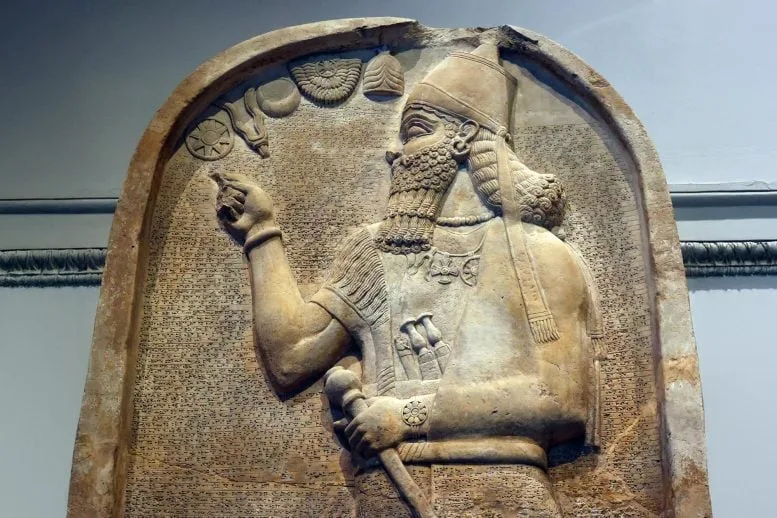
The second missing king, a Shalmaneser, was identified through a stela discovered at Tell ‘Abta in Iraq. Researchers believe he ruled shortly before Tiglath-pileser III took power in 745 BCE, explaining why the monument's original name was later altered to match the new victor. The deliberate modification of physical monuments highlights the lengths to which later rulers went to legitimize their power.
The third ruler, Aššur-uballiṭ, likely reigned from 913 to 912 BCE. His existence is corroborated by a cuneiform tablet referencing his restoration of a ceremonial vessel. Further physical evidence points to a deliberately defaced, headless royal statue found at the ancient city of Aššur, where the arms and royal insignia were intentionally worn away.
Rewriting the Assyrian King List
The deliberate removal of these three monarchs fundamentally shifts how historians must interpret ancient chronologies. The Assyrian King List can no longer be viewed as a simple timeline; it was a highly curated political canon designed to legitimize the victors and erase short-lived or parallel rulers. This revelation mirrors modern historical revisionism, proving that the weaponization of cultural memory is as old as civilization itself.
By exposing these hidden reigns, Edmonds and Frahm have turned a settled authority into a source of profound new questions. If the world's first empire actively manipulated its own official memory to project an image of unbroken stability, countless other ancient texts may require similar re-evaluation. The perceived stability of the early Neo-Assyrian period was clearly an illusion, masking a volatile era of power struggles that the empire's architects desperately wanted the future to forget.