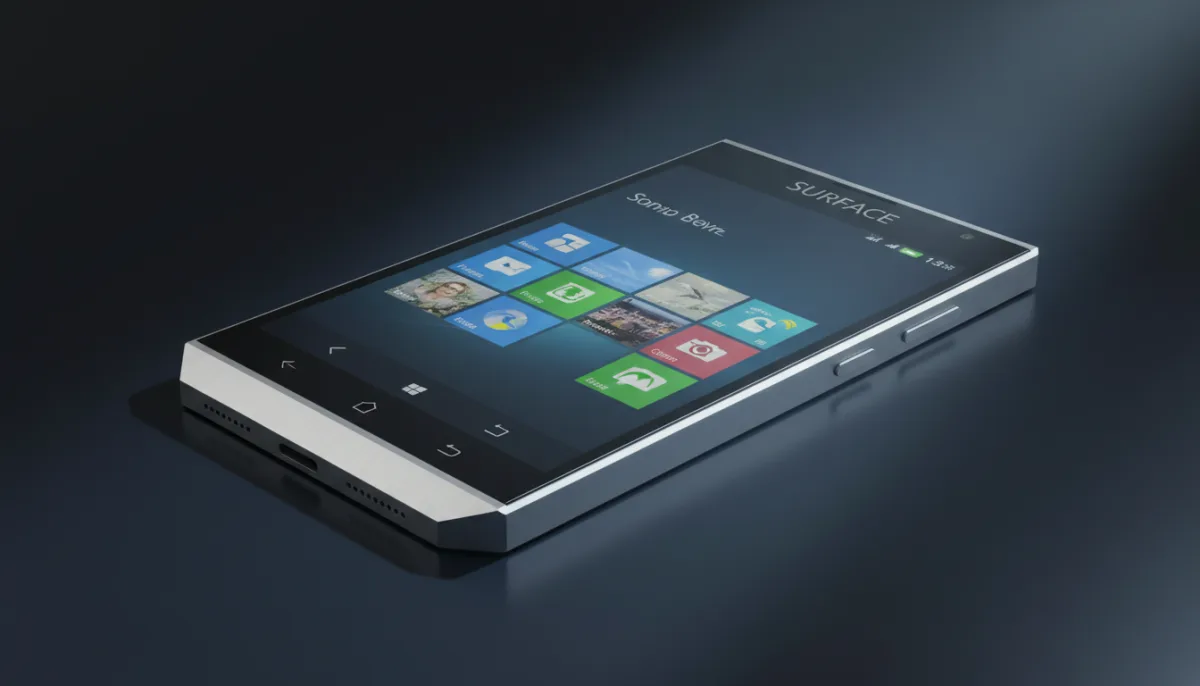
Years before the dual-screen Surface Duo hit the market, Microsoft secretly developed a traditional slab-style smartphone that never saw the light of day. A newly revealed 2014 Surface phone prototype showcases what could have been the company's first true first-party mobile device, running Windows Phone 8.1.
For Windows Phone enthusiasts and tech historians, these leaked images offer a fascinating glimpse into an alternate timeline. This prototype proves that Microsoft had the capability to build its own mobile hardware ecosystem without relying entirely on Nokia's engineering DNA.
Prototype Specifications and Design
According to images and details shared by Windows Central, the unreleased device heavily embraced the established Surface branding of that era. The hardware closely mirrored the aesthetic of the 2013 Surface 2 tablet, translating its premium industrial design into a pocketable form factor.
While the exact internal specifications remain partially obscured, the prototype featured several standard components for a 2014 flagship:
- A 720p display, which was the industry standard for premium smartphones at the time.
- Physical hardware keys for navigation, a staple requirement for early Windows Phone devices.
- A silver chassis equipped with dedicated up and down volume buttons, a power button, and a dedicated camera shutter button.
- An unspecified Qualcomm processor, likely from the Snapdragon 200, 400, 600, or 800-series lineup.
The Nokia Acquisition Pivot
The timeline of this prototype's development directly coincides with a massive corporate shift. In September 2013, Microsoft announced its acquisition of Nokia's Devices and Services business. This multi-billion dollar deal effectively killed the in-house Surface phone project.
With one of the biggest names in mobile hardware suddenly under its control, Microsoft had no immediate business reason to compete against its own newly acquired Lumia lineup. The company pivoted to releasing inherited Nokia designs, which eventually materialized as devices like the Lumia 535 later in 2014.
The Hardware Identity Crisis
The cancellation of this 2014 prototype represents one of Microsoft's most critical strategic missteps in the mobile sector. By abandoning a true first-party Surface phone in favor of the Nokia acquisition, Microsoft delayed its independent mobile hardware vision by roughly six years. When the company finally returned to the smartphone market with the Surface Duo in 2020, it was forced to differentiate itself with a novel, dual-screen form factor.
That dual-screen approach ultimately became the Surface Duo's biggest downfall, plagued by software compromises and an unoptimized user experience. Had Microsoft stuck to its original 2014 plan and iterated on a traditional slab-style Surface phone, it could have built a loyal hardware base without the steep learning curve and technical debt that doomed the Duo series.