The venture capital landscape has fundamentally fractured, with megafunds hoarding 72% of all deal value in the first half of 2026. For investors and family offices, accessing top-tier startups now means navigating a "winner-take-most" market dominated by a handful of giants. According to new PitchBook data, this represents a massive leap from just 25% during the same period in 2025, leaving first-time managers fighting for a mere 10% of the market.
This concentration of wealth is driven by the unprecedented capital requirements of generative AI and a resurgence in blockbuster public offerings. As capital becomes increasingly concentrated in private markets, the venture capital firms with the largest balance sheets are securing exclusive access to the most lucrative growth firms.
The $50 Billion Fundraising Bottleneck
Megafunds - defined as those managing over $1 billion in assets - are aggressively crowding out smaller competitors. In the first half of the year, these mega VCs raised a staggering $50 billion in capital, dwarfing the $8 billion collected during the same timeframe last year. The consolidation is so severe that 73% of all newly committed capital in the venture sector this year has flowed into just five megafunds.
Five years ago, many of us were evaluating how we think about a billion-dollar venture fund size. Today, that can be the amount a single firm is investing in a single round of a single company.
- Theresa Hajer, Head of U.S. Venture Capital Research, Cambridge Associates
This shift has fundamentally altered how limited partners (LPs) deploy capital. Many of the investors who rushed into the venture boom of 2021 and 2022 have since exited the market. They are rapidly being replaced by sovereign wealth funds and massive institutional players capable of writing significantly larger checks, resulting in more money flowing from fewer investors into a shrinking pool of elite funds.
AI Valuations and the Return of the Mega-IPO
The 2026 venture revival is heavily anchored by artificial intelligence and a thawing IPO market. Following a severe drought after 2022 that left many funds struggling with poor performance and zero distributions, liquidity has finally returned. In the first quarter, OpenAI raised an astonishing $122 billion at an $852 billion valuation, while rival Anthropic secured $65 billion at a $965 billion valuation.
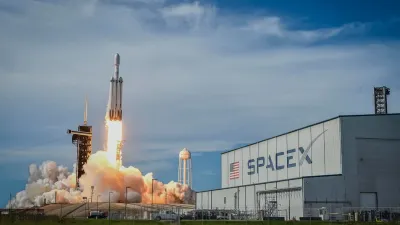
The public markets are mirroring this explosive private growth. In June, SpaceX went public, debuting at a historic $2 trillion valuation and triggering the largest liquidity event ever recorded across public or private markets. Both OpenAI and Anthropic have already filed preliminary registration documents with the Securities and Exchange Commission, targeting valuations that could also reach the $1 trillion mark.
This environment has birthed over 800 unicorns - private companies valued at over $1 billion. Hajer noted that successful firms are riding early investments in companies like SpaceX to massive valuation increases, compounding their market dominance.
Where the Capital is Flowing
Armed with massive reserves, megafunds are executing deals across all stages with unmatched flexibility. Between 2024 and 2025, Andreessen Horowitz executed over 300 seed and Series A deals. In just the first half of 2026, the firm closed 74 seed, Series A, and Series B deals. Meanwhile, General Catalyst, Lightspeed Venture Partners, and Sequoia Capital accounted for a combined 104 deals in the same period.
The scale of recent fund closures highlights this disparity. Thrive Capital recently closed its $10 billion Thrive X fund, while Sequoia Capital locked in a $7 billion late-stage AI fund. Andreessen Horowitz finalized a $6.75 billion growth fund, and Peter Thiel's Founders Fund closed its largest vehicle ever, the $6 billion Growth IV fund.
"People forget that SpaceX was 20 years in the making," Hajer explained, emphasizing that these mega-firms started by placing early-stage bets that have now compounded into industry-defining winners.
The Hidden Risk of Chasing Giants
The current power-law dynamics in venture capital present a dangerous paradox for investors. While choosing a VC has technically become simpler - the bulge-bracket firms are the undeniable winners - actually gaining access to these funds and stomaching their steep fees has become nearly impossible for all but the ultra-wealthy.
Pouring capital exclusively into the top five megafunds creates a severe concentration risk tied directly to the AI hype cycle. If the trillion-dollar valuations of OpenAI or Anthropic face regulatory hurdles or market corrections, the funds heavily indexed on these hyperscalers will suffer disproportionately. True long-term outperformance requires looking beyond the current AI frenzy.
As Hajer warned, investors must maintain true diversification. While exposure to the megafunds is critical for capturing current market beta, the real alpha over the next decade will likely emerge from overlooked growth sectors like biotech and healthcare, where capital is currently scarce but innovation remains high.
This article was written by AI from reporting by cnbc.com.