Tesla is rolling out a critical over-the-air software update to nearly three million vehicles in China to resolve a massive recall regarding emergency door latches. Meanwhile, the automaker is officially gearing up to unveil its highly anticipated, fully autonomous Cybercab at a dedicated event in Austin, Texas, on September 3.
These simultaneous developments highlight a pivotal week for Elon Musk’s empire. The company is balancing immediate physical safety fixes with next-generation transportation reveals and ambitious new spaceflight targets.
How the Tesla Software Update Fixes Door Latches
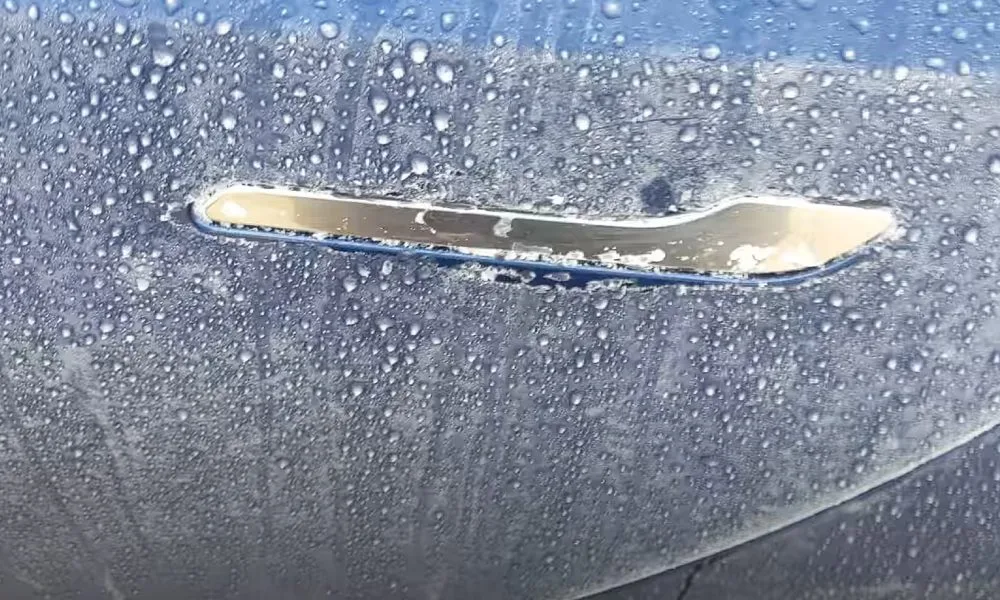
Chinese regulators initiated a recall affecting nearly three million Tesla vehicles, specifically over 1.9 million Model Y and 970,000 Model 3 units. The core issue stems from emergency door release latches not being visible enough during severe crashes that disable the low-voltage system.
To address this, Tesla is deploying a two-part solution. First, owners will receive physical warning labels added to the emergency latches free of charge. Second, a mandatory over-the-air software update will introduce a post-crash window-lowering strategy to ensure occupants can escape and emergency responders can gain entry.
- Physical Labels: Visit a local service center to have the high-visibility stickers applied to the manual door releases.
- OTA Update: Connect your vehicle to Wi-Fi to download the latest firmware, which automatically lowers the windows upon detecting a collision.
This regulatory push aligns with China’s State Administration for Market Regulation (SAMR), which will mandate mechanical release mechanisms on all new vehicles starting January 1, 2027. This upcoming standard will effectively ban purely electronic door handles across the industry.
Cybercab Launch: The Next Era of Autonomous Driving
Beyond the recall, Tesla is preparing for a major milestone in its Full Self-Driving (FSD) roadmap. The company has issued invitations for the Tesla Cybercab launch, scheduled for September 3 in Austin.
The Cybercab is a dedicated ride-sharing vehicle built without a steering wheel or pedals, relying entirely on Tesla's AI4 hardware and upcoming AI5 iterations. It is designed to operate within a fully autonomous Robotaxi fleet alongside existing Model Y vehicles.
If the September event allows the Cybercab to transport public passengers on Austin roads, it will represent a drastic advancement in the company’s self-driving capabilities. The event follows closed-circuit testing previously held at Warner Bros. Studios.
SpaceX Targets 10,000 Annual Starship Launches
In the aerospace sector, Elon Musk has outlined unprecedented goals for the Starship program following a new presidential memo aimed at accelerating U.S. spaceflight. The National Space Transportation Policy sets a target of 1,000 annual launches and reentries, but Musk is aiming significantly higher.
We’re aiming to reach 30+ Starship launches/day in 2030, which is ~10k annualized. Still tiny numbers compared to airplane flights!
- Elon Musk, CEO, SpaceX
Achieving this ~10k annualized cadence requires a massive leap from the two Starship flights conducted so far this year. The immediate focus remains on Flight 14, targeted for late August, following a successful six-engine static fire test.
Tesla Semi Officially Expands to Europe
Rounding out the company's expansion, the all-electric Tesla Semi is officially heading to the European market. Full specifications and launch details will be unveiled at the IAA Transportation trade fair in Hannover, Germany, in mid-September.
High-volume manufacturing of the Semi began in April 2026 at Gigafactory Nevada, targeting an annual capacity of 50,000 units. The Long Range variant delivers roughly 500 miles of range with an 822 kWh battery, while the Standard Range offers 325 miles.
European adaptations are expected to include modified cab configurations and lighting to meet local regulatory compliance. These updates position the Semi as a formidable competitor to traditional diesel freight on the continent.
The Regulatory Squeeze on Minimalist Design
The mandatory changes to Tesla's door handles in China signal a broader global pushback against the hyper-minimalist, electronic-first vehicle interiors that the company pioneered. By forcing automakers to include mechanical releases by 2027, regulators are prioritizing tactile safety over sleek aesthetics, a move that will likely ripple through European and North American safety standards.
Simultaneously, the September 3 Cybercab event represents the ultimate test of Tesla's hardware-only autonomy bet. While the company is retrofitting physical safety features into its current lineup, it is simultaneously preparing to remove the steering wheel entirely in its next vehicle.
If the AI4-powered Robotaxi fleet fails to demonstrate flawless public road navigation in Austin, the regulatory scrutiny currently focused on door latches will rapidly pivot to the safety of pedal-less cabins. Tesla must prove that its software can entirely replace the physical controls that regulators are currently fighting to preserve.