Traditional school fundraising relies on silent auctions and annual galas, but elite institutions in the San Francisco Bay Area are rewriting the playbook. A growing number of Silicon Valley private schools have established miniature venture capital funds to secure massive financial windfalls. These funds are capitalized entirely by community donations and are strategically aimed at early-stage, pre-IPO tech companies.
Rather than relying on amateur stock picks, these schools leverage the expertise of parent-investors from top-tier firms like Lightspeed, Notable Capital, and Sequoia. As companies like SpaceX hit a $2 trillion valuation on the Nasdaq, and AI giants like Anthropic and OpenAI prepare for public markets, these schools are positioning themselves to turn small early checks into generational wealth.
How the Miniature VC Fund Model Works
The mechanics of a school-run venture fund are straightforward, but the execution requires elite industry access. A school sets aside a dedicated pool of donated capital - strictly separate from tuition revenue or the operating endowment. A committee of volunteer investors then vets potential deals and decides where to allocate the funds.
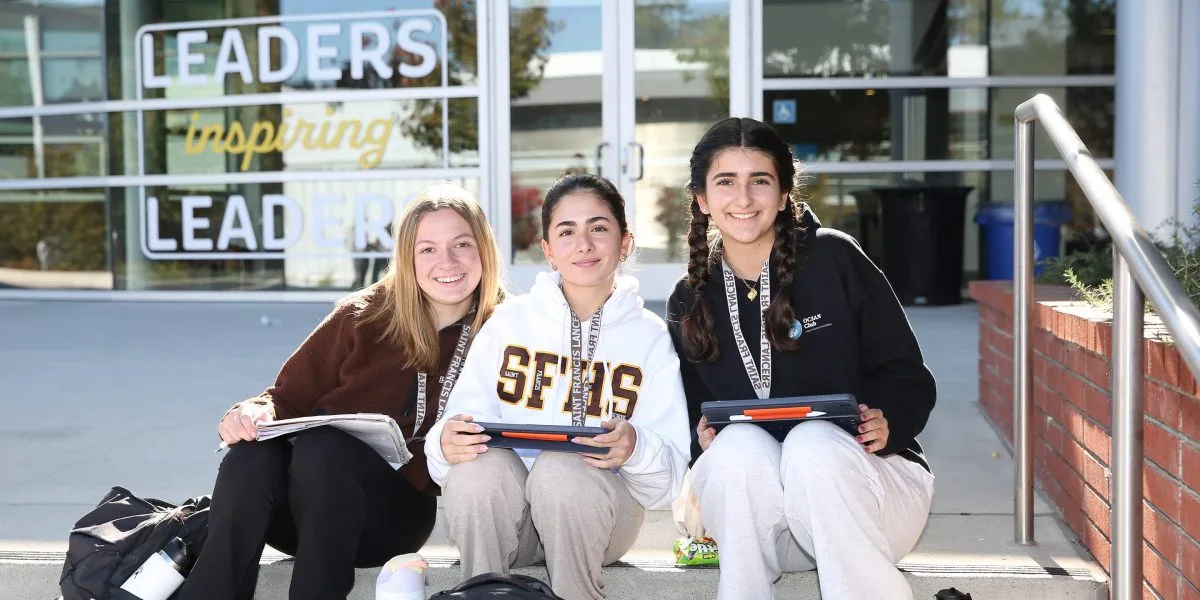
At Saint Francis High School in Mountain View, the vehicle is known as the growth fund. Overseen by investors from Battery Ventures, Mayfield Fund, Meritech Capital Partners, Sequoia, and Lightspeed, the fund operates much like a traditional early-stage VC. It invests in roughly 10 companies annually, writing checks between $25,000 and $50,000 apiece.
These educational institutions hold a massive structural advantage over traditional venture firms. Because the investment professionals donate their time, the funds carry zero management fees and do not pay out "carried interest" (a share of the profits). Furthermore, as 501(c)(3) nonprofits, the schools do not pay capital gains tax on their returns, ensuring maximum profitability.
The $34 Million Snap Windfall
The pioneer of this approach is Saint Francis High School, whose early bet on social media is now Silicon Valley lore. In 2012, the school's growth fund invested $15,000 in Snap at the urging of Barry Eggers, co-founder of Lightspeed Venture Partners. When Snap went public in March 2017, the school’s stake had ballooned to $34 million - a return of over 2,000 times their initial money.
If a deal is good enough for Sequoia, Meritech, Battery, Mayfield, or Lightspeed, then it’s good enough for Saint Francis.
- Barry Eggers, Lightspeed Venture Partners
Eggers estimates the Saint Francis fund has generated roughly $50 million in cumulative lifetime returns. The bulk of the Snap windfall was directed into the school's endowment, funding retention bonuses to help teachers afford the exorbitant cost of living in Silicon Valley, alongside a multi-million dollar capital campaign.
Other elite schools are rapidly adopting the model. Crystal Springs Uplands School recently launched the Crystal Growth Fund, holding approximately $1.75 million in private equity investments out of a total $61.1 million portfolio by June 2025. Meanwhile, Menlo School manages a Menlo Venture Capital Endowment comprising 36 individual investments. Overseen by a 23-member board, this sub-$1 million fund represents a strategic fraction of Menlo’s broader $122.6 million endowment.
Overcoming the J-Curve and Deal Flow Barriers
Replicating this success is not without significant hurdles. The primary barrier is the venture capital "J-curve," where funds often experience years of negative cash flow before seeing positive returns. Schools typically operate on strict annual budgets with immediate needs, making it difficult to wait five to eight years for an investment to mature.
The second, and more exclusive, barrier is deal flow. Committees require access to highly vetted, competitive investment opportunities. This model is only viable in metropolitan hubs like Los Angeles, New York, and Chicago, where schools can tap into a concentrated population of finance and private equity professionals.
The End of the Traditional Gala
This venture-backed approach is part of a broader shift away from traditional, event-based fundraising. Galas are notoriously expensive to host, demand significant staff time, and offer a comparatively low return on investment. Furthermore, high-priced gala tickets often highlight economic disparities within the school community.
Schools are not the only nonprofits capitalizing on the IPO market. When Figma went public in July 2025, the Marin Community Foundation - a Bay Area nonprofit focused on affordable housing - made $440 million as the largest selling shareholder, having received shares from co-founder Evan Wallace.
The Wealth Gap Engineered by Elite Deal Flow
While schools across the country are calling Silicon Valley to learn how to replicate this model, the reality is that this strategy is inherently exclusionary. The success of these mini VC funds does not stem from brilliant institutional investing; it relies entirely on proximity to power. These schools are bypassing the velvet rope of elite venture capital simply because the gatekeepers happen to be dropping their kids off at the same campus.
This creates a compounding financial advantage that public schools - and even average private schools - cannot possibly match. As the era of companies staying private longer continues, the ability to access pre-IPO shares in the next SpaceX or OpenAI will generate tax-free, fee-free wealth that further insulates elite institutions. Ultimately, this isn't just a clever fundraising pivot; it is a masterclass in how Silicon Valley's closed-door networks engineer generational wealth for their own communities.