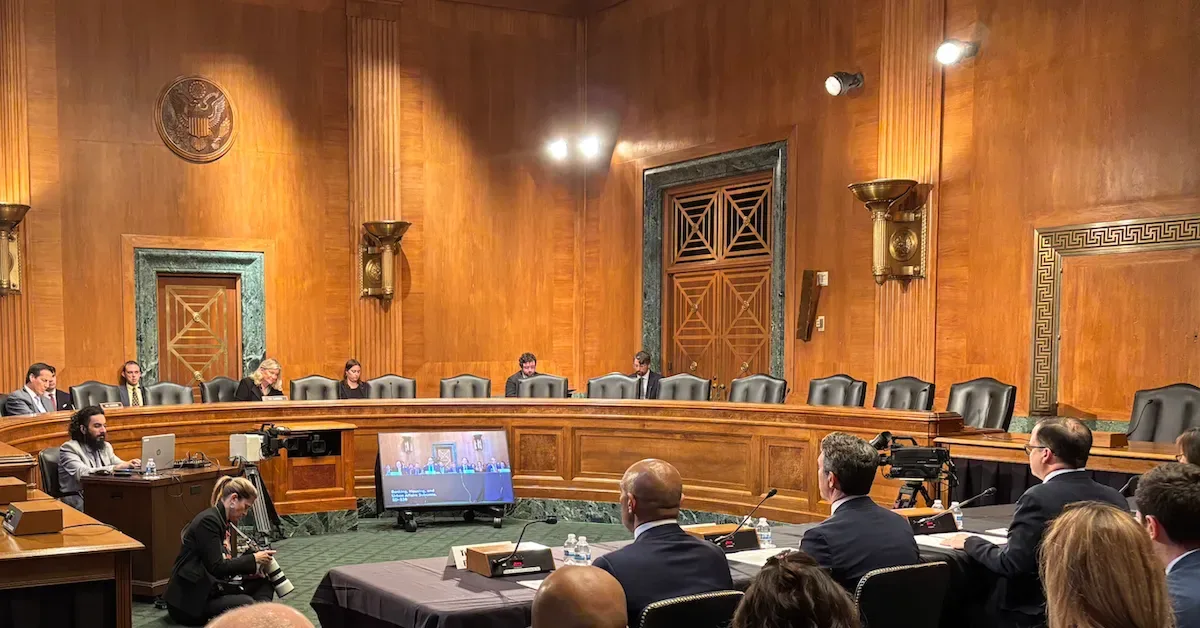
The U.S. Senate Banking Committee is officially moving forward with the Digital Asset Market Clarity Act of 2025, scheduling a critical markup hearing for Thursday, May 14. The legislative push marks a pivotal moment for U.S. crypto market structure, signaling that lawmakers are ready to advance the bill despite lingering concerns from traditional financial institutions.
The Clarity Act crypto bill had been stalled since January following a major industry backlash. Coinbase CEO Brian Armstrong notably pulled his exchange's support over restrictive provisions regarding stablecoin yields. To break the deadlock, Senators Thom Tillis and Angela Alsobrooks introduced a compromise text last week.
The updated language prohibits crypto companies from offering yield on static stablecoin reserve holdings, but permits rewards for stablecoins actively involved in network activities. Despite this breakthrough with crypto-native firms, traditional finance remains hesitant. A coalition of major banking trade associations, including the American Bankers Association and the Bank Policy Institute, submitted formal feedback demanding stricter consumer protections.
Additional work is needed to arrive at text that embraces the innovation represented by digital assets while also protecting consumers.
- American Bankers Association and allied trade groups
Meanwhile, Senator Kirsten Gillibrand is pushing for a strict ethics provision to be attached to the legislation. Citing recent polling data where 73% of registered U.S. voters expressed concern, Gillibrand is demanding a ban that would prevent senior government officials from profiting off the crypto industry while actively regulating it. If the bill passes the Banking Committee, it must still be reconciled with a competing version from the Senate Agriculture Committee.
SEC Eyes AI and Onchain Trading Rules
As Congress debates the Clarity Act, the regulatory landscape is shifting on other fronts. SEC Chair Paul Atkins recently indicated that the agency is drafting new rules specifically targeting onchain trading systems, crypto vaults, and blockchain settlement infrastructure.
Atkins noted that existing securities frameworks struggle to accommodate decentralized protocols that merge multiple market functions into a single automated system. This regulatory gap is becoming more pronounced as artificial intelligence increasingly drives automated financial transactions across blockchain networks.
The Legislative Tightrope for Digital Assets
The decision to push the Clarity Act to a markup hearing without full consensus from the traditional banking sector is a calculated risk by the Senate Banking Committee. By prioritizing the Tillis-Alsobrooks stablecoin compromise, lawmakers are clearly prioritizing the retention of major crypto players like Coinbase over the immediate blessing of legacy banks.
However, the path to law remains exceptionally steep. Even if the committee clears the bill on May 14, the required merger with the Senate Agriculture Committee's version guarantees further friction. Furthermore, the SEC's parallel move to regulate onchain infrastructure under Paul Atkins suggests that even if Congress provides structural clarity, the technical execution of decentralized finance will face intense, separate scrutiny from federal agencies.