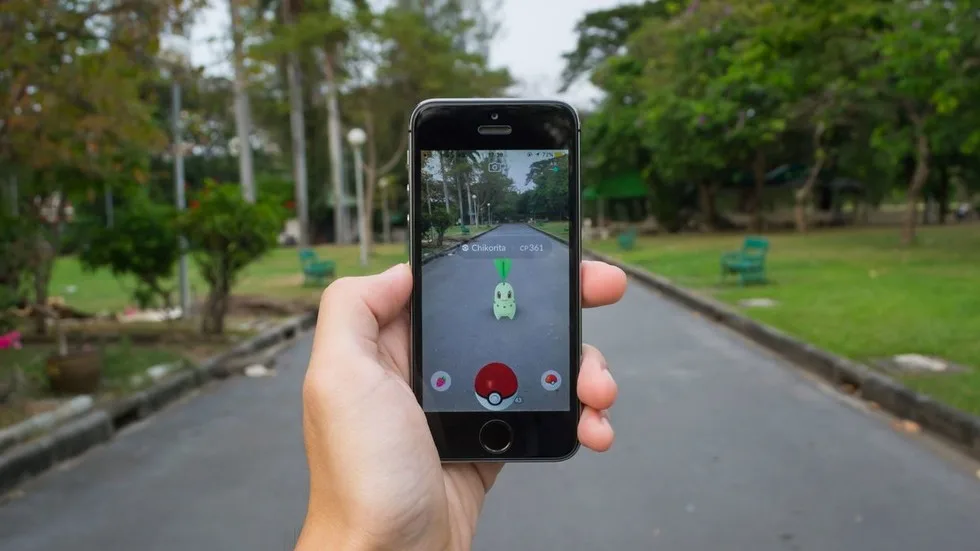
Millions of players who spent the last decade catching digital monsters have unknowingly contributed to a massive AI project, as Pokemon Go mapping data is now powering autonomous delivery robots. Niantic Spatial, an AI spin-off from the game's developer, has partnered with Coco Robotics to utilize over 30 billion user-generated images to navigate city streets with centimeter-level precision.
For privacy-conscious gamers and tech enthusiasts, this development highlights the hidden value of crowdsourced augmented reality data. It explicitly transforms a casual mobile gaming experience into a foundational pillar for real-world robotics and urban infrastructure.
Released in 2016, the augmented reality game was downloaded over 500 million times and amassed 232 million monthly players at its peak. Today, Coco Robotics relies on this massive dataset to operate approximately 1,000 delivery bots across Los Angeles, Chicago, Miami, and recently Helsinki, Finland.
John Hanke, CEO of Niantic Spatial, explained the technical synergy between the two ventures. "It turns out that getting Pikachu to realistically run around and getting Coco’s robot to safely and accurately move through the world is actually the same problem," he stated, noting that the company can now precisely locate users in over a million locations worldwide.
Privacy Concerns and Security Warnings
The unprecedented scale of this data collection has sparked backlash from critics, who argue that players effectively performed unpaid labor to help an AI company build a massive surveillance tool. In response, developer Niantic emphasized that environmental scanning was always an optional feature and that the collected visual data is strictly anonymized and disconnected from individual player accounts.
The game's location-tracking capabilities have historically drawn scrutiny from government entities. Following the escalation of the Ukraine conflict in 2022, Niantic pulled the app from the Russian and Belarusian markets. Prior to the ban, Russian officials, including a retired Federal Security Service (FSB) general, warned that the app could be exploited for intelligence gathering, describing the gameplay as voluntary recruitment without coercion.
My Take
The revelation that 30 billion images from a mobile game are now steering a fleet of 1,000 Coco Robotics delivery bots is a masterclass in long-term data monetization. Niantic has successfully pivoted from a consumer gaming publisher to a spatial computing powerhouse, proving that the true product of augmented reality was never the digital creatures, but the high-fidelity, crowdsourced 3D map of the physical world.
Looking ahead, this centimeter-precise mapping capability gives Niantic Spatial a distinct competitive advantage over traditional mapping services, which rely heavily on vehicle-mounted cameras rather than pedestrian-level visual data. However, as AI companies increasingly harvest consumer data to train physical robots, the industry will inevitably face stricter regulatory scrutiny regarding user consent and the ethical boundaries of gamified data collection.