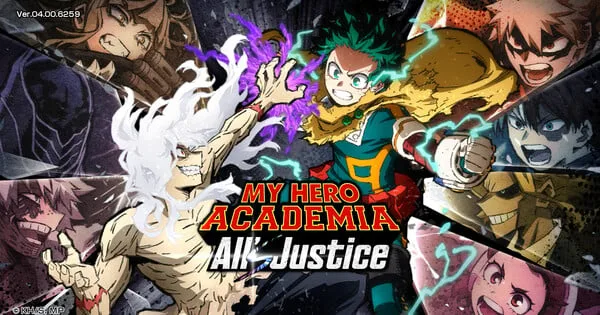
Players diving into MY HERO ACADEMIA: All's Justice will find a 3D arena fighter that heavily caters to series veterans while leaving franchise newcomers completely in the dark. Developed by Byking Inc. and published by Bandai Namco, this direct follow-up to My Hero One's Justice 2 refines the franchise's tag-team combat but relies entirely on the player's existing knowledge of the anime's Final War arc. The game wastes no time getting into the action, dropping players into a city overworld to fulfill missions, battle online, or engage with a story mode that skips crucial narrative buildup.
The narrative structure offers branching paths depending on the chosen character, allowing players to experience simultaneous battles from the Final War arc. Scenarios like Todoroki hunting down Dabi, Endeavor clashing with All For One, and Uraraka confronting Toga act as excellent vehicles for showcasing character abilities without compromising the original lore. When the presentation peaks, the cel-shaded 3D character models and dynamic cutscenes rival the anime's most iconic moments. However, the storytelling frequently relies on awkward, cheap-looking still frames pulled directly from the show, which severely undercuts the cinematic tension.
Refined Combat and Tag-Team Mechanics
Byking Inc. has significantly overhauled the combat foundation, delivering the fastest and most responsive system the series has seen to date. The janky, floaty physics of previous installments have been replaced with aggressive, high-speed mechanics that raise the learning curve while keeping basic controls accessible.
- Tag-Team Combos: Players can swap characters mid-combo or call in teammates for assist damage to extend offensive pressure.
- Plus Ultra Attacks: Filling the battle gauge allows fighters to execute devastating cinematic finishers or enter an enhanced state for maximum damage output.
- Aerial Combat: Basic attack strings transition seamlessly between ground and air juggles, demanding faster reaction times from players.
While the combat shines, the game struggles with environmental variety and long-term replayability. Because the Final War arc takes place in a handful of specific locations, such as the floating Hero Academy, the Story Mode arenas quickly become visually repetitive. Outside of the main campaign and online multiplayer, the single-player missions largely feel like filler content designed around specific combat handicaps, offering only a few hours of meaningful gameplay.
The Cost of Pure Canon Compliance
MY HERO ACADEMIA: All's Justice succeeds as a mechanical upgrade but struggles to justify its existence as a standalone video game. By strictly adapting the Final War arc, the developers backed themselves into a corner regarding stage variety and narrative accessibility. Unlike broader anime fighters that invent scenarios to justify diverse rosters and locations, this title sacrifices environmental diversity for strict canon compliance.
For diehard fans who have already mastered My Hero One's Justice 2, the tighter combat and updated character forms make this a worthwhile arena brawler. However, fighting game enthusiasts looking for the next genre-defining title will find a mechanically sound but ultimately standard experience with a very short shelf life.