Quantum computers hold immense potential, but their practical future depends on mastering the complex, competing electronic states within quantum materials. In a breakthrough study published in Nature Physics, an international team of researchers led by MIT has successfully observed how these delicate states rebuild themselves after being blasted by lasers, revealing a mechanism that closely resembles water freezing into ice.
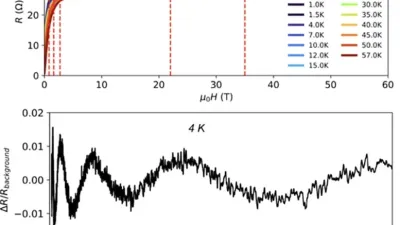
The researchers focused on erbium tritelluride, a rare-earth material capable of simultaneously hosting two distinct quantum phases known as charge density waves (CDWs). "Just like superconductivity, charge density waves are a collective phenomena where electrons move together in certain ways," physicist Yifan Su explained. The material develops its first dominant CDW below -8 °C (18 °F).
A second, perpendicular CDW emerges below -113 °C (-171 °F), creating a microscopic checkerboard pattern of electron density. Because these co-existing phases only appear at extreme cold and are difficult to study in a normal equilibrium state, the team needed a dynamic way to observe their formation.
The Two-Pulse Laser Disruption
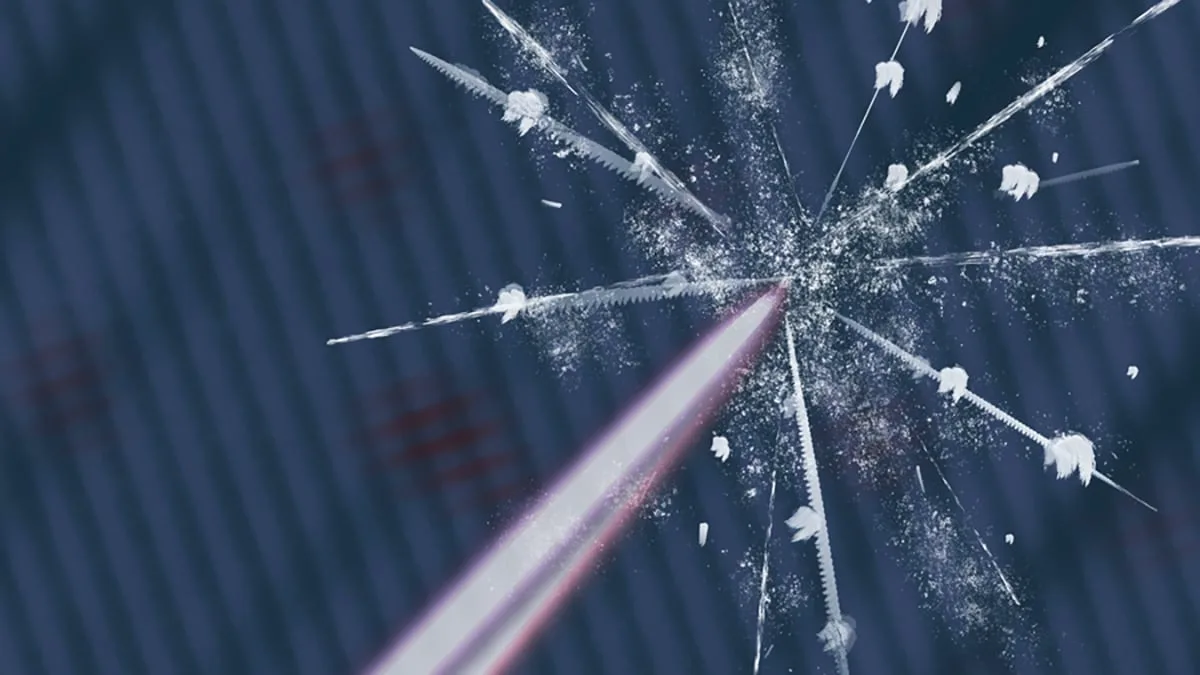
To capture the phase transition in action, the team deployed a "one-two punch" of short, intense laser pulses. The first pulse shattered the checkerboard order of the electron phases, forcing them to reconstruct from scratch. The second pulse acted as a high-speed measurement tool to track the recovery process.
The results revealed fundamentally different formation mechanisms for the two phases. While the dominant phase returned gradually and uniformly, the secondary phase reappeared in isolated pockets that slowly spread across the material. This behavior directly mirrors the way ice crystals nucleate and expand as water freezes.
"One of the biggest questions in physics is why some materials host multiple phases while others do not," physicist Nuh Gedik noted. Understanding whether these phases reinforce, compete, or co-exist independently is crucial for unlocking exotic properties in more complex systems, such as high-temperature superconductors.
People believe the cornerstone of replacing silicon lies in quantum materials that have multiple coexisting phases. Our experiment provides a very neat way to study these multiple phases.
- Alfred Zong, Stanford University
The Blueprint for Post-Silicon Computing
The discovery that secondary quantum phases nucleate like ice rather than forming uniformly provides a critical missing piece for materials science. If engineers can understand exactly how these isolated pockets form and spread, they could theoretically design synthetic materials that "freeze" into desired quantum states on command.
This level of precise control is the ultimate prerequisite for moving beyond traditional silicon chips. While current quantum computers require massive, specialized cooling infrastructure to maintain these delicate states, mapping the exact nucleation process of charge density waves brings the industry one step closer to engineering stable, multi-phase quantum materials that could eventually operate in practical environments.
This article was written by AI from reporting by sciencealert.com.