Microsoft is officially rolling out Project Zenith, a heavily customized, distraction-free version of Windows 11 built specifically for developers. Designed to run on high-end hardware with 64GB or more of unified memory, this new environment strips away consumer bloatware to focus entirely on local AI development and coding efficiency.
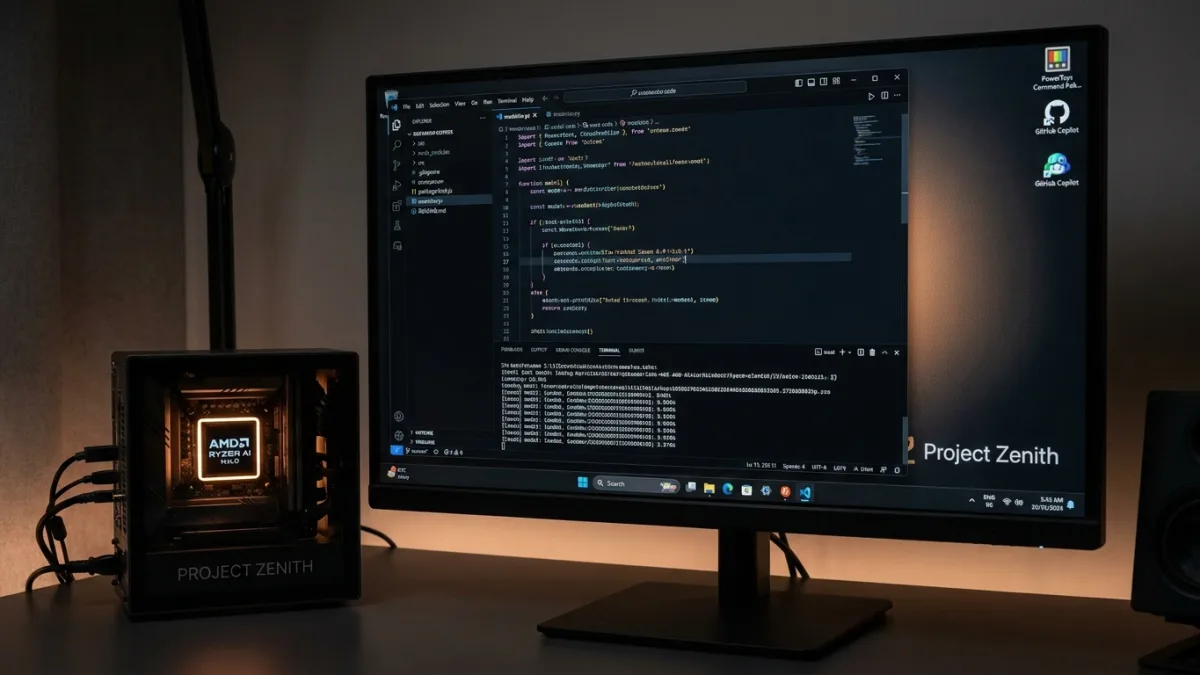
The first Project Zenith device, a miniature PC powered by AMD’s new Ryzen AI Halo chips, was unveiled at IFA earlier today. Microsoft plans to expand this ecosystem in the coming months with additional silicon partners. The core advantage of these machines is their ability to run massive 30-billion parameter AI models locally and unmetered, drastically reducing a developer's reliance on expensive cloud tokens.
Project Zenith devices come with a preconfigured Windows setup for development and a set of tools curated for what developers reach for first. On these devices, developers can run 30B+ parameter models locally and unmetered.
- Logan Iyer, CVP of Windows Platform and Developer, Microsoft
Under the Hood: What Project Zenith Changes in Windows 11
To create a frictionless environment, Microsoft has fundamentally altered how the operating system behaves out of the box. The changes prioritize file visibility and rapid command execution over consumer-facing suggestions.
- Preinstalled Developer Tools: The OS comes loaded with Visual Studio Code, GitHub Copilot, PowerToys, WinAppCLI, and Windows Dev Skills.
- File Explorer Overhaul: The system is configured to show file extensions, hidden files, and the full path in the title bar by default, alongside enabled long-path support.
- Zero Distractions: Start menu tips, account notifications, recently used files and folders, and sync provider tips are completely disabled.
- Instant Commands: The PowerToys Command Palette is enabled by default for rapid navigation and execution.
The Blueprint for a 'Windows 11 Pro' We Actually Want
This initiative reveals a frustrating truth about the current state of Microsoft's flagship OS. If developers require a specialized, "distraction-free" version just to get their work done efficiently, it highlights exactly how bloated standard Windows 11 has become. Tweaks like showing file extensions by default and disabling account notifications shouldn't be exclusive to a developer build - they are fundamental features that every power user expects from a professional operating system.
Furthermore, locking this clean experience behind hardware that requires 64GB of unified memory suggests Microsoft is positioning local AI development as a premium, workstation-exclusive tier. While running 30B parameter models locally is a massive leap forward, the high barrier to entry means indie developers who cannot afford Ryzen AI Halo miniature PCs may be left behind, remaining dependent on metered cloud subscriptions while enterprise teams reap the benefits of unmetered local processing.
This article was written by AI from reporting by theverge.com.