

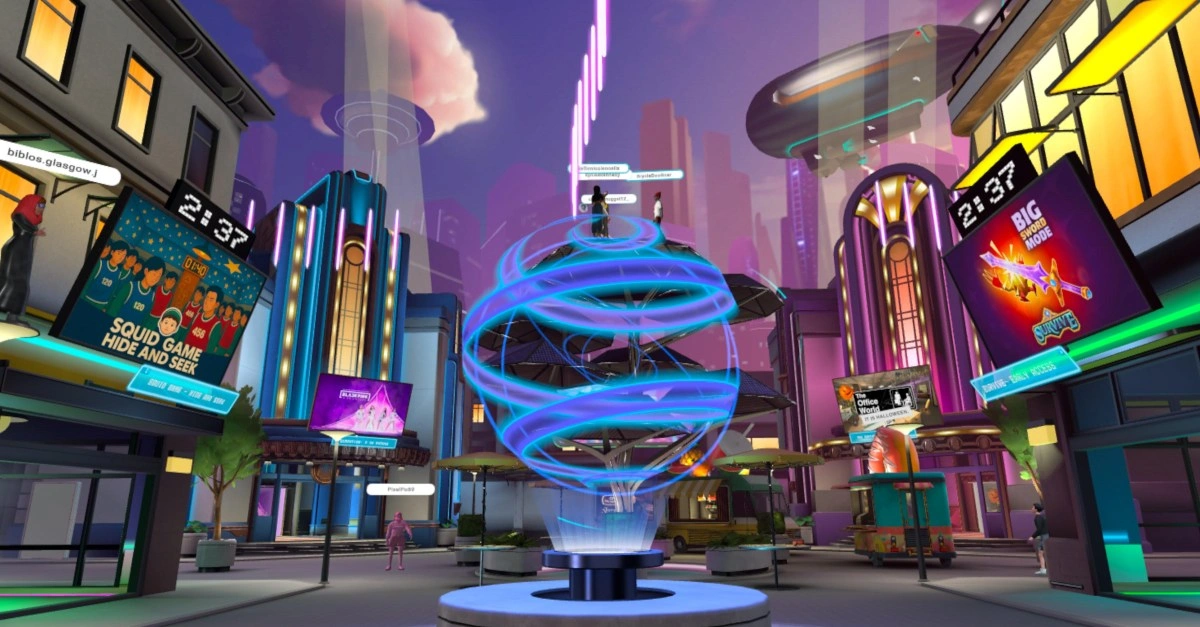
Meta is executing a decisive strategic pivot that effectively decouples its flagship metaverse platform from the hardware originally designed to define it. In a move to salvage engagement and drive mass adoption, the company is repositioning Horizon Worlds to operate "almost exclusively" as a mobile application, shifting focus away from the virtual reality roots that birthed it. This transition marks a significant admission that the VR-first approach to the metaverse has failed to generate the mainstream social momentum Meta CEO Mark Zuckerberg originally envisioned.
This restructuring involves a clear bifurcation of Meta's ecosystem. While Horizon Worlds chases the massive install base of iOS and Android userspositioning itself closer to competitors like Robloxthe Quest hardware line will receive a distinct, system-level social layer independent of the Horizon app. This separation aims to remove the friction for VR users who previously felt forced into a specific app for social interaction, while simultaneously opening the floodgates for mobile users who do not own a headset.
The Mobile-First Mandate
The decision to prioritize mobile platforms over virtual reality is driven by the stark reality of user numbers. By transforming Horizon Worlds into a mobile-first experience, Meta is acknowledging that the barrier to entry for VR is still too high for a scalable social network. The new strategy treats the smartphone not as a companion device, but as the primary window into the metaverse. This shift allows Meta to leverage the billions of existing mobile devices globally, attempting to capture the younger demographic that currently spends hours in accessible, flat-screen social gaming environments.
In this new paradigm, the user experience (UX) and interface design of Horizon Worlds are being overhauled to cater specifically to touchscreens rather than hand controllers. The immersive, 3D spatial audio and presence that defined the VR version are being adapted into a more traditional third-person mobile gaming format. This move suggests that Meta is prioritizing daily active users (DAU) and retention metrics over the depth of immersion, betting that accessibility will trump the novelty of virtual presence.
Decoupling Quest from Horizon
For owners of Quest headsets, this news signals a major improvement in system usability. Previously, the Quest operating system was heavily intertwined with Horizon Worlds, often forcing users into the app for basic social functions like avatars or meeting friends. The new strategy promises a dedicated system-level social infrastructure for Quest. This means VR users will likely be able to interact, form parties, and launch games without ever loading into the heavy, often buggy Horizon Worlds environment.
This separation benefits the hardware division by allowing the Quest platform to stand on its own merits as a gaming and productivity console, unburdened by the reputation of a struggling social app. It allows the hardware team to focus on optimizing the core VR experiencelatency, passthrough, and hand trackingwithout being tethered to the development cycle and strategic pivots of the Horizon software team.
Strategic Comparison: The Pivot
| Feature | Old Strategy (VR-First) | New Strategy (Mobile-First) |
|---|---|---|
| Primary Platform | Meta Quest Headsets | iOS & Android Smartphones |
| Target Audience | Early Adopters & VR Enthusiasts | Gen Z & Mass Market Social Gamers |
| Hardware Requirement | $200-$500 Headset | Existing Smartphone |
| Social Integration | Forced via Horizon App | System-Level Layer (Quest) vs. App (Mobile) |
| Core Metric | Immersion Depth | Accessibility & User Growth |
My Take: A Necessary Concession
This pivot is arguably the smartest, albeit most painful, decision Meta has made regarding the metaverse. By uncoupling the software from the hardware, Meta saves both. Horizon Worlds was never going to succeed as a VR-exclusive walled garden; the friction was simply too high. Moving to mobile puts it in direct competition with Roblox and Fortnite, a brutal arena but one with a vastly larger total addressable market.
Simultaneously, freeing the Quest headset from the baggage of Horizon Worlds allows the hardware to mature as a general-purpose computing device. This is not the death of VR, but rather a maturation of the strategy: acknowledging that while VR is the future of immersion, mobile is the present of social interaction.
Frequently Asked Questions
Will Horizon Worlds still work on Quest VR headsets?
Yes, but it will no longer be the primary focus or the default system interface. It will exist as a standalone app that VR users can choose to download, rather than a mandatory system layer.
Why is Meta shifting focus to mobile?
The install base for smartphones is in the billions, whereas VR headsets are in the millions. To build a sustainable social economy and compete with platforms like Roblox, Meta needs the scale that only mobile can provide.
What happens to my Meta Avatar?
Your avatar will likely remain cross-compatible. Meta envisions avatars as a persistent identity across Instagram, Facebook, Horizon (mobile), and the Quest system interface, unifying your digital presence across 2D and 3D surfaces.
