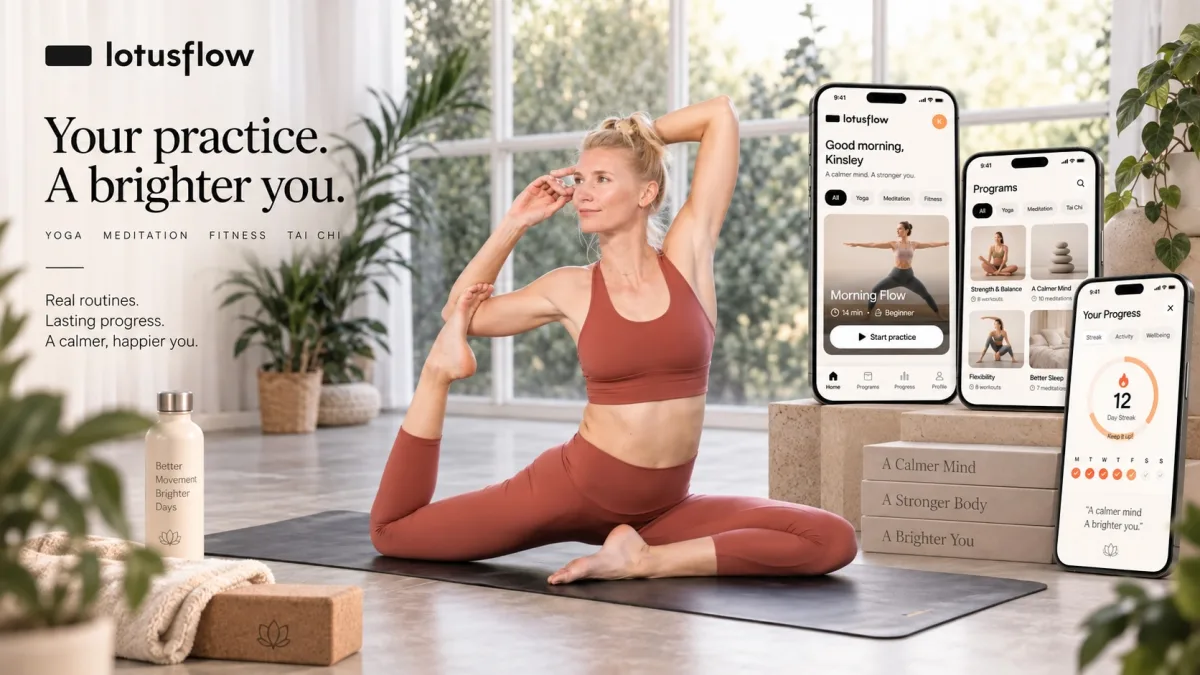
The Lotus Flow app is targeting home fitness users who are tired of juggling separate subscriptions for yoga, Pilates, and mindfulness. Available on iOS and Android, the platform consolidates a massive library of wellness routines into a single personalized hub. Instead of focusing on a single type of workout, the app generates structured programs based on a user's specific goals, experience level, and daily schedule.
By integrating physical fitness with mental wellbeing, the platform aims to be a comprehensive daily companion. Users provide their preferences during the onboarding process, which the app uses to suggest a customized daily routine while still allowing free exploration of its broader catalog.
A Comprehensive Library Beyond Traditional Yoga
While many wellness apps strictly focus on standard yoga flows, Lotus Flow expands its catalog to include a wide variety of movement styles. The yoga section covers Vinyasa, Hatha, Yin, Prenatal, and Restorative practices. For users seeking more intensity, the app integrates cardio, strength training, calisthenics, and core-focused Pilates sessions.
The platform also caters to low-impact and accessibility needs. It features dedicated Wall Pilates and Chair Yoga classes, which are ideal for older adults, beginners, or anyone recovering from an injury. To round out the physical offerings, users can access Tai Chi, flexibility work, mobility drills, and breathwork exercises.
Mindfulness is treated as a core pillar rather than an afterthought. The app includes guided sessions targeting relaxation, sleep improvement, stress reduction, and general mental wellbeing, allowing users to seamlessly transition from a high-intensity workout to a calming meditation within the same interface.
Personalization and Flexible Scheduling
To prevent users from feeling overwhelmed by the sheer volume of content, Lotus Flow relies heavily on its filtering system. The Classes section allows users to narrow down workouts by style, experience level, specific focus, and duration. This makes it easy to find exactly what fits into a busy day.
Session lengths are highly adaptable, ranging from quick routines under 10 minutes to comprehensive 45-minute workouts. This flexibility is particularly useful for home fitness users trying to squeeze a session in between work and family commitments. The app also tracks workout history and progress over time, helping users maintain consistency without having to manually log their activities.
Pricing, Availability, and User Reception
On the U.S. App Store, Lotus Flow currently holds a strong 4.6 out of 5 rating based on approximately 3,500 reviews. Users frequently praise the inclusion of niche categories like Chair Yoga and the convenience of having diverse guided classes in one place.
The platform operates on a subscription model with three primary tiers. At the time of writing, the monthly plan costs $29.99, the 3-month plan is priced at $38.99, and the 6-month plan is available for $59.99. Prices and promotional offers may vary by region and platform, so users should verify the final cost before committing.
Pros and Cons
Before subscribing, users should weigh the platform's extensive features against its cost and their actual fitness needs.
- Pros: Offers a massive variety of yoga, Pilates, fitness, and mindfulness content. Includes accessible options like Chair Yoga and Wall Pilates. Features personalized plans, robust filtering, and progress tracking for sessions ranging from 10 to 45 minutes.
- Cons: The sheer volume of content may be overwhelming and unnecessary for users who only want a basic yoga app. Class difficulty can vary unexpectedly, and the $29.99 monthly subscription cost is relatively high compared to single-purpose competitors.
The True Cost of Consolidated Wellness
Lotus Flow's pricing strategy reveals exactly who this app is built for: the committed, long-term home fitness enthusiast. At $29.99 for a single month, the entry price is steep, but the 6-month tier at $59.99 drastically drops the effective monthly cost to just $10. The developer is clearly incentivizing users to lock in and make the app their primary fitness hub.
If you are currently paying for a dedicated meditation app, a separate Pilates subscription, and a yoga studio membership, consolidating them into Lotus Flow makes financial sense. However, if you only plan to roll out your mat once a week for a basic stretch, the expansive library - and the price tag attached to it - will likely be overkill.