Google is rolling out a major update to the Google Home app, introducing ready-made templates that eliminate the steep learning curve of smart home automation. Arriving with Google Home v4.20, the update fundamentally changes how users build routines by offering actionable starting points rather than forcing them to build complex triggers from scratch.
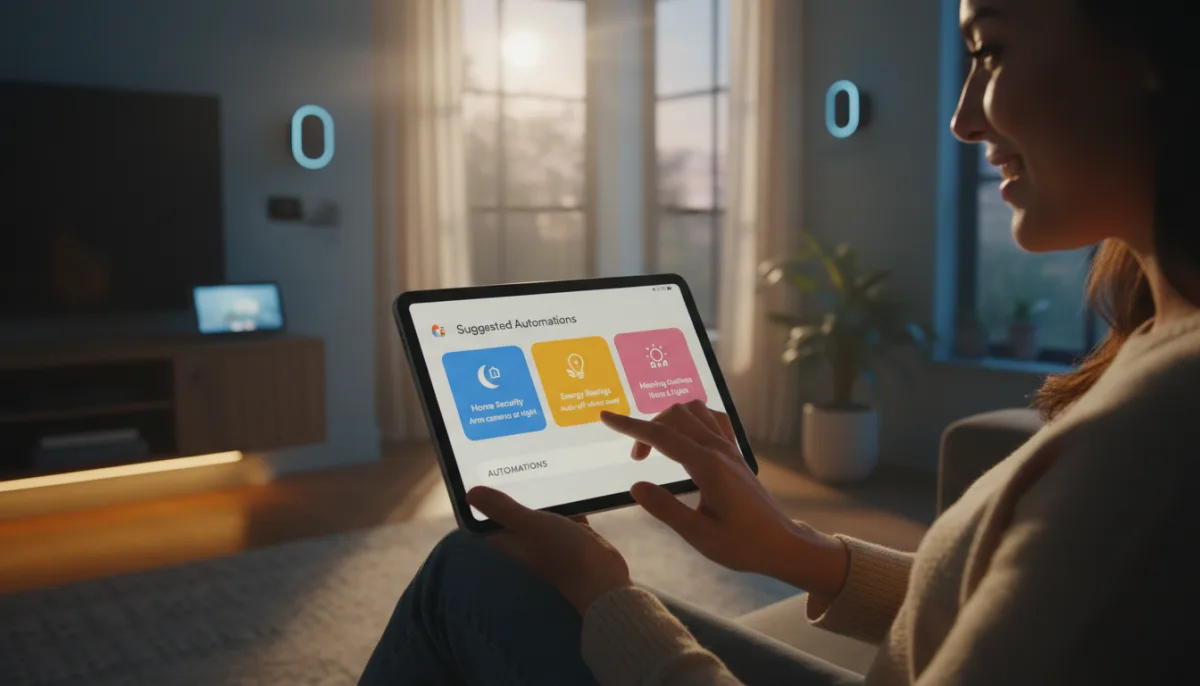
The standout feature, officially detailed by Google, is the introduction of Suggested Automations. These tailored recommendations will appear at the top of the Automations tab, providing users with pre-configured systems designed for real-life scenarios. The update is currently rolling out globally to all Android and iOS users over the coming weeks.
New Features to Try: Suggested Automations
Instead of staring at a blank canvas, users can now select from a menu of ready-made automations that can be customized to fit their specific hardware. Google has designed these templates around practical daily needs, making it significantly easier to kickstart a smart home ecosystem.
- Home Security: Automatically turn on specific outdoor or indoor cameras at night.
- Energy Savings: Configure lights and thermostats to power down automatically when the Home app detects that no one is in the house.
- Morning Routines: Set up systems that automatically play music, adjust lighting, or trigger appliances at a designated time every morning.
Enhanced Camera Controls and Setup
Beyond automations, the latest update delivers targeted upgrades for third-party cameras, specifically focusing on models sold by Walmart. The retailer's Onn Outdoor and Onn Floodlight cameras, which feature built-in lighting, now benefit from a dedicated button within the Home app to toggle the light and adjust brightness directly.
While Google has not confirmed if the Nest Cam with Floodlight will receive identical UI adjustments, the overall camera setup process has been accelerated. Early access members will also begin seeing new visual cards on the Nest Hub, alongside continued integration upgrades for Gemini.
Crucial Bug Fixes and Performance Upgrades
To address ongoing stability issues, Google has deployed a comprehensive list of bug fixes aimed at improving the reliability of live feeds and device controls. The update includes the following specific corrections:
- More reliable camera live streaming: Resolves an issue where live streams failed to refresh or resume after unlocking a mobile device.
- Optimized camera live view: Prevents slow performance and lag during extended viewing sessions.
- Prevent accidental lock states: Corrects the status display of smart door locks so they no longer show incorrect offline icons.
- Face Match setup reliability: Fixes a bug where the setup flow would abruptly exit during brief network interruptions.
- Flicker-free fan controls: Resolves a visual flickering issue when manually toggling a thermostat fan on and off.
- Stable favorites reordering views: Fixes a crash that occurred when rotating the screen while organizing favorite tiles.
- Polished Google TV previews: Removes an unintended black border that appeared on offline doorbell camera previews on Google TV.
The End of the Smart Home Learning Curve
The introduction of Suggested Automations is a quiet but massive strategic shift for Google. For years, the biggest barrier to smart home adoption hasn't been the hardware, but the intimidating "if this, then that" logic required to make devices work together. By replacing the blank canvas with one-tap templates, Google is finally treating the Home app like a consumer product rather than a developer tool.
This move directly counters the simplicity of Apple's HomeKit ecosystem, aiming to capture users who want the benefits of automation without the hassle of programming it. Furthermore, the specific UI updates for budget-friendly hardware like Walmart's Onn cameras show that Google is serious about maintaining a broad, inclusive ecosystem, ensuring that even entry-level devices feel like premium integrations.