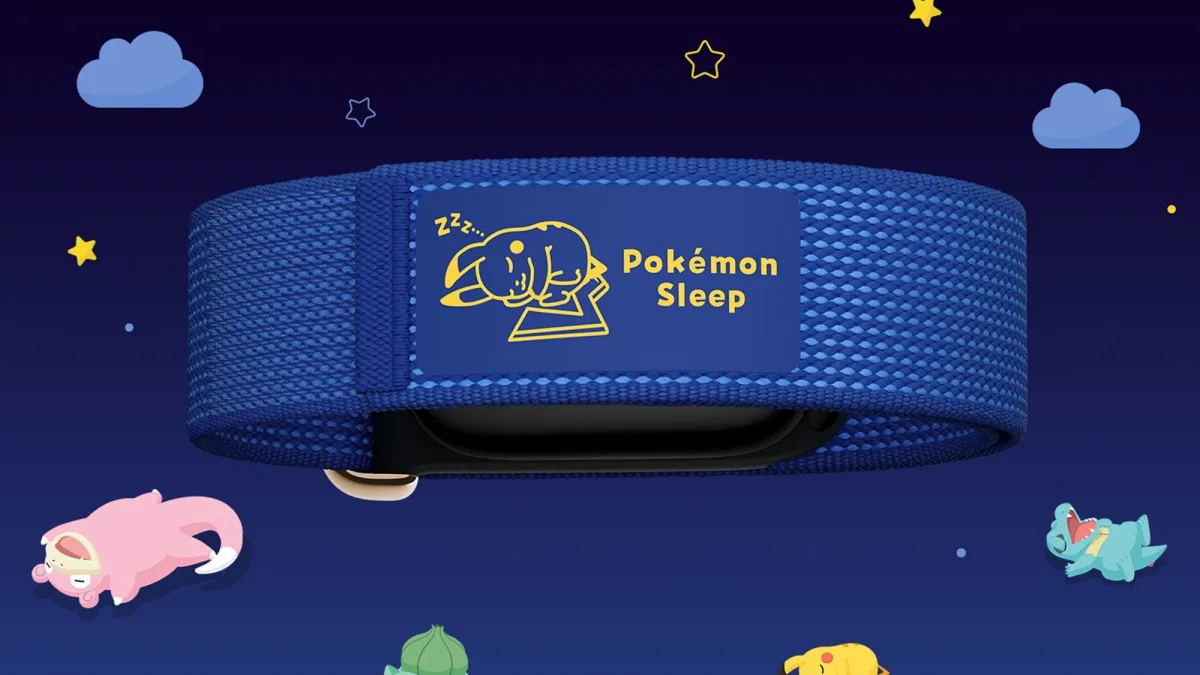
Google has officially unveiled the Fitbit Air Pokémon Sleep Edition, a $130 wearable designed to gamify your nightly rest. Launching in mid-September to coincide with the franchise's 30th anniversary, the tracker integrates directly with the Pokémon Sleep app to turn real-world sleep metrics into in-game rewards.
The special-edition band arrives in a custom Sleepy Blue colorway, featuring soft blue tones and a unique silk-print label from the Pokémon Sleep brand. Designed for 24/7 wear, the micro-adjustable tracker maintains the lightweight, unnoticeable feel of the standard Fitbit Air. It is currently up for pre-order for $130. Every purchase also includes a three-month trial of Google Health Premium for deeper personalized coaching.
To bridge the gap between health tracking and gaming, the device utilizes Google Health's advanced algorithms to monitor light and deep sleep stages. These metrics are then synced to the Pokémon Sleep app using Health Connect on Android or Apple Health on iOS. This cross-platform compatibility ensures that both overnight sleep and daytime naps contribute to your in-game progress, working seamlessly across all Google Pixel and Fitbit wearables.
How Sleep Tracking Powers Your Game
- Gather Pokémon Around Snorlax: Waking up prompts Pokémon with similar sleep types to gather around Snorlax, allowing players to complete their Sleep Style Dex and recruit new helper Pokémon.
- Calculate Your Drowsy Power: Helper Pokémon collect Berries to increase Snorlax's Strength. The Sleep Score, derived from Google Health data, multiplies this strength to generate Drowsy Power.
- Discover Rare Sleep Styles: Accumulating higher Drowsy Power attracts a wider variety of Pokémon and unlocks rare sleep styles the following morning.
The Gamification of Rest
The integration of the Fitbit Air with Pokémon Sleep represents a brilliant strategic pivot for Google's wearable division. By tying a $130 hardware purchase directly to a popular mobile game's progression loop, Google is effectively lowering the barrier to entry for health tracking among younger demographics and hardcore gamers.
While the standard Fitbit Air appeals to traditional fitness enthusiasts, this crossover leverages the psychological hook of Drowsy Power and rare Pokémon encounters to build consistent sleep habits. If successful, this could pave the way for more gamified wearables, potentially integrating with other augmented reality titles like Pokémon GO to track active daytime metrics.
This article was written by AI from reporting by bleedingcool.com.