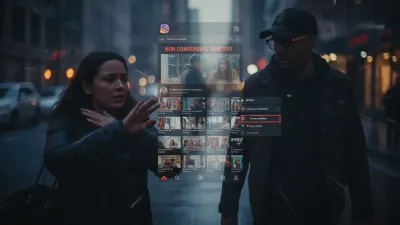
Your public Facebook posts are now the foundation for Meta's latest search engine overhaul. Starting today, the company is rolling out a dedicated AI Mode that generates conversational search results using data scraped directly from public user content across its platforms. This marks a significant shift in how users will discover information within the social network, moving away from traditional link-based results.
Powered by the new Muse Spark AI model, this feature appears as a distinct option alongside traditional search filters like "People" and "Marketplace." Instead of returning a standard list of links, Meta’s new AI Mode synthesizes answers grounded in public discussions. Users can also ask follow-up questions to refine their results, similar to the AI search functionality recently introduced in Meta's new Reddit-like Forum app.
Expanding the Muse Spark AI Ecosystem
The integration of Muse Spark AI extends beyond simple text queries. Meta has confirmed that the model will eventually unlock new features that cite recommendations and content shared across Instagram, Facebook, and Threads. This creates a unified, cross-platform search experience that relies entirely on user-generated content to answer questions.
Beyond search, Meta is introducing several creative AI tools to boost user engagement. These include smart suggestions for collage templates and new photo presets capable of digitally swapping sports jerseys onto fans in images, further embedding generative AI into everyday social interactions.
The Walled Garden Becomes a Search Engine
Meta’s decision to power Muse Spark AI with public user posts is a direct counter to Google’s recent strategy of indexing Reddit threads for its AI Overviews. By tapping into the billions of conversations happening across Facebook, Instagram, and Threads, Meta is leveraging its massive, exclusive data moat to keep users inside its ecosystem rather than bouncing out to a traditional search engine.
However, this shift fundamentally changes the nature of a "public post" on Meta's platforms. Users must be more hyper-aware of their privacy settings than ever before; if a post is public, it is no longer just visible to followers - it is officially training data and source material for the next generation of social search. For creators and businesses, this could mean unprecedented visibility, but for the average user, it is a stark reminder of how their data fuels Meta's AI ambitions.