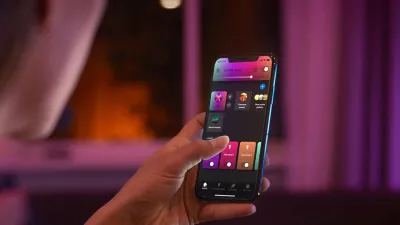
The launch of F-Droid 2.0 marks the largest overhaul to the free and open-source Android app repository in a decade, solving long-standing usability issues for privacy-conscious users. After more than a year of development and 14 test releases, the platform has been completely rewritten using Kotlin Compose. This modernization aligns the app with current Material Design standards while retaining the core values of the F-Droid ecosystem.
For years, users seeking software without trackers or engagement algorithms had to tolerate a somewhat clunky interface. This update changes that dynamic entirely. By leveraging new Android APIs and regulatory shifts, F-Droid 2.0 delivers an experience that rivals native, built-in app stores in both speed and simplicity.
Streamlined Discovery and Smarter Search
Finding the right open-source tool among thousands of applications has historically been a challenge. To fix this, F-Droid 2.0 simplifies its main navigation into three core tabs: Discover, Search, and My Apps. The Discover screen now highlights newly added, recently updated, and highly downloaded apps, while integrating higher-level meta categories to guide browsing.
The category system itself received a massive expansion. Instead of dumping all games into one broad list, the repository now distinguishes between 17 different game genres. Search functionality has also been upgraded to scan app descriptions and translated content, rather than just titles. Furthermore, the search engine now offers vastly improved support for Chinese, Japanese, and Korean (CJK) writing systems.
How to Leverage the Unified Installer
Historically, alternative app stores suffered from a second-rate installation experience forced by Android restrictions. F-Droid 2.0 introduces a unified installer that takes advantage of new pre-approval APIs to streamline the process.
- Enable Automatic Updates: F-Droid 2.0 now fetches and installs app updates in the background by default. The old pull-to-refresh gesture has been removed entirely, though manual update controls remain available in the action overflow menu.
- Experience Seamless Installs: On supported devices, you can now confirm an installation immediately after tapping the button, rather than waiting for the download to finish first.
- Utilize Advanced Filtering: You can now combine multiple criteria to narrow down app lists. For example, you can filter for action games that are compatible with your specific device while excluding apps that rely on non-free network services.
Privacy Adjustments and Security Changes
F-Droid has long catered to users operating in environments where privacy is critical, but the landscape of network security has shifted. The app's built-in Tor auto-detection has been removed in favor of a simplified approach. Going forward, using the TorVPN app is the recommended method for secure routing, though manual proxy settings remain available for advanced users.
The platform's famous "panic" features have also seen adjustments. The app-hiding function, which previously disguised F-Droid as a fully functional calculator, now only masks the app icon and name. This change ensures users understand the limits of the disguise, as the app remains visible in system settings during forensic inspection. Additionally, the ability to wipe apps via a panic trigger like Ripple has been temporarily removed, as the highly specialized feature requires further evaluation to maintain.
Technical Foundation and Dropped Support
Behind the scenes, the shift to Kotlin and Jetpack Compose drastically lowers the barrier for new developers to contribute to the project. However, this modernization requires newer system components. Because of specific fixes introduced in newer OS versions, F-Droid 2.0 officially drops support for Android 6, requiring Android 7 or higher.
The update also changes how the repository interacts with custom operating systems. While F-Droid remains deeply integrated into privacy-focused ROMs like CalyxOS, emteriaOS, iodéOS, Lineage-for-microG, and ShiftOS, the F-Droid Privileged Extension (FPE) is no longer supported. The new Android session installer handles background updates natively, rendering FPE obsolete.
Other Notable Updates
- Nearby Sharing Rework: The feature for sharing apps directly between devices offline is being rebuilt from the ground up for better reliability, with development actively underway.
- Data Usage Controls: Settings have been reworked to give users in regions with expensive mobile data more intuitive control over background network traffic.
- Security Audit: The Open Technology Fund conducted an independent security review of the new codebase, with the full audit report pending publication.
The DMA Is Finally Leveling the Playing Field
The most significant technical achievement in F-Droid 2.0 - the seamless background installer - is not just a coding victory; it is a direct result of geopolitical regulation. For years, Google maintained a strict monopoly on smooth app installations, forcing third-party stores to use jarring, multi-step prompts. The EU's Digital Markets Act (DMA) and global antitrust pressure finally forced Android to open its pre-approval APIs to alternative repositories.
This regulatory shift fundamentally changes F-Droid's market positioning. It is no longer just a niche tool for privacy advocates and developers willing to endure a clunky interface. By matching the frictionless install experience of the Google Play Store, F-Droid 2.0 proves that alternative app ecosystems can be viable for mainstream users when platform holders are legally compelled to play fair.