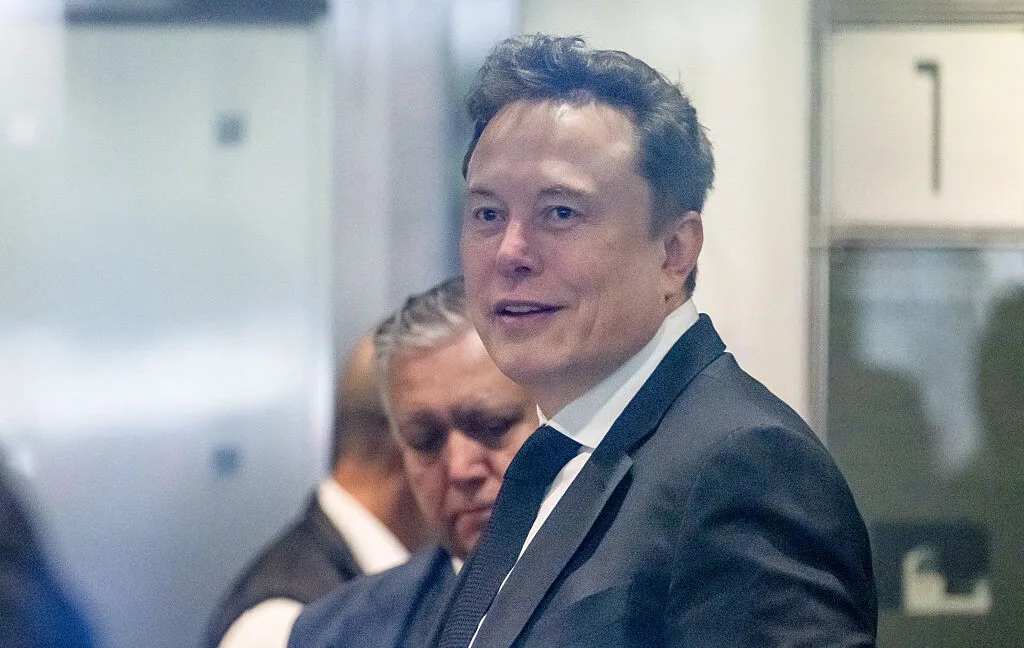
Elon Musk’s high-stakes legal battle against his former company took a turbulent turn during his three-day testimony, revealing significant vulnerabilities in his case. The Elon Musk OpenAI trial has exposed deep contradictions between his public persona as an AI safety advocate and his private corporate maneuvers. Musk is attempting to block the AI giant from going public, arguing that Sam Altman and co-conspirators hijacked a $38 million charitable donation to build an $800 billion for-profit empire.
However, under intense cross-examination by defense lawyer William Savitt, Musk's credibility faced severe tests before Judge Yvonne Gonzalez Rogers. The defense systematically dismantled Musk's narrative, portraying him as a jealous competitor using the legal system to slow down his biggest rival while his own company, xAI, struggles to catch up. Throughout the proceedings, Musk struggled to maintain his composure, leading to several critical errors on the stand.
The 7 Major Stumbles on the Stand
- Making forced concessions: Musk admitted to leaving the company after the other co-founders denied him control over a proposed for-profit arm, directly contradicting his pure-nonprofit narrative.
- Exposing xAI's safety record: The judge overruled objections, allowing the defense to scrutinize the safety record of Musk's own for-profit AI company, xAI, and its Grok chatbot.
- Documentary contradictions: Musk appeared dishonest as the defense repeatedly presented emails, deposition transcripts, and social media posts that directly contradicted his live testimony.
- Insulting the safety team: Musk was confronted with past communications where he called the internal safety researchers "jackasses," which he attempted to downplay as a management tactic.
- Ignorance of safety protocols: Despite xAI issuing them for its own models, Musk admitted on the stand that he did not know what AI "safety cards" were.
- Losing his temper: After explicitly testifying that he never yells or loses his temper, Musk raised his voice and yelled at the defense lawyer over a dispute regarding a 2018 email.
- Political influence revelations: The court allowed discussions regarding Musk's ties to Donald Trump, specifically allegations that Musk used his White House advisory role to hinder the "Stargate" project to benefit xAI.
Cross-Examination Tactics and the xAI Factor
The defense strategy relied heavily on using Musk's own historical communications against him. Savitt introduced a pivotal 2016 email where Musk warned that a nonprofit structure might be "the wrong move" because rival DeepMind was moving too fast. This evidence forced Musk to acknowledge that he had previously considered a corporate shift necessary for the organization's survival, which aligns perfectly with how the current leadership justifies their for-profit transition today.
Furthermore, the court's decision to allow xAI's operations into evidence severely damaged Musk's positioning as an impartial AI babysitter. By highlighting that Musk founded xAI as a for-profit entity from day one, the defense successfully questioned why his AI doomsday scenarios under Altman's leadership would be any less plausible if the company had transitioned to a for-profit model under Musk's direct control.
The Battle Over AI Governance
This trial is ultimately less about charitable intent and more about the brutal reality of artificial general intelligence market dominance. By forcing Musk to admit he once pitched using Tesla as a "cash cow" to fund the nonprofit, the defense effectively neutralized his moral high ground. The revelation that he allegedly leveraged government connections to stall competitor infrastructure projects further paints this as a corporate turf war rather than an ideological crusade.
If Altman takes the stand with the same stone-faced composure he maintained while watching Musk testify, the defense is exceptionally well-positioned to win this case. A victory would clear the path for the highly anticipated late-2026 initial public offering, leaving xAI to compete purely on technical merit and compute power rather than relying on legal obstruction to close the market gap.